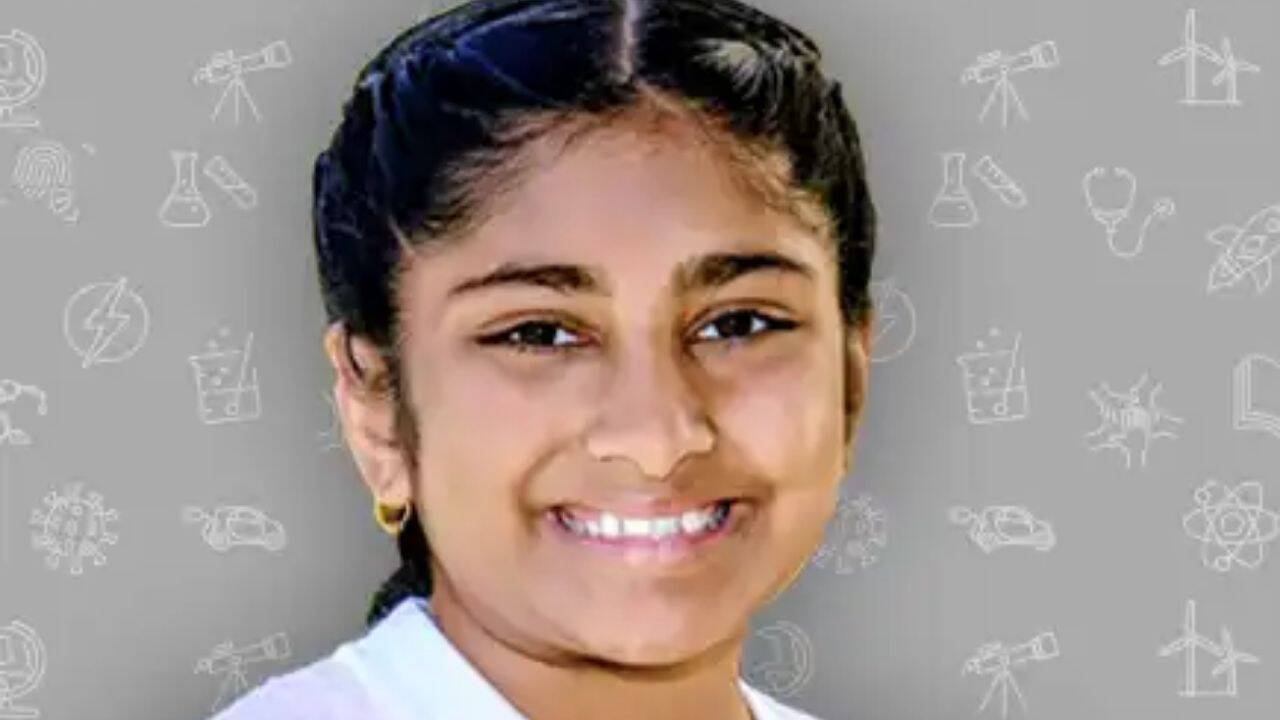
Oceans are quietly turning into acid baths, and a seventh grader from Connecticut decided she wasn't going to wait for adults to fix it. Raji Doshi, a twelve-year-old student at Talcott Mountain Academy, looked at one of earth's most stubborn environmental crises and engineered a dual-action defense mechanism using algae and natural calcium. Now, her invention has thrust her into the national spotlight as a finalist in the prestigious 3M Young Scientist Challenge, putting her in direct contention for the $25,000 grand prize.
If you think middle school science fairs are just about baking soda volcanoes, think again. Real-world chemical threats require actual chemistry, and Doshi's project takes on ocean acidification head-first.
The Chemistry Problem Nobody Wants to Talk About
Here is what most casual observers miss about carbon emissions. When humanity pumps massive amounts of CO2 into the atmosphere, the oceans absorb a huge percentage of it. That sounds helpful on paper, but chemistry doesn't care about convenience.
When carbon dioxide dissolves in seawater, it triggers a chain reaction that lowers the water's pH. Lower pH means higher acidity.
Suddenly, water chemistry shifts in a way that strips away carbonate ions. Marine organisms like corals, clams, oysters, and microscopic plankton rely on those exact ions to build and maintain their shells and skeletons. As the water grows more corrosive, these creatures literally struggle to keep their bodies from dissolving. Entire marine food webs face an existential threat, and traditional remediation efforts move at a glacial pace.
How Raji Doshi Combined Algae and Aragonite
Instead of throwing her hands up, Doshi engineered a system that tackles the problem from two distinct angles: biological carbon capture and chemical buffering.
Her setup uses two primary components:
- Cultivated algae to actively draw down carbon dioxide via photosynthesis.
- Natural calcium buffers, specifically aragonite, to directly counteract rising water acidity by boosting alkalinity.
Algae naturally consume carbon dioxide as part of its normal life cycle. By introducing a controlled algae component, the system pulls dissolved carbon right out of the local aquatic environment. At the same time, the integration of natural aragonite buffers helps stabilize the pH balance, raising the water's overall alkalinity.
It is a smart pairing. Photosynthesis removes the root driver of the acidification, while the calcium buffer provides an immediate chemical shield for vulnerable marine organisms. It treats both the source of the sickness and the immediate symptoms.
Moving Beyond Student Hypotheses
Skeptics often write off youth science projects as cute school assignments with zero real-world application. That misses the point entirely. Doshi's project, developed as part of the Young Scientist Lab initiative, highlights how foundational concepts in biology and chemistry can cross over into practical ecological engineering.
While her design is a student research initiative rather than a deployed industrial technology, the underlying principles mirror large-scale marine restoration strategies currently debated by marine biologists. Scientists across the globe are desperately searching for localized alkalinity enhancement methods to protect coral reefs and shellfish hatcheries. A twelve-year-old mapping out a dual biological-mineral approach provides a clean, conceptual blueprint that professional researchers often overcomplicate.
The Road to the 3M Young Scientist Challenge
Getting noticed by national science judges isn't easy. The 3M Young Scientist Challenge evaluates hundreds of entries based on creativity, scientific thinking, and the potential to solve real-world problems.
As a finalist, Doshi isn't just sitting back waiting for results. She has earned access to professional scientist mentors who help young innovators refine their prototypes, test their theories, and prepare to present their findings to a live panel of expert judges. The competition culminates in the selection of a single winner who takes home the $25,000 prize and the title of America's Top Young Scientist.
Whether she walks away with the grand prize or not, her work proves a vital point about modern education and environmental action. You don't need a doctorate to ask the right questions. You just need curiosity, a willingness to look at existing data differently, and the drive to build something that works.
Keep an eye on what she builds next because the conventional institutions are going to need all the help they can get.