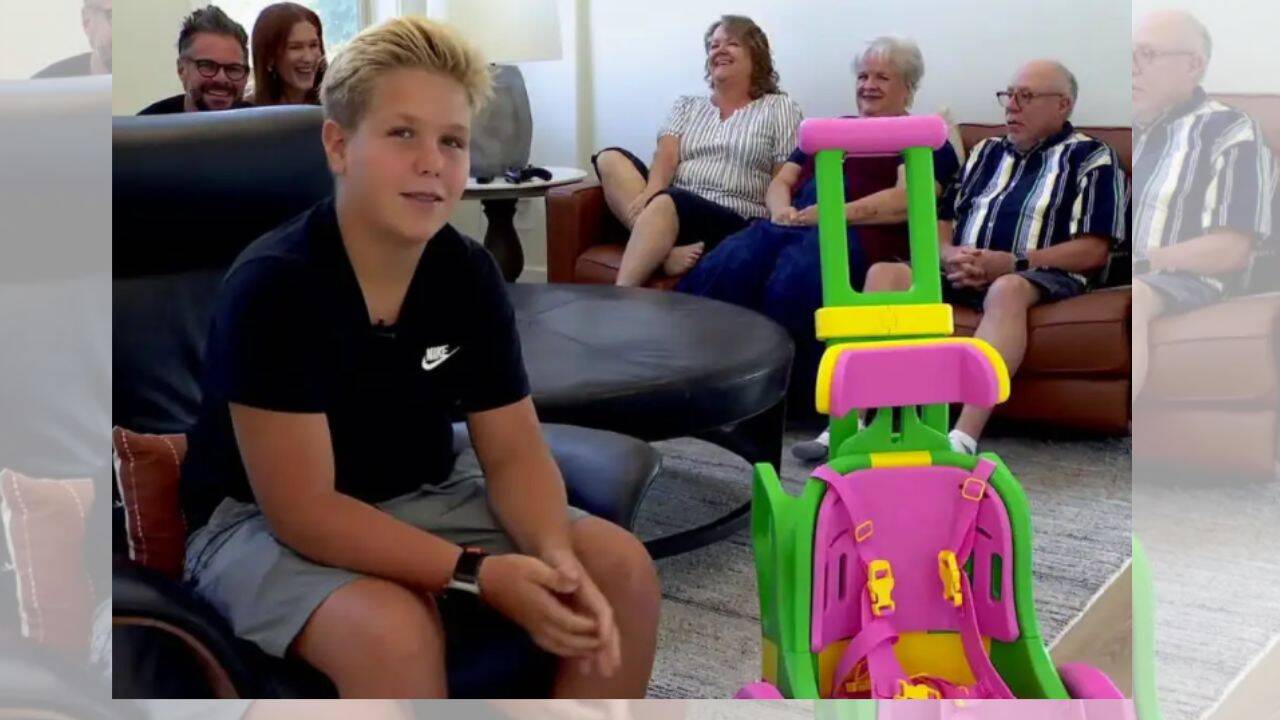
Most teenagers spend their summer breaks chasing video game high scores or sleeping past noon. Thirteen-year-old Zac Waters from Lehi, Utah, spent his break building a custom 3D printed wheelchair.
He didn't do it for a school grade. He didn't do it for cash. He spent roughly 300 hours designing, calibrating, printing, and assembling a mobility device from scratch for a 21-month-old toddler he had never met.
Stories like this usually get reduced to feel-good fluff on evening news segments. But look closer, and you'll find a blueprint for how open-source manufacturing and grassroots engineering are quietly solving real-world physical gaps that traditional medical systems ignore.
The Reality of Pediatric Mobility Access
Commercial medical equipment for toddlers is notoriously expensive, slow to manufacture, and rigid. Children under two years old grow at a blistering pace. By the time a custom corporate-manufactured wheelchair clears insurance approvals and ships, the child has often outgrown it.
That is a systemic failure.
Zac bypassed that broken system entirely by plugging into MakeGood, a New Orleans-based nonprofit founded in 2021 by certified healthcare architect Noam Platt. MakeGood coordinates an open-source volunteer network of home 3D printer operators. Their flagship design, the Toddler Mobility Trainer, costs about $150 in raw materials to produce.
Compare that price point to standard medical hardware, and the disruptive power of consumer-grade additive manufacturing becomes obvious. You don't need a million-dollar cleanroom to change a life. You just need a spool of filament, an internet connection, and patience.
Inside Zac Waters' 300-Hour Build
Building a medical device for a baby requires more than hitting print and walking away. Zac spent 300 hours grinding through iterations.
The specifications of the finished chair reveal an eye for detail that many adult makers would miss:
- Custom Ergonomics: The chair features vibrant pink accents because it's the toddler's favorite color.
- Adaptability: Both the headrest and footrest adjust to accommodate rapid physical growth.
- Functional Add-ons: Zac integrated a removable tray table and a cupholder.
- Medical Readiness: The back panel leaves clearance for heavier medical gear, while the harness straps utilize a soft, flexible print material to prevent chafing against sensitive skin.
Zac got hooked on 3D printing by watching YouTube tutorials. Instead of stopping at decorative plastic trinkets, he wanted to build things that matter. Assembling the modular components taught him practical spatial logic—the kind of iterative troubleshooting that textbooks can't teach.
His grandmother, Charlotte Waters, acted as a sounding board throughout the project. She compared the family's guidance to bowling training rails—keeping him pointed straight while letting him solve mechanical puzzles on his own.
The Scale of the Problem
Zac's build is inspiring, but it highlights a grim statistical reality. MakeGood has successfully delivered more than 1,000 mobility trainers through its volunteer base. Even so, the backlog remains heavy, with over 550 open requests and an average wait time hovering around 70 days.
Nationwide estimates indicate that over two million children in the United States need mobility assistance devices that they simply do not possess.
Traditional medical supply chains cannot scale fast enough to close that gap. Decentralized fabrication networks can. When kids with desktop printers can manufacture clinical-grade mobility aids for the price of a nice pair of shoes, the barrier to entry for humanitarian engineering collapses.
What Comes Next for Tech-Driven Youth
Zac plans to keep refining his fabrication skills, aiming to match the engineering benchmarks set by the MakeGood core team. He hasn't locked down a final career path yet, but he knows it will involve "something techie".
The lesson here is simple. If a thirteen-year-old in Utah can use open-source files to give a toddler the freedom of movement, the excuses for everyone else run out pretty fast.
Stop waiting for institutions to fix every broken process. Fire up your tools, download an open-source blueprint, and build something useful.