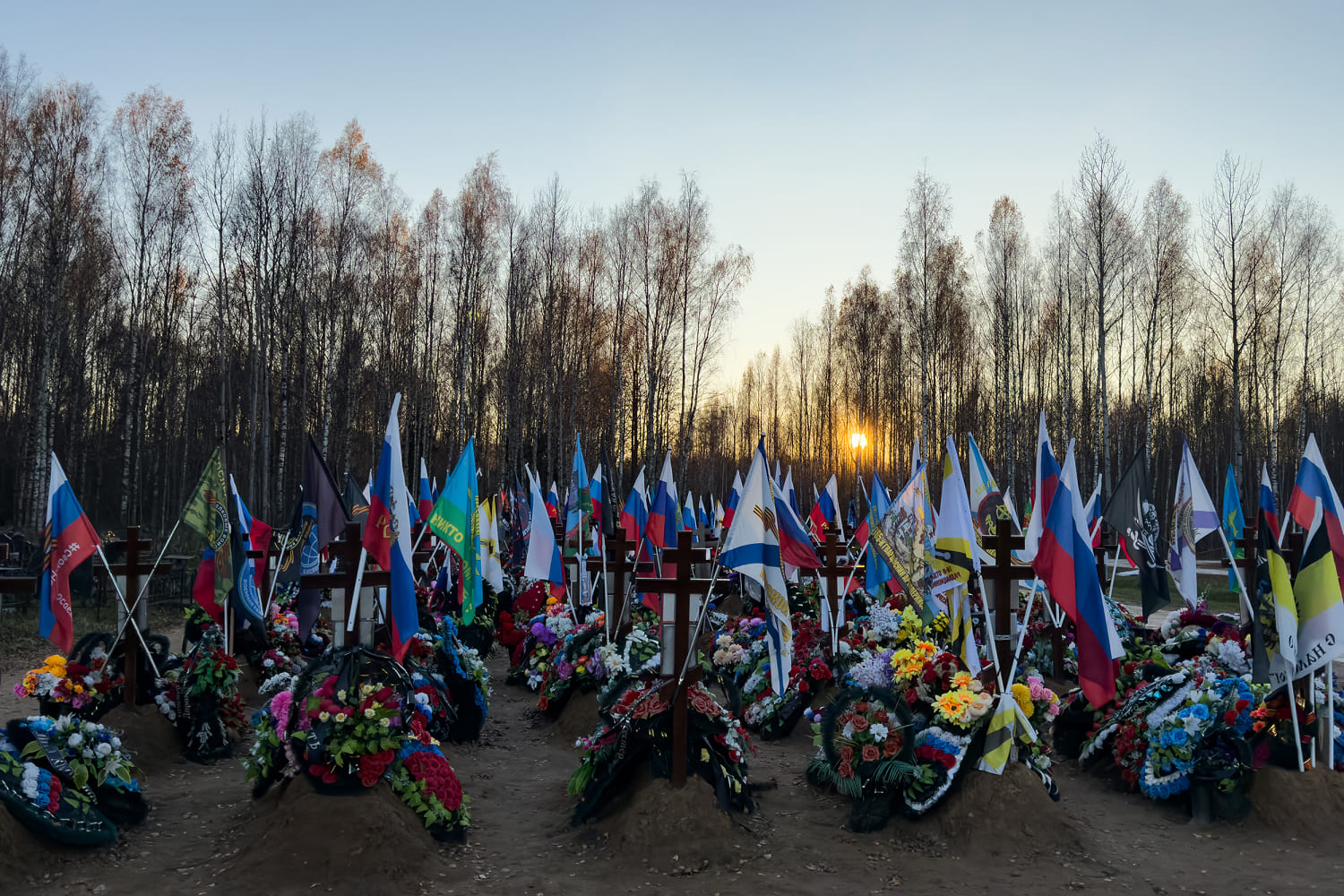
Around 700,000 Russian soldiers—and possibly up to 720,000 by fall 2026—have likely died in the war in Ukraine, according to fresh estimates built on a massive November 2026 leak from Russia's federal statistics agency, Rosstat.
That number is staggering. Even if you look strictly at registered deaths already sitting inside Russian statistical records through late September 2026, independent outlets and researchers put the confirmed toll at roughly 490,000 to 500,000 (with some cross-checks like the Dossier Center's analysis reaching slightly higher depending on how foreign nationals and court rulings are counted). Once you add probable deaths among troops listed as missing and late registrations that haven't hit the books yet, the estimate crosses 700,000.
I've spent years watching casualty claims fly back and forth in this war, and honestly, most of them are noisy. Ukrainian General Staff tallies mix killed and wounded. Western intelligence estimates shift from quarter to quarter. The Kremlin freezes its official death count back in September 2022 at fewer than 6,000 servicemen and tells everyone else to ignore reality. This Rosstat leak is different because it comes from inside Russia's own civil registry pipeline—the anonymized death records civil offices feed up to federal statisticians.
How the 700,000 Russian war dead estimate actually works
Don't confuse "registered deaths in a leaked database" with "total people killed." That distinction trips up almost everyone scanning headlines.
When hackers from the Belarusian Cyber Partisans and Silent Crow breached Rosstat in early November 2026 and shared the archive with investigative outlets including Meduza, Mediazona, and international newsrooms, reporters didn't just trust a raw number. They checked whether the records lined up against known named obituaries, probate court filings, and regional registry quirks. For the most part, they did—especially after July 2023 when Rosstat's data exchange shifted onto the SMEV system.
Earlier years had small blind spots. Researchers noted roughly 20,000 missing records across certain early registry offices—including around 3,000 war-related deaths from 2022 and early 2023 tied largely to Wagner fighters in Bakhmut and specific Rostov-on-Don offices—as well as local gaps in Crimea and occupied areas. Yet across the broader timeline, the leaked demographic records gave analysts a far clearer baseline than open-source obituaries alone could ever provide.
So why jump from roughly 490,000 registered deaths up to around 700,000 or 720,000?
Because bodies don't always get recovered, identified, or officially registered right away. In high-intensity assault waves, thousands of soldiers are logged as missing in action first, and family or court declarations take months to catch up. When Mediazona and Meduza modeled missing-person curves, late registrations, and incomplete 2026 entries—deliberately keeping recent months conservative rather than padding them—the toll pushed past 700,000.
Why the Kremlin calls it fake while numbers keep climbing
Kremlin spokesman Dmitry Peskov told reporters on November 25, 2026, that only Russia's Defense Ministry can release casualty figures and urged people to disregard other data. He didn't offer an updated number of his own.
That silence has lasted more than four years. Since former Defense Minister Sergei Shoigu cited 5,937 dead in September 2022, Moscow has treated military fatalities as a state secret while still paying out massive recruitment bonuses and death compensation to keep troops signing contracts.
Here's what's interesting about the political squeeze Moscow faces. You can hide a press release, and you can classify public birth or mortality bulletins—which Rosstat started doing on key demographic series—but you can't stop local probate courts from handling inheritances, families from mourning, or hackers from leaking internal tables. When multiple independent newsrooms—including The Guardian, CBS News, and Russia Matters—examine the same underlying patterns and land in the same ballpark, flat denials lose punch.
Killed vs. wounded vs. missing in this war
In conventional military planning, armies expect roughly three wounded soldiers for every one killed. Warfare in Ukraine has broken a lot of textbook ratios.
Heavy drone surveillance, artillery saturation, and attritional infantry pushes mean soldiers who get hit in open terrain or contested trenches often aren't evacuated in time. Analysts examining the demographic and casualty data have pointed out that Russia's ratio of killed to severely wounded looks grimly skewed compared with traditional expectations, while total permanent losses—killed, permanently disabled, and missing—stretch well past a million when you combine estimates from Western officials and research groups like CSIS.
Who is actually dying on the front lines
One detail that gets buried in big-round-number headlines is who makes up these losses. This isn't an army of 20-year-old career soldiers from Moscow.
Reporting on the leaked data and open-source records shows the average age of Russian war dead has climbed steadily—from around 34 in 2022 to close to 40 by 2026. Nearly a fifth of recorded deaths in 2026 with known ages were men over 50, up sharply from about 6% in the first year of the full-scale invasion. Men aged 35 to 44 account for roughly a third of the dead across the conflict.
That age shift tells a clear story about recruitment. When young men are scarce or harder to sign up without ever-higher payouts, recruiters pull older men, former convicts, contract volunteers, and eventually foreign nationals—including recruits from Central Asia, Belarus, and Latin America—into the meat grinder.
The regional gap is just as stark. Poorer Russian regions have paid a vastly higher per-capita price than wealthier hubs like Moscow and St. Petersburg, where lower poverty rates and tighter administrative cushioning kept per-capita death rates much lower. For young Russian men in 2025, demographic reporting on the leaked data indicated the war became the leading cause of death—an extraordinary shock for a country already grappling with long-term population decline.
A demographic scar that lasts decades
War deaths aren't a one-year accounting item. They reshape a society's curve for generations.
Analysis of the Rosstat leak noted that Russia's male life expectancy fell to 65.3 years in 2025, opening a 14.1-year gap behind female life expectancy—far below the Kremlin's stated 2030 target of 78. Even if shooting stopped tomorrow, losing hundreds of thousands of working-age and family-age men, alongside wartime emigration and delayed births, leaves a hole in Russia's labor pool and household structure that money alone can't patch quickly.
Practical steps when reading war casualty reports
Numbers this big can numb you or push you straight into confirmation bias. If you're tracking the conflict, researching geopolitics, or separating solid reporting from rumor, a few habits help a lot.
- Check the definition before quoting the number. Always ask whether a figure means killed only or killed plus wounded, and whether it includes estimated missing troops. Mixing those up is the single most common mistake in casual debates.
- Separate confirmed registries from projections. A count of registered deaths or named individuals is a floor; statistical models projecting missing soldiers and recent unrecorded deaths are estimates. Treat floors and projections as distinct pieces of evidence.
- Watch the lag on recent months. Civil registries, court rulings, and obituary databases always run behind real-time combat. A drop in registered deaths for the past two or three months usually reflects paperwork lag rather than a sudden halt in fighting.
- Compare multiple independent sources. Don't rely on a single viral post or one side's daily press briefing. Cross-check independent data journalism, think-tank assessments, and intelligence summaries over time to see where trends converge.