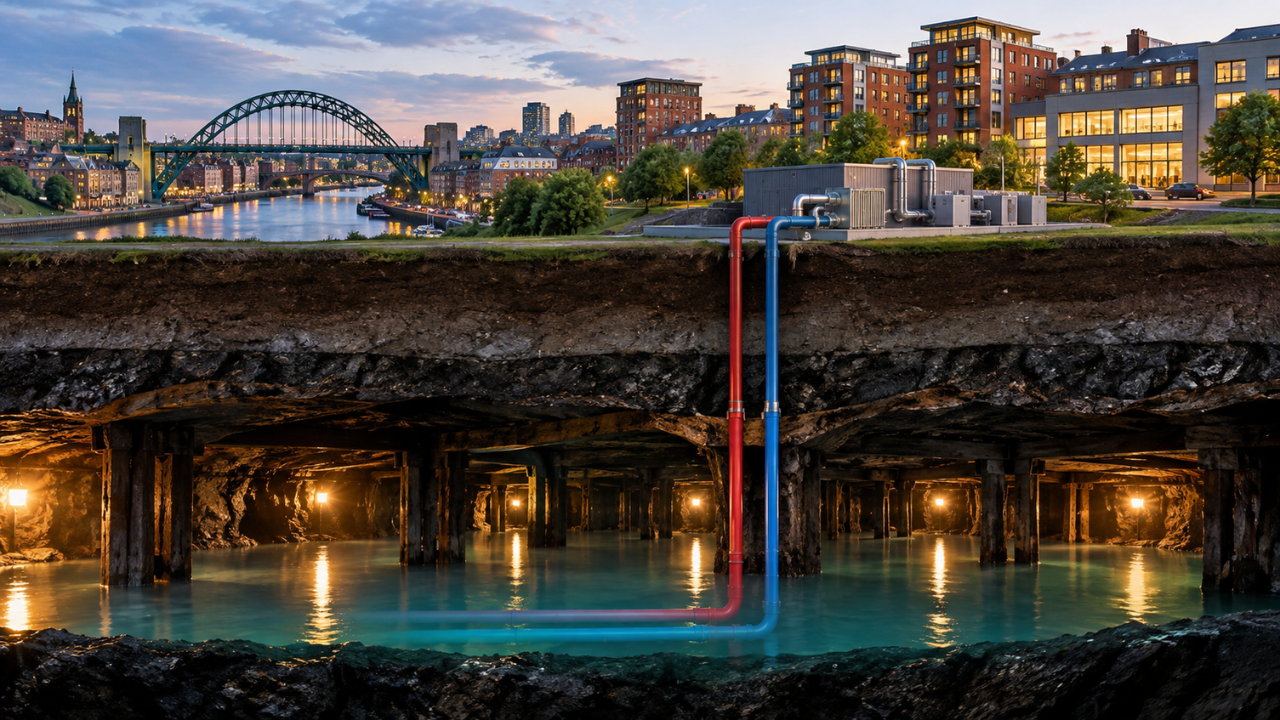
We've spent centuries digging deep into the earth to pull out fossil fuels, burning them to keep our homes warm while trashing the atmosphere in the process. Now, engineers are turning that old industrial logic on its head. Deep beneath the streets of Gateshead, water trapped 150 metres down in abandoned coal mines is heating hundreds of homes and public buildings. It's a brilliant second act for ghost shafts most people forgot existed.
If you think heating a town with flooded coal tunnels sounds like a sci-fi gimmick, look closer at the physics. The earth acts like an enormous natural radiator. As you go deeper underground, temperatures rise naturally due to the geothermal gradient. In the abandoned workings of Tyne and Wear, that trapped water sits comfortably at a steady temperature year-round, completely immune to freezing winter surface snaps. Recently making headlines in related news: Why China's Record-breaking Running Robot Matters More Than The Hype.
Instead of letting that subterranean heat go to waste, a 6-megawatt water-source heat pump pulls thermal energy right out of the mine water. That energy travels through more than 5 kilometres of district heating pipes, supplying warmth directly to places like Gateshead College, the Baltic Arts Centre, local offices, and 350 council-owned homes. Plans are already rolling out to connect hundreds of private properties, a hotel, and a conference centre.
How Mine Water Heating Actually Works
People often assume geothermal energy requires rumbling volcanoes or bubbling hot springs. It doesn't. Abandoned coalfields act as massive, pre-excavated underground reservoirs. Further information regarding the matter are explored by Gizmodo.
Engineers drill boreholes down into the flooded tunnels to tap into the water. Pumps bring that water to the surface, where a heat pump extracts the thermal energy using heat exchangers. Once the heat is stripped out and sent into the local district network, the cooled water is safely returned underground or managed through regulatory frameworks.
The biggest advantage here is stability. Gas prices fluctuate wildly based on global politics and supply shocks. Ground temperatures do not. Once you build the extraction infrastructure, your fuel source sits right beneath your feet, quietly absorbing heat from the earth's core 24 hours a day, seven days a week.
The Living Laboratory Driving Future Projects
This isn't just about keeping local students and residents warm. The Gateshead network doubles as a major research hub known as the Gateshead Living Laboratory. Researchers drilled additional boreholes and installed monitoring equipment to track how these large-scale extractions affect the surrounding hydrogeology and thermal balance.
Too many green infrastructure projects launch with high hopes and zero data tracking. This initiative provides open-access data for regulators, academic institutions, and city planners across Europe. If we want to scale up mine water heating across other historic coal-mining regions, we need to know how multiple heat schemes interact over decades without depleting the thermal capacity of the ground.
What This Means for Other Industrial Towns
Thousands of abandoned mines scar post-industrial landscapes across the UK, Europe, and North America. For generations, these flooded networks were viewed as environmental liabilities or flood risks that required expensive ongoing management by agencies like the Coal Authority.
Turning those liabilities into utility assets changes the economics of urban decarbonization completely. Cities built on coal can literally use their industrial past to power their clean-energy future.
If your city sits on top of old mine workings, the blueprint is already written. Stop looking for expensive new technological miracles when the earth has already stored the heat you need right beneath your basement.