Imagine stepping onto a double-decker bus in North London, looking for a place to park a baby stroller, and finding a twitching laundry bag instead.
That is exactly what happened on Friday, July 17, aboard a Route 302 bus waiting at Kensal Rise. When a mother couldn't maneuver her buggy past an oversized, chequered laundry bag blocking the luggage bay, the bus driver stepped in to help. As he shifted the bag, it started jumping. High-pitched chirping echoed through the lower deck.
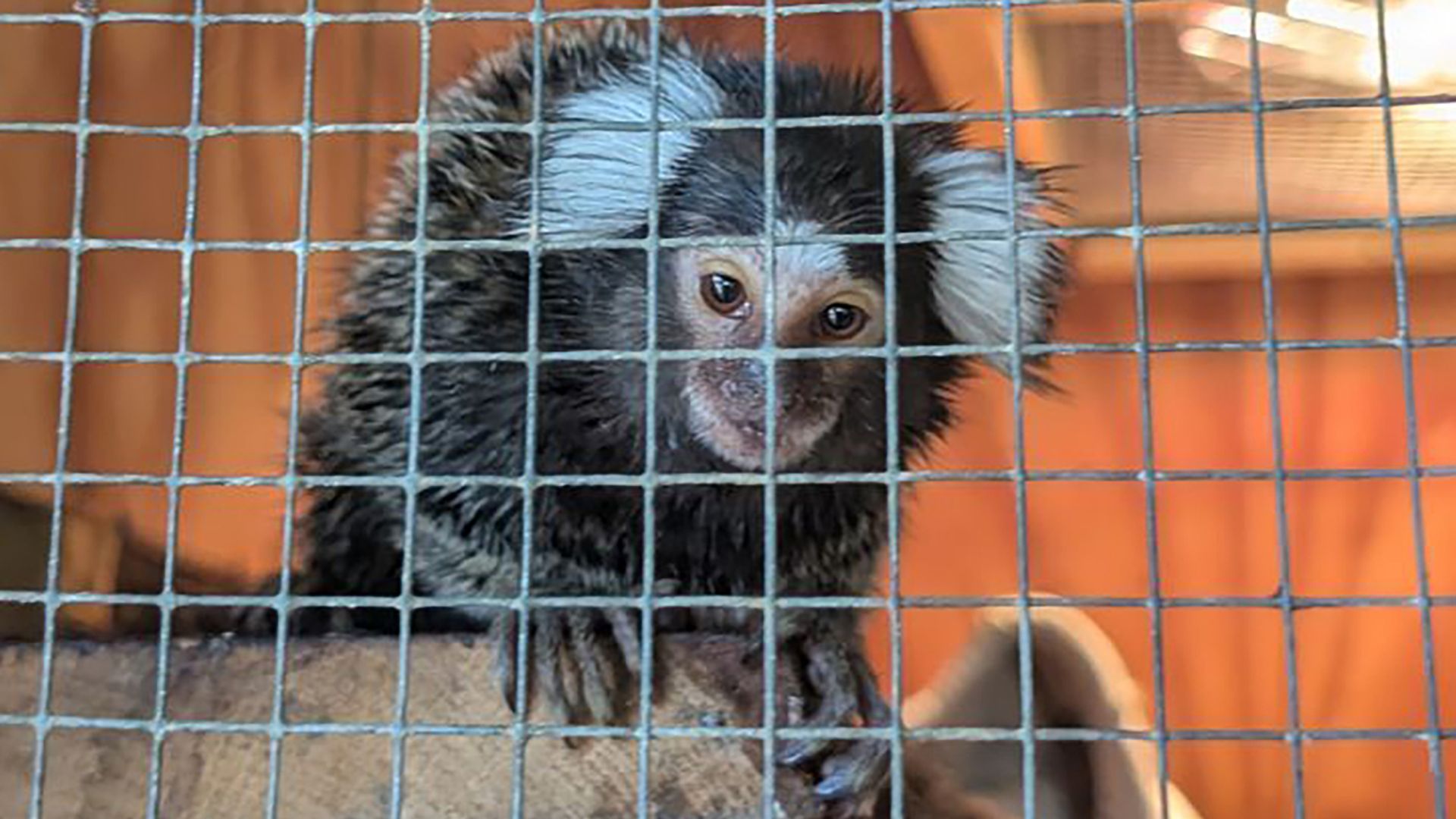
Inside that bag wasn't a forgotten load of towels. It was a white metal bird cage containing a terrified, dehydrated female common marmoset, left behind with nothing more than a piece of sliced apple.
The driver acted fast. He drove straight to the Metroline Bus Depot in Willesden, tucked the crate into a quiet, dark room to calm the animal, and dialed the RSPCA. Rescuers quickly nicknamed the tiny primate "Oyster" after the capital's iconic travel card.
Oyster got lucky. Most abandoned exotics don't. But this bizarre discovery wasn't a random act of chaos. It is the predictable opening salvo of an exotic pet crisis washing over England right now.
A Sudden Shift in Law and predictable Panic
You don't just forget a screaming monkey in a luggage bay. RSPCA chief inspector Clare Dew made it clear that dumping Oyster was a deliberate act.
Why would someone stash a exotic primate on a public bus? Look at the calendar.
Back in April, new UK government regulations hit the books requiring anyone keeping primates as pets in England to secure an official license. The law forces private owners to meet strict, zoo-level housing and care standards, alongside mandatory microchipping.
The Department for Environment, Food and Rural Affairs (DEFRA) estimates around 5,000 primates are living in British homes. Yet animal protection organizations like the Born Free Foundation report that hardly anyone has actually applied for the new licenses.
Owners caught without a license or failing to meet strict enclosure standards face heavy fines or prosecution. Faced with compliance costs, expensive vet upgrades, and strict housing inspections, unprepared owners are panicking.
Unchipped and unregistered, Oyster had no identification tags on her cage. The person who left her likely knew that taking her to a standard vet meant risking questions they couldn't answer. So they left her on a bus heading from Mill Hill Broadway to Kensal Rise, hoping the public transport network would handle the mess.
RSPCA exotic animals expert Evie Button warned this exact scenario would happen. When regulatory cracks close around illegal or private wildlife trade, animals get dumped in alleyways, parks, and bus bays. Oyster is likely just the first of many.
The Reality of Owning a Marmoset at Home
People buy marmosets because they look cute on social media. They are small, fuzzy, and move with comedic agility.
The reality of keeping one in a living room is a complete nightmare.
Marmosets are native to the tropical rainforests of South America. They are wild animals with complex emotional, physical, and social demands. A human living room cannot mimic a jungle canopy.
Here is what private buyers rarely realize before bringing a primate home.
Vocalizations and Noise
Marmosets do not sit quietly on your shoulder. They communicate through high-frequency squeaks, sharp chirps, and loud whistles designed to travel across forest thickets. In a small home or flat, that noise is constant and ear-piercing.
Scent Marking
Primates mark their territory continuously. Marmosets use specialized glands to rub scent markers—mixed with urine—over every surface they touch. Curtains, sofas, carpets, and clothing get covered quickly.
Specialized Nutrition
You cannot feed a monkey dog food or simple fruit. Marmosets need high-protein diets, specialized gum- arabic supplements, live insects, and constant UV lighting to synthesize Vitamin D3. Without specialized care, they develop metabolic bone disease, causing severe fractures, twisted spines, and agony.
Extreme Social Needs
Marmosets live in tight family groups in the wild. Isolating a marmoset in a metal cage leads to severe psychological distress. They pull out their own fur, become aggressive, and bite deeply with razor-sharp canine teeth. Human interaction cannot replace the presence of another marmoset.
When owners realize they cannot handle a biting, screaming, scent-marking animal—and cannot afford the specialized vet care—the illusion shatters. With the new licensing rules closing off easy resale routes, abandonment becomes their desperate, illegal exit strategy.
A Stroke of Fate for Oyster
Despite her terrifying experience inside a dark laundry bag, Oyster’s story took an extraordinarily lucky turn.
Following her rescue from the Willesden depot, RSPCA officers transported the female marmoset to a specialist exotics veterinarian. The check-up brought good news. Aside from severe dehydration and high stress levels, Oyster was healthy.
She was immediately transferred to a specialized primate sanctuary equipped with massive outdoor enclosures and expert keepers.
Then came the coincidence.
For weeks, the sanctuary had been coordinating with the RSPCA to locate an available female marmoset. They were caring for a lone male marmoset who urgently needed a companion to prevent depression. Rescuers were scheduled to transfer a suitable female from northern England, but that arrangement collapsed just hours before Oyster was found on the 302 bus.
Chief Inspector Dew called it fate. Oyster stepped into that exact vacant spot. She spent her first weekend eating well, regaining her energy, and settling into her new home. Sanctuary staff plan to introduce her to her new male partner as soon as her quarantine protocol wraps up.
Meanwhile, the legal investigation remains active. RSPCA inspectors are working alongside Metroline staff to review security video, bus logs, and smartcard scan timestamps. They are asking anyone who saw someone boarding the 302 bus with a bulky chequered laundry bag around 11:45am on July 17 to call their confidential line at 0300 123 8018.
What to Do If You cannot Care for an Exotic Pet
Abandoning an animal in a public space is a criminal offense under the Animal Welfare Act. It carries heavy fines, potential prison time, and causes extreme suffering. Leaving a tropical primate inside a bag on a summer morning can cause fatal heatstroke within hours.
If you or someone you know is holding an unlicensed primate or an exotic pet that has become impossible to manage, take these steps immediately.
- Contact a specialist rescue organization. Reach out directly to the RSPCA, Born Free Foundation, or regional wildlife sanctuaries. Surrendering an animal directly to a charity ensures the pet gets proper medical care without putting it in danger.
- Talk to an exotic animal veterinarian. Specialist vets prioritize animal welfare. They can connect you with legitimate rehoming networks and help manage medical issues safely.
- Do not attempt to sell on private classifieds. Dumping exotic pets onto online marketplaces passes the problem to another unprepared buyer and perpetuates illegal breeding.
- Seek advice on licensing compliance. If you want to keep your pet legally, contact local council environmental health teams. They can detail exact enclosure upgrades required to meet the current standards.