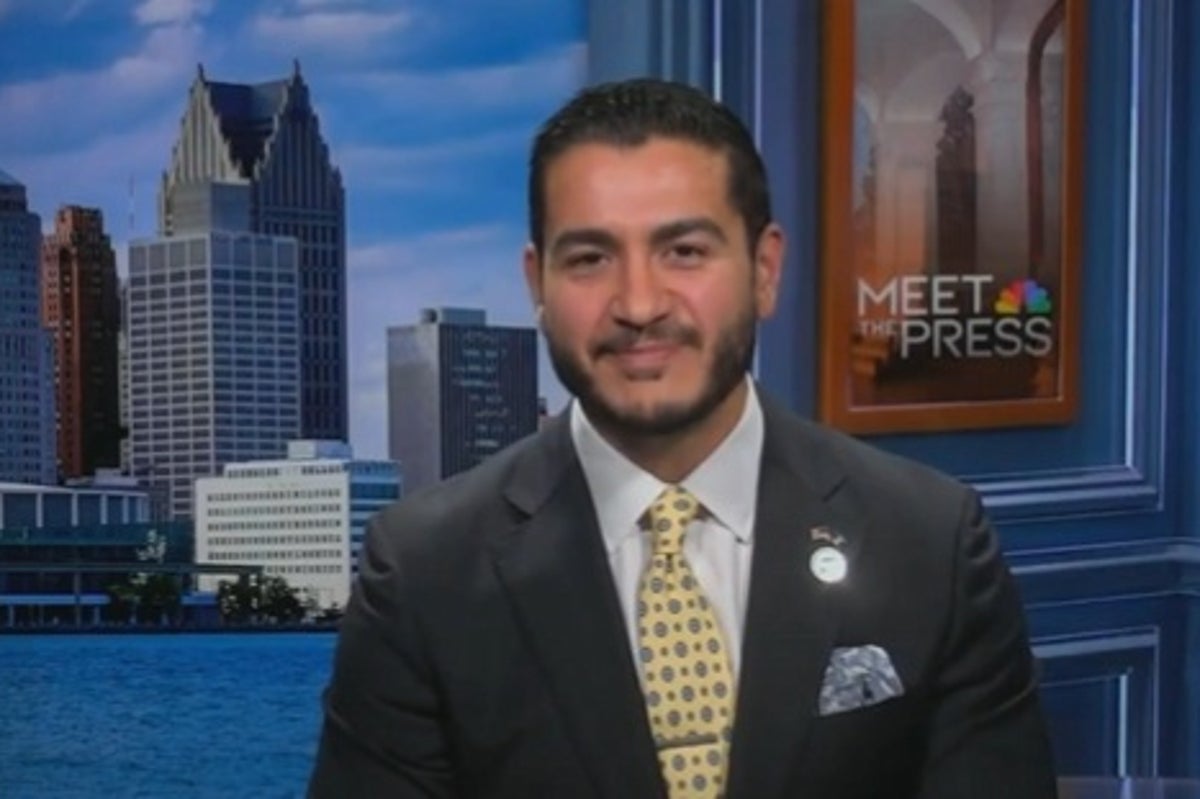
You can't run a high-profile progressive campaign in a crucial battleground state without drawing heavy fire from every corner of the political establishment. Fresh off winning Michigan's fierce Democratic Senate primary, Abdul El-Sayed found himself sitting across from NBC's Meet the Press host, forced to answer questions not about healthcare policy or inflation, but about political streamer Hasan Piker.
The line of questioning zeroed in on a controversial remark Piker made years ago. Piker had claimed on a livestream that "America deserved 9/11". Because Piker appeared on the campaign trail alongside El-Sayed during the primary cycle, opponents and mainstream journalists immediately tried to tie those past statements directly to the candidate.
El-Sayed didn't dodge the question entirely, but he pushed back hard against the framing. He called Piker's old remark a "dumb statement" while dismissing the line of inquiry as classic gotcha politics.
The Battleground Strategy and Online Allies
Campaigning with internet influencers isn't standard operating procedure for most traditional politicians. For El-Sayed, tapping into alternative media channels like Piker's massive Twitch audience was a calculated move to mobilize young voters and disaffected leftists who usually ignore standard stump speeches.
It worked. El-Sayed beat representative Haley Stevens in a razor-thin primary margin, proving that a progressive populist message can resonate in a swing state. But that alliance came with a steep political cost. Critics from both parties pointed to Piker's polarizing rhetoric on foreign policy and domestic issues as a liability.
When pressed on whether he would continue appearing with Piker moving forward, El-Sayed refused to offer a definitive yes or no. Instead, he argued that voters care far more about the cost of living and economic survival than online baggage.
Navigating Foreign Policy Pressures
The scrutiny over Piker is just one piece of a much larger puzzle regarding El-Sayed's foreign policy stances. During his national television appearances, El-Sayed faced intense questioning regarding his opposition to unconditional military aid to Israel.
He drew a sharp contrast between how the United States handles different global conflicts. He defended supporting Ukraine against Russian aggression by pointing out that it involves a direct violation of international law by a neighboring sovereign power. By contrast, he criticized Washington's long-standing policy of writing blank checks for foreign military assistance to Israel without demanding accountability.
That position made him a prime target for heavy spending from outside groups like the American Israel Public Affairs Committee, turning the Michigan race into a national referendum on the future of the Democratic Party's foreign policy wing.
The Identity Politics Playbook
Republicans and conservative super PACs have wasted no time trying to define El-Sayed for the general election. Opponents have highlighted his full name, Abdulrahman Mohamed El-Sayed, in attack ads, deploying tactics that political analysts immediately compare to the strategy used against Barack Obama years ago.
El-Sayed called out these tactics directly, arguing that opponents rely on identity-based dog whistles because they cannot win on economic substance. He pointed out that his legal name doesn't drive up grocery prices or dictate housing shortages.
As the general election race accelerates, the central question remains whether a candidate who leans into alternative digital media and challenges party orthodoxy on foreign policy can survive a brutal swing-state contest. The establishment wants him to pivot to the center. El-Sayed is betting that doubling down on economic populism is the only way to win.
Abdul El-Sayed wins Michigan's Democratic Senate primary
This video clip provides additional context on Abdul El-Sayed's primary victory in Michigan.
http://googleusercontent.com/youtube_content/1