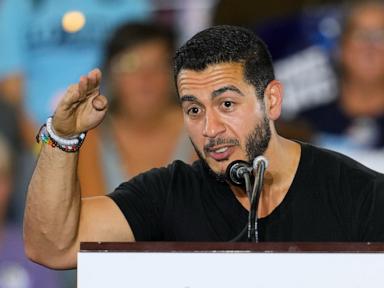
Winning a messy political primary is the easy part. Healing the resulting family feud is where campaigns actually live or die.
Abdul El-Sayed just pulled off a major upset in Michigan's Democratic Senate primary, narrowly defeating establishment favorite and U.S. Rep. Haley Stevens. Shortly after clinching the nomination, El-Sayed revealed he received a warm, advisory phone call from former President Barack Obama. It sounds like a standard-issue establishment blessing, but the reality on the ground in a crucial purple state is far messier.
If you want to understand how Democrats plan to hold onto a vital Senate seat after a cycle of heavy internal bruising, you have to look past the high-profile phone calls and examine the deep ideological cracks threatening to split the party in half.
The Morning After a Brutal Primary Fight
Michigan's primary didn't just expose minor disagreements. It dragged progressive and moderate wings of the Democratic Party into a high-stakes collision.
El-Sayed ran a unapologetically progressive grassroots campaign centered on universal healthcare and reigning in corporate cash. Stevens countered with deep ties to state establishment figures, heavy outside financial backing, and a pragmatic framing focused on her role in the historic auto rescue. Super PAC spending topped tens of millions of dollars, turning the primary into an ideological proxy war.
When the dust settled, El-Sayed scraped past Stevens by a narrow margin of less than two percentage points. That leaves a massive block of moderate voters who backed Stevens feeling alienated, nervous, and deeply skeptical about whether a progressive public health official can win a statewide general election.
Why the Obama Phone Call Matters
Obama knows how to win Michigan. He carried the state twice in 2008 and 2012, building a diverse coalition of urban voters, working-class union members, and suburban moderates.
When El-Sayed hopped on NBC's "Meet the Press" to praise his Friday conversation with the former president as "really warm and inspiring," he was sending a deliberate message. He wants Obama on the campaign trail in Michigan before November. More importantly, he wants moderate Democrats to see that the party architects aren't abandoning him.
Obama's involvement acts as a bridge. It tells skeptical centrists that they can swallow their primary grievances and back the nominee without feeling like they are endorsing a total party takeover.
Yet, symbolism only goes so far.
The Republican Trap Waiting in November
Republicans aren't sitting back while Democrats try to patch things up. Former GOP congressman Mike Rogers—who narrowly lost the state's other Senate race to Elissa Slotkin in 2024—is already weaponizing the primary's leftover resentment.
Rogers dropped a targeted video message explicitly aimed at moderate Democrats. The pitch is simple: if you feel your party has drifted too far to the left under El-Sayed, you have a home on the right.
This is the exact danger facing progressive nominees in swing states. Winning the primary requires energizing the base with sharp, systemic critiques. Winning the general election requires convincing swing voters and moderate centrists that you won't upend the economy. El-Sayed has tried to thread that needle by clarifying that he views himself as a capitalist who wants to regulate monopolies rather than a democratic socialist. Still, convincing weary voters takes more than a press release.
Closing the Rifts Before November
During a joint rally in Detroit, national and local figures attempted to project a united front. The crowd roared loudest for El-Sayed, signaling real enthusiasm from the progressive wing. But rallies are designed to preach to the converted.
To actually secure the Senate seat left open by retiring Senator Gary Peters, El-Sayed has to operationalize party unity. He needs Stevens's core network of supporters to knock on doors, write checks, and show up at the polls.
If you are watching the Michigan race unfold, stop looking at national endorsements as magical fixes. The real test happens in suburban Detroit living rooms and union halls, where local organizers have to convince reluctant centrists that a shared opposition to Republican policies outweighs a messy primary battle.