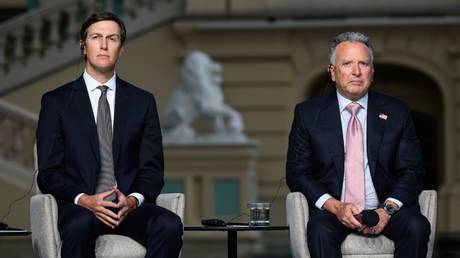
Diplomacy rarely moves at the speed of political ambition. As American, Russian, and Ukrainian delegates converge on Abu Dhabi for a fresh round of high-stakes trilateral negotiations, the gap between what Washington wants and what the warring capitals demand remains painfully wide. If you listen to political rhetoric, a grand bargain is just around the corner. Look at the actual battlefield positions, however, and you realize everyone is still reading from entirely different scripts.
Washington's special envoys, including Jared Kushner and Steve Witkoff, have framed the discussion around a broader European security architecture, permanent security consultations, reliable crisis channels, and postwar economic reconstruction. It sounds neat on paper. But Kyiv and Moscow aren't sitting down to workshop abstract architectural blueprints. They are fighting for survival, territory, and long-term geopolitical dominance.
What Ukraine Actually Demands
President Volodymyr Zelenskyy has made Kyiv's red lines explicit. For Ukraine, any conversation that bypasses an immediate end to hostilities or ignores concrete security guarantees is a non-starter. Ukraine holds a formidable defensive belt in the east, and handing over tactical advantages without ironclad protection against a future invasion is political suicide.
Furthermore, Kyiv remains deeply suspicious of any sweeping framework hatched between major powers that might leapfrog over European stakeholders or sacrifice territorial integrity for a quick diplomatic headline. Zelenskyy has repeatedly stressed that the primary focus must stay anchored on verifiable security guarantees and the mechanics of stopping Russian bombardments, rather than premature talk of grand continental security deals that leave Ukraine exposed.
Moscow's Hardline Calculus
On the other side, Moscow's objectives haven't softened simply because negotiators flew to the United Arab Emirates. The Kremlin continues to demand significant territorial concessions and an absolute block on future NATO expansion for Ukraine. Russian leadership views the conflict through the lens of permanent strategic buffer zones.
While Russian officials might engage in diplomatic choreography to appease international pressure or test American intentions, their underlying military strategy hasn't shifted. They continue to target critical energy infrastructure while attempting to lock in gains before economic fatigue or domestic friction forces a genuine compromise. When you look at who Moscow sends to the table, it's clear they treat these sessions as a platform to reiterate maximalist demands rather than trade away hard-won ground.
The European Anxiety Factor
Europe's role in these talks has turned into a massive diplomatic tug-of-war. Kyiv insists that European allies must be central to any security architecture because whatever agreement emerges will happen on Europe's doorstep. Yet, Russian officials have already signaled intense resistance to any European troops deploying to Ukraine post-conflict, labeling them legitimate targets.
European capitals are watching anxiously, terrified of being sidelined by a U.S.-brokered deal that forces unpalatable compromises onto the continent. The fear in Brussels and Berlin is simple: a rushed settlement that fails to deter future aggression isn't peace; it's just an intermission.
Where the Process Breaks Down
The fundamental flaw in current diplomatic efforts is the mismatch in timing. Washington wants a swift resolution to pivot away from a grinding European quagmire. Ukraine wants survival backed by cast-iron guarantees that endure long after current administrations leave office. Russia wants validation of its territorial conquests and a neutered Ukrainian state.
You can't reconcile those three worldviews with a four-point checklist on crisis communications or investment funds. Until one side faces an undeniable military or economic wall that forces a genuine change in calculus, expect these high-profile summits to produce plenty of press releases and very little permanent peace.