We treat orbit like a cosmic junkyard. Look up at the night sky and you see quiet stars. You do not see the hundreds of thousands of dead rocket boosters, shattered satellite shrapnel, and discarded paint flecks screaming around the planet at seventeen thousand miles per hour.
Most people think a handful of rogue space programs hold all the blame. They do not.
Space debris in Earth orbit comes from decades of Cold War posturing, commercial satellite constellations launching unchecked, and a complete lack of global accountability. A tiny screw moving at orbital velocity hits with the kinetic energy of a hand grenade. We are staring down a future where low Earth orbit becomes so choked with debris that launching new weather satellites, GPS networks, or crewed missions turns into a game of interstellar Russian roulette.
Let us break down who is actually responsible for the metallic mess circling our heads.
The Big Three and the legacy of the space race
You cannot talk about orbital trash without looking at the heavy hitters. The United States, Russia, and China built the foundation of the modern space age. They also built the foundation of the modern orbital landfill.
Russia inherited the Soviet Union's heavy launch legacy. For decades, the Soviets put thousands of objects into space. Many of those old upper-stage rocket bodies remain unpassivated, meaning they still hold residual fuel and pressurized tanks that explode years after launch, creating massive clouds of shrapnel. Russia tops historical tracking lists simply by virtue of longevity and sheer volume of historical fragmentation events.
The United States isn't far behind. America pioneered communications satellites, GPS, and deep-space probes, leaving behind spent boosters and dead payloads from programs dating back to the sixties. The US also holds a distinct record for active tracking capability through the Space Surveillance Network, meaning we simply spot and log more debris than almost anyone else.
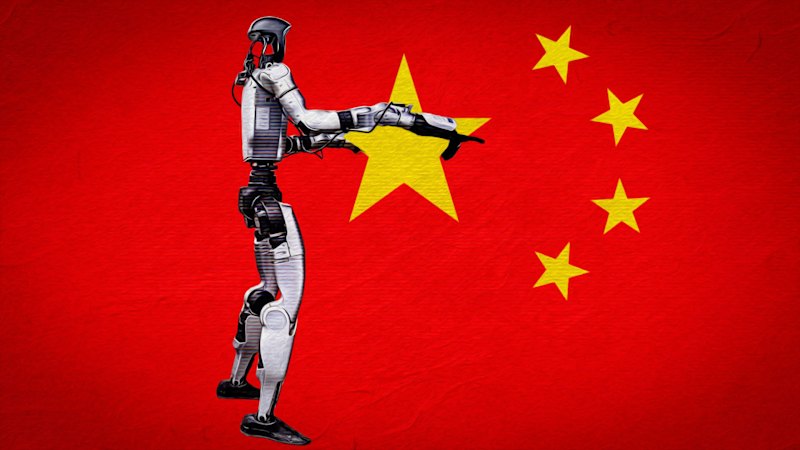
Then you have China. China's rapid rise as a space superpower changed the orbital dynamic completely. The 2007 anti-satellite missile test conducted by China blew up an old weather satellite, creating thousands of trackable pieces of space debris that are still decaying out of orbit today. That single event stands as one of the single largest pollution spikes in human history.
The rising impact of commercial mega constellations
Old state-sponsored missions represent past history. Today's problem moves much faster. Private companies change the game daily.
SpaceX, OneWeb, and other commercial entities launch fleets of internet satellites by the thousands. While modern commercial operators design satellites to deorbit safely at the end of their lifespan, failures happen. Thrusters die. Computers freeze. A dead satellite sitting in a busy orbital shell becomes a sitting duck.
When you crowd thousands of active spacecraft into tight low Earth orbit bands, the statistical probability of a close approach spikes. Autonomous collision avoidance maneuvers happen every single week now. If one commercial operator loses control of a bus-sized satellite, it can trigger a domino effect known as the Kessler Syndrome. One collision shatters two objects into thousands of pieces, those pieces strike other objects, and suddenly a useful orbital highway becomes a permanent wall of hyper-velocity shrapnel.
The hidden contributors nobody talks about
It is easy to point fingers at Washington, Moscow, and Beijing. Yet space access has democratized. More than eighty countries now possess at least one satellite in orbit.
India entered the space club aggressively, launching successful lunar missions and expanding domestic constellations. Like China, India also tested an anti-satellite weapon in 2019, creating a temporary debris field that drew sharp international criticism due to the altitude of the test.
Europe, through the European Space Agency, launches fewer rockets than the US or China, but its historical Ariane rocket programs left plenty of inactive upper stages in geostationary and low Earth orbit. Japan contributes its share through historical missions and active tracking infrastructure, while nations like France and smaller emerging space programs add regional payloads to the mix.
The dirty secret is that any country with a rocket program contributes to the orbital smog. Space does not recognize international borders. A piece of debris launched by a minor player can easily smash into a multibillion-dollar weather satellite belonging to someone else.
Why nobody cleans it up
Cleaning up space debris sounds simple until you look at the economics and the physics.
Catching a tumbling rocket body moving at orbital speeds requires precision engineering that costs hundreds of millions of dollars per target. There is no international tax or global recycling fund for orbit. If an American company builds a robotic arm to grab a dead Russian rocket body, diplomatic nightmares emerge. Does touching another country's space hardware constitute an act of war or a violation of sovereign property rights? International space law remains hopelessly outdated, written in the late nineteen-sixties when nobody imagined private billionaires parking thousands of internet relays overhead.
We are flying blind through a metallic minefield. Governments talk about sustainability guidelines, voluntary deorbit rules, and green propulsion. Voluntary rules do not work when commercial survival depends on launching faster than the competition.
Until there are severe financial penalties or mandatory removal bonds tied to every single launch permit, the trash pile up there will keep growing. Stop waiting for a global treaty to save the sky. The next major orbital collision isn't a matter of if. It is a matter of when.