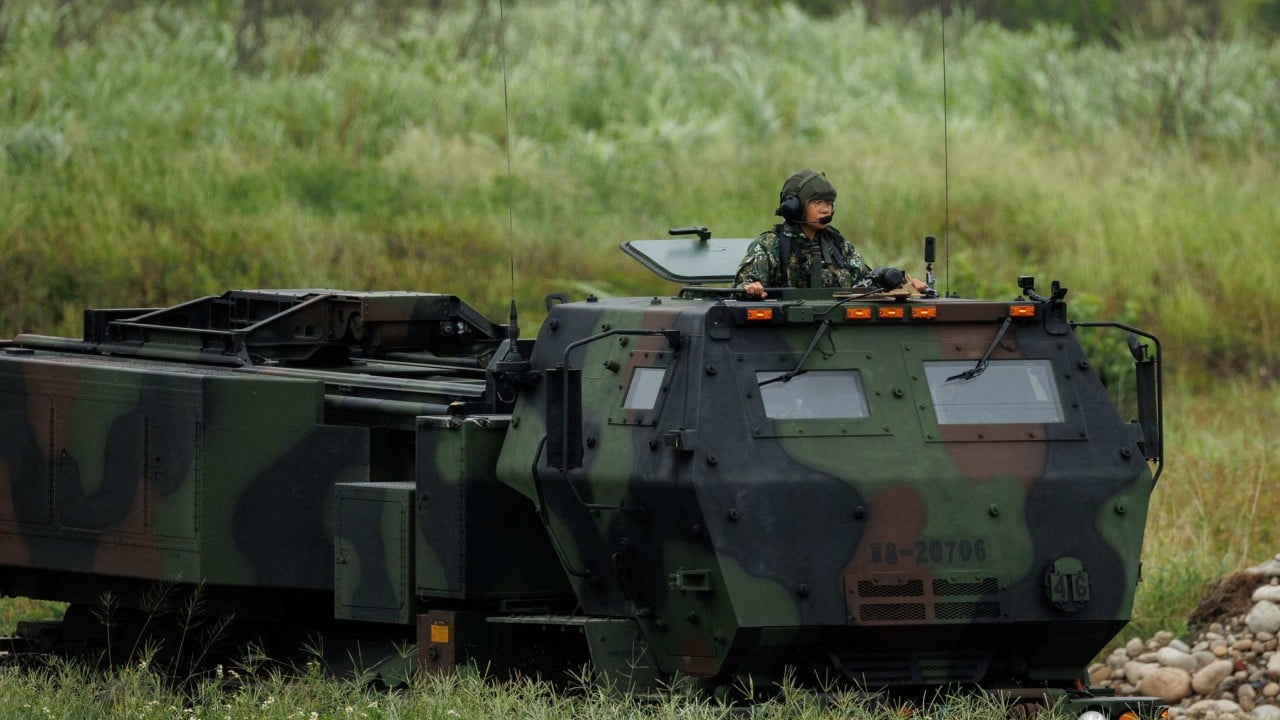
Taiwan cannot simply buy its way out of a defense crisis. The island is facing an existential troop shortage, and the latest plan to fix it sounds great on paper but fails under real scrutiny. Defense Minister Wellington Koo Li-hsiung recently announced a massive overhaul of the reserve system. Taiwan is scrapping its old five-to-seven-day reserve call-ups. Instead, it is forcing eligible reservists into a mandatory 14-day training course.
The goal is clear. The military wants to train civilian reservists to operate high-tech gear like drones and US-made High Mobility Artillery Rocket Systems, known as HIMARS. They call it the policy of returning personnel to their original positions. If you operated a specialized system during your active duty, you are going right back to it during your call-up. If you found value in this post, you should check out: this related article.
It sounds logical. But it ignores the structural rot inside the system.
Handing expensive, complex hardware to people who only wear a uniform for two weeks a year does not create an elite fighting force. It creates a logistical nightmare. The uncomfortable truth is that Taiwan is running out of young men, and its military culture is driving away the few recruits it has left. For another look on this development, refer to the recent update from NPR.
The New Fourteen Day Mandate
The Comprehensive Defense Mobilization Agency claims that these new 14-day training sessions will feature ten hours of intense daily drilling. Reservists will practice live firing, tactical marching, night operations, and battlefield first aid. The Ministry of National Defense even wants to rewrite the law to bring retired female volunteer soldiers into the reserve pool. They are desperate for warm bodies who already know how a military base functions.
This desperation stems from a massive shortfall in the standing army. Look at the numbers from the Institute for National Defense and Security Research. The gap between theoretical staffing requirements and actual professional soldiers is widening at a terrifying speed. In 2020, Taiwan filled 93% of its professional military slots. By June 2025, that number plummeted to just 63%.
Active-duty personnel numbers dropped from nearly 165,000 in 2021 to around 153,000. Frontline combat units are frequently operating at 60% to 80% capacity. Think about that for a second. The very units tasked with defending Taipei from a potential amphibious assault are missing up to a third of their required manpower.
The 14-day call-up is an emergency bandage on a gaping wound. The military hopes that by intensifying reserve training, they can offset the hollowed-out active units. But a two-week refresher cannot build the deep muscle memory required for modern warfare.
High Tech Toys Need Long Term Operators
Modern military gear is not plug-and-play. You cannot learn to operate a HIMARS unit or coordinate drone swarms through a quick crash course. These systems require constant maintenance, deep technical knowledge, and continuous operational practice.
When a reservist leaves active duty, they go back to civilian life. They get office jobs, start families, and worry about mortgages. Their tech skills degrade rapidly. Under the old system, a former tanker or paratrooper called up for reserve duty was usually handed a rifle and told to act as light infantry. It was basic, but it was realistic.
Expecting a civilian to step away from their desk, hop into a high-tech artillery unit, and accurately fire precision missiles after a few days of practice is wishful thinking. Experts like Tamkang University Assistant Professor Lin Ying-yu have warned that Taiwan is spending billions on advanced American weapons without having the actual human infrastructure to run them. The government proposed a massive NT$1.25 trillion special budget for defense acquisition. Who is going to pull the triggers?
Worse, the military lacks the basic equipment and instructors to run these advanced classes properly. A Washington Post report revealed that instructor shortages have delayed critical training. Last year, when Taiwan extended its mandatory conscription for young men from four months to one year, only about 6% of eligible conscripts actually enlisted. The rest deferred their service to attend university. Because the intake was so small, training on Stinger surface-to-air missiles and Javelin anti-tank systems had to be postponed.
If the military cannot even find enough instructors to teach full-time conscripts how to use these weapons, how will they manage thousands of rotating reservists?
The Shrinking Talent Pool is a Math Problem
Taiwan's biggest national security threat might not be the People's Liberation Army. It might be the birth rate.
The island has one of the lowest fertility rates in the world. The pool of military-age men is shrinking fast. Data from the legislature's Budget Center shows that the number of eligible young men fell to 97,828 in 2023. By 2027, that number will drop to 79,742.
You cannot recruit people who do not exist.
To make matters worse, the general public lacks confidence in the military. A recent survey revealed that over 50% of Taiwanese respondents have zero confidence in their military's self-defense capabilities. Young conscripts openly refer to themselves as cannon fodder.
This cultural disconnect is critical. In the United States, military service often carries immense social prestige. In Taiwan, decades of peace and a history of martial law have left the military's public image tarnished. Raising salaries and offering financial bonuses will not fix a recruitment crisis when the underlying society holds the uniform in low regard.
There is also the issue of willingness to fight. Max Lo, Executive Director of the Taiwan Association for International Strategic Studies, points out that civilian reservists with stable careers and families face a brutal psychological hurdle. Choosing to re-enlist or fight during a chaotic wartime scenario is completely different from showing up for a mandatory two-week training session during peacetime. If the mobilization system feels unfair—where tech specialists are constantly called up while others are ignored—resentment grows. Resentment kills morale.
What Needs to Change Next
Taiwan needs to stop pretending that longer reserve training and expensive hardware will automatically deter an invasion. Without drastic structural reform, the new 14-day policy is just theater.
First, the Ministry of National Defense must fix its instructor deficit. Taiwan should look at the Swiss and American models. They need to aggressively hire retired veterans and professional contractors specifically to train the reserve forces. Active-duty soldiers are already overworked; forcing them to run constant reserve cycles degrades their own combat readiness.
Second, the military must create a wider incentive gap between frontline combat roles and rear-support positions. A soldier sitting in a supply depot should not be making the same career trajectory as someone operating a Javelin missile on the beach. Frontline operators need massive bonuses, top-tier healthcare, and guaranteed post-service career placement to make the grueling lifestyle attractive.
Finally, the training itself needs a reality check. Focus on the basics that save lives. Instead of trying to turn every civilian into a high-tech drone pilot in 14 days, prioritize urban survival, decentralized communication, basic anti-armor weapon operations, and trauma medicine.
If Taiwan wants to survive a conflict, it needs a professional force that can fight today, backed by a reserve force that knows how to survive tomorrow. Fancy weapons are useless if there is no one left to fire them.