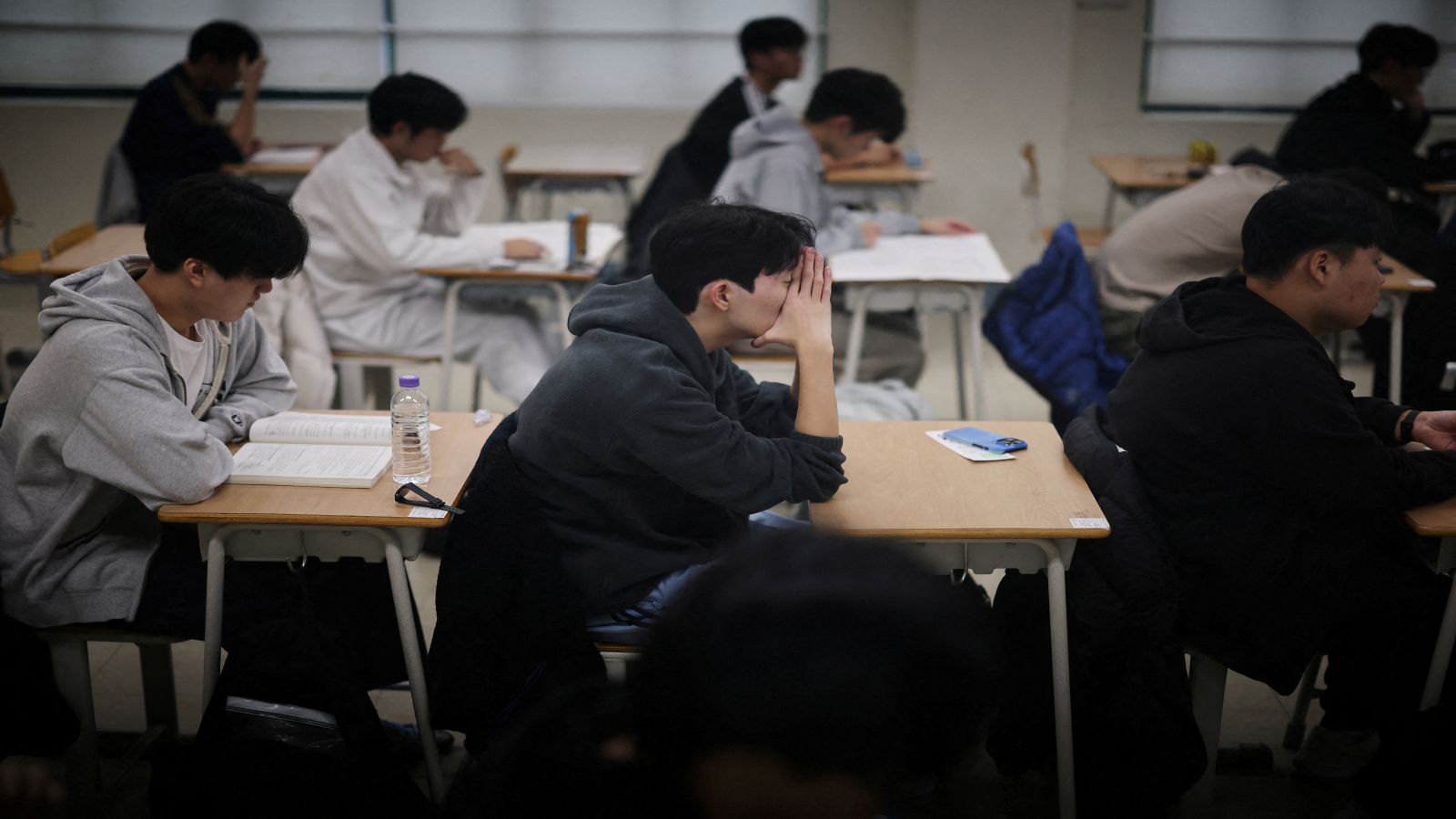
Even a shirt button can look guilty when panic sets in. That's not a joke—it's what over half a million South Korean students faced when last-minute anti-AI rules turned the country's make-or-break college entrance exam into a high-wire act of suspicion.
On November 22, 2026, South Korea's Education Minister Choi Kyo-jin resigned after rushing out tight anti-cheating measures for the annual College Scholastic Ability Test, widely known as the Suneung. President Lee Jae Myung accepted the resignation quickly and ordered a broad review of how national exams are run and policed. You might also find this related story insightful: Why The Financial Times Still Rules The Brussels Bubble.
Honestly, the resignation isn't the real shock here. The real shock is how fragile a once-a-year standardized test looks the moment generative AI and wearable cameras enter the room.
How a Tax Exam Scandal Sparked a Suneung Scramble
To understand why the college entrance exam got caught in a security spiral, you have to look back just days before test day. Earlier in November 2026, the top scorer on a national tax-accountant exam confessed publicly to using a miniature camera, a smartphone, and generative AI to beat the test across multiple sittings. Reporting from outlets like The Korea Herald and The Guardian highlighted how staggering those numbers looked—near-top marks that raised eyebrows before a confession made the method unmistakable. As highlighted in latest reports by Reuters, the implications are notable.
Once that hit the news, trust took a direct hit. In South Korea, standardized exams aren't just school milestones; they steer university admission, career doors, and social mobility for years. When a high-stakes credential looks gameable with a tiny camera and a chatbot, politicians feel immediate heat to do something right away.
So officials scrambled. Instead of rolling out a vetted, calm security update months in advance, rules shifted right before the exam. Items that had been allowed one day were suddenly off-limits the next. Proctors checked glasses and clothing buttons for hidden gear, Wi-Fi faced tight restrictions, and authorities pushed out emergency alerts during testing hours to catch phones students hadn't turned in.
That last-minute rush is where things went sideways. When you change stationery and inspection rules at the eleventh hour, honest students spend mental energy worrying about accidental violations instead of solving math or reading passages. Worse, officials caught 111 cases involving prohibited electronic devices—roughly half tied to emergency alerts buzzing unsubmitted phones—while lawmakers pushed ideas like 10-year bans from retaking the exam and criminal complaints for smart-glasses or hidden-camera cheats.
Why Last-Minute AI Cheating Curbs Backfired
I've watched plenty of institutions try to patch a high-tech problem with blunt, late-stage rules, and it rarely goes smoothly. Security theater feels decisive in a press conference. In a crowded exam hall, it often creates friction for the wrong people.
Take the crackdown on everyday items like pens, erasers, correction tape, and even clothing details. Micro-cameras and wireless earpieces are small enough to hide in clever places, sure. Still, banning familiar tools at the last second forces students to adapt on the fly during one of the most stressful days of their lives. A student already trembling through an eight-hour exam shouldn't have to wonder whether a slightly unusual pen or shirt clasp will trigger an argument with a proctor.
Then there's the detection gap. A human proctor walking aisles can spot obvious phones or awkward movements, yet tiny cameras paired with AI assistants are built to stay quiet and out of sight. Even statistical score checks tend to flag anomalies after the fact rather than stopping live cheating in real time.
Choi Kyo-jin's own words during a parliamentary hearing only fueled the storm. Asked whether he felt confident authorities could catch would-be cheaters on exam day, the 72-year-old minister said he wasn't confident due to his age. Critics pounced immediately. Whether he meant that as candid humility or a plain admission of a generational tech gap, it sounded like the person running the system didn't trust his own defenses.
By the time Choi stepped down—acknowledging that preparation fell short and confusion hit both students and test staff—the frustration wasn't just about one exam. It was about leadership under pressure. As the Korean Teachers and Education Workers Union noted after his exit, understanding classrooms from the inside doesn't automatically solve large-scale administrative stumbles when a crisis hits fast.
What This Crisis Means for High-Stakes Testing
If you think this is strictly a South Korean headache, you're kidding yourself. Every school board, licensing agency, and university admissions office on earth is staring down the exact same question: how do you test people fairly when AI can answer complex prompts in seconds?
For years, high-stakes testing relied on a simple bargain. Lock students in a room, take away textbooks and phones, watch the clock, and grade everyone on the same sheet. That bargain assumes the hardest part of cheating is smuggling paper or texting a friend outside.
Pocket-sized cameras, smart eyewear, and fast multimodal AI blow up that assumption. Worse, an over-aggressive response carries its own cost. If security gets so heavy-handed and erratic that innocent students get falsely accused, rattled, or barred from future sittings, fairness breaks from the other side.
President Lee's directive to inspect national qualification exams and review related laws points toward a bigger reckoning. Punishing cheats harshly—through multi-year bans or criminal charges—might deter some risk-takers. Yet penalties alone don't fix outdated exam designs that reward regurgitating facts easily handled by software.
Practical Next Steps for Students, Parents, and Educators
If you're sitting on the sidelines of an exam system—whether you're taking a major test, guiding a student, or designing assessments—don't wait for a scandal to show where the cracks are.
- Read official rule updates the day they drop, not the morning of the test. Check official ministry or testing-board notices daily in the final two weeks before an exam so last-minute bans on calculators, pens, glasses, or electronics never catch you off guard.
- Keep test-day gear boring and minimal. Stick to plain, transparent, or explicitly approved items, avoid bulky accessories or smart wearables near testing centers, and turn in prohibited devices cleanly before seating begins.
- Document everything if a dispute happens. If a proctor questions a device, item, or seating rule, stay calm, follow instructions so you aren't cited for defiance, and write down exact times, room details, and names right afterward in case you need to appeal.
- Push schools and exam makers to test real reasoning, not just recall. If you teach or design exams, mix in oral defenses, process checks, in-person problem walkthroughs, or open-ended applied tasks that AI can't easily fake without showing the student's actual thinking.
South Korea's college entrance exam didn't just lose a minister over AI cheating curbs. It exposed how quickly old testing habits can buckle when technology moves faster than policy.