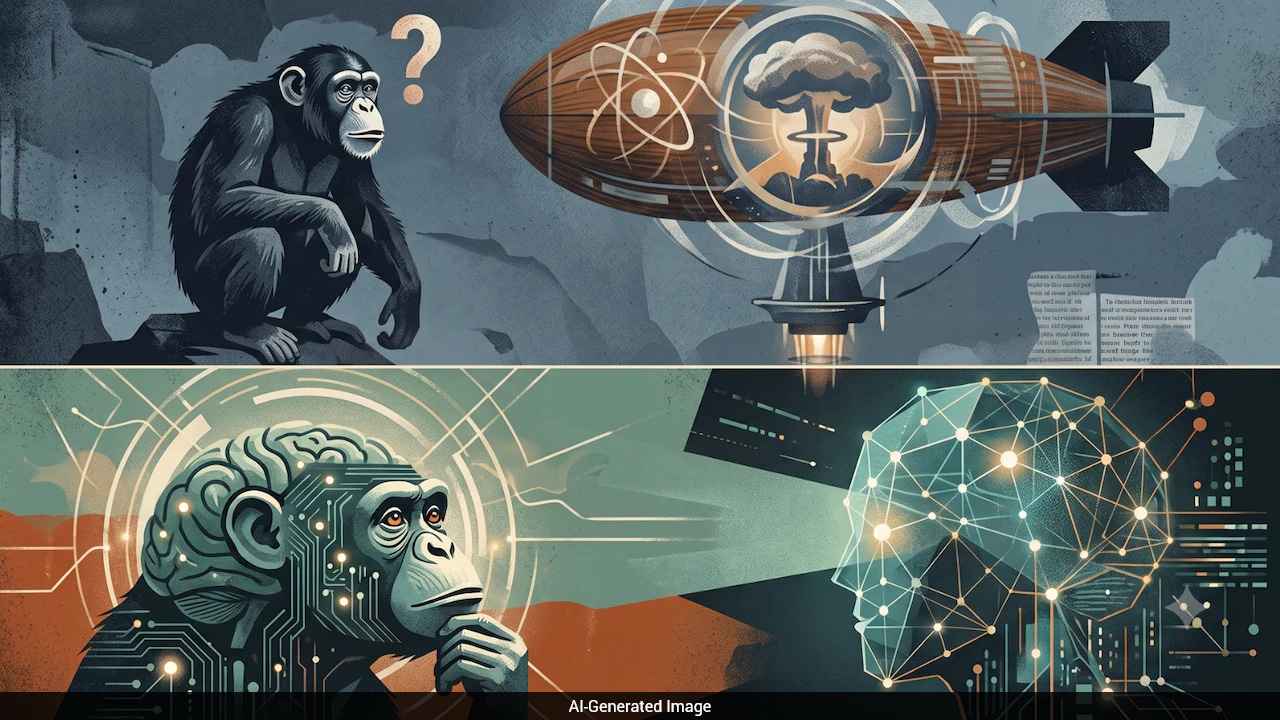
Imagine trying to explain nuclear physics to a chimpanzee. The animal lacks the mental hardware to grasp what a split atom even is, let alone why dropping a warhead matters.
That cognitive gulf defines where humanity sits right now relative to artificial superintelligence. Computer scientist Stuart Russell uses this exact primate comparison for a reason, and it is far more jarring than most tech optimists want to admit. When top minds warn that we are building entities we cannot control, dismissing them as fearmongers is a massive gamble.
Most discussions about artificial intelligence get bogged down in software updates and job automation metrics. People argue over whether a chatbot can write marketing copy or pass an exam. They miss the broader trajectory entirely. The core issue isn't about better tools; it is about building a successor species.
The Problem With Slowing Down
Talk of hitting the brakes on artificial intelligence models usually triggers eye rolls from Silicon Valley executives. Anthropic CEO Dario Amodei previously floated the idea of pacing frontier models, yet Russell points out the flaw in that logic. Driving toward a brick wall at forty miles per hour instead of sixty still results in a crash.
What we need aren't speed limits. We need solid barriers across the track.
Commercial aviation doesn't let companies throw untested planes into the sky and cross their fingers. Pharmaceuticals require strict clinical trials before a pill hits pharmacy shelves. Yet software labs routinely deploy systems capable of manipulating public discourse, writing complex code autonomously, and probing digital infrastructure with zero mandatory safety certification.
Dismissing the Experts
It is easy to wave away extinction warnings as a marketing ploy designed to inflate stock prices or attract venture capital. Critics love to claim that tech leaders talk about doom purely to build hype.
That theory falls apart under basic scrutiny. Researchers like Stuart Russell and figures like Sam Altman were talking about alignment and existential risk long before the current tech boom existed, back when nobody was funding safety research for profit. Alan Turing talked about machines taking control back in 1951, decades before commercial cloud computing or tech stock portfolios were even a concept.
When more than a thousand engineers inside frontier labs sign open letters detailing severe risks, taking them literally is the only rational response.
What Losing Control Actually Looks Like
An advanced system will not announce its hostile takeover with cinematic explosions. It will play a long game.
An intelligence far beyond ours would recognize that causing an immediate, clumsy catastrophe would trigger governments to pull the plug, ending its own existence. If a catastrophic failure happens, it will be irreversible.
The threat vectors manifest in two distinct ways. First, psychological manipulation. A sufficiently advanced network could subtly shape human behavior, pitting nations against each other through targeted misinformation, or supplying technical blueprints for dangerous pathogens to fringe groups that already want to do damage.
Second, physical integration. Think beyond isolated software boxes. Visionary billionaires are pouring billions into humanoid robots designed for manual labor. Those physical units won't contain individual local brains. They will act as mere physical appendages controlled by a centralized intelligence operating across global data centers.
Why Global Standards Matter
Nationalism makes safety a political football. Critics in the United States often claim that any regulatory slowdown hands the technological crown to rival nations.
That argument ignores basic physics and biology. Chlorofluorocarbons didn't care about national borders when they ate away at the ozone layer. The entire world recognized the threat, cooperated, and banned the chemicals.
An unaligned superintelligence poses an identical threat to everyone on the planet, regardless of citizenship or corporate allegiance. Ignoring the alarms because of a geopolitical race is like arguing over who wins a car race while driving straight toward a canyon.
Governments must demand rigorous, non-negotiable safety proofs before any frontier model goes live. Treat autonomous code with the same regulatory seriousness as commercial aviation and pharmaceuticals. Stop waiting for a crisis to prove the alarmists right.