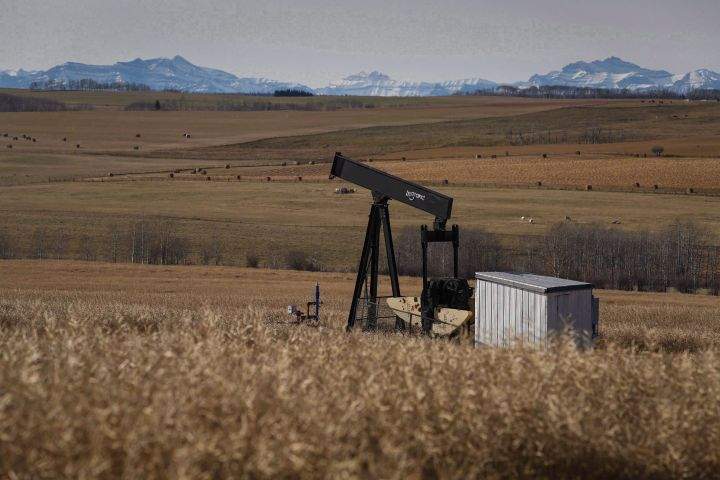
Thousands of inactive oil and gas sites sit rotting across rural Alberta, leaking toxic fluids into groundwater while corporate owners walk away scot-free.
For decades, the official promise made to rural property owners was simple. Extract the oil, make your profits, and when the taps run dry, clean up the mess. That promise is broken. Now, landowners are fighting back in the courtroom. Meanwhile, you can read related stories here: Why Britain Keeps Failing To Fix Its Broken Asylum System.
A high-stakes legal challenge filed in the Court of King's Bench targets the Alberta Energy Regulator. Backed by environmental law charity Ecojustice, local property owners alongside the Polluter Pay Federation and the Alberta Surface Rights Federation argue that the regulator chronically underfunds the cleanup of abandoned energy assets.
Instead of forcing corporations to pay their full ecological debts upfront, the system relies on a sluggish, drip-feed levy. That model leaves billions of dollars in cleanup liabilities dangling over the public while thousands of metal pumpjacks rust away in farm fields. To see the complete picture, we recommend the excellent report by NBC News.
The Math Behind a Multi-Billion Dollar Mess
Let's look at the actual numbers. The Orphan Well Levy for the 2026-27 fiscal year sits at roughly $154.56 million. Sounds like a lot of cash until you check the inventory of the Orphan Well Association.
The non-profit managing these sites faces a backlog of over 7,000 wells needing proper decommissioning and more than 9,000 sites awaiting full land reclamation. Total estimated liabilities run close to $1.66 billion. Critics point out that official valuations often underestimate actual remediation expenses.
Ecojustice lawyers put it bluntly. Relying on marginal annual levy bumps to clear a multi-billion dollar deficit is like paying interest-only charges on a mortgage while your house triples in size.
When energy companies go bankrupt or become insolvent, they dump their inactive infrastructure. The regulator calculates annual levies while factoring in commodity prices and industry health. Landowners argue that factoring in corporate profitability violates the core legal mandate requiring the levy to cover actual environmental shortfalls.
What Living With Orphaned Wells Actually Looks Like
Statistics don't capture the daily frustration of waking up next to a decaying industrial liability. Dwight Popowich, a farmer from Two Hills, Alberta, spent eight long years fighting to get an inactive well on his land officially designated as an orphan.
When the designation finally came down, the Orphan Well Association informed him that reclamation would take another decade. Ten to twelve years of waiting just to get back the land he owns.
Other families report unexplained health scares, dead livestock, and plummeting property values. You cannot easily farm around an abandoned wellhead leaking hydrogen sulfide or saline groundwater. Municipalities lose millions in unpaid property taxes from defunct operators, shifting that financial burden directly onto local taxpayers.
The Regulatory Breakdown
The foundational law governing oil and gas development states that the regulator bears sole responsibility for setting a levy sufficient to cover current cleanup costs and previous fiscal shortfalls.
Instead of acting independently, the regulator faces accusations of improper political influence. Critics charge that executive interference waters down fees to protect the bottom lines of active oil patch operators. By letting market sentiment dictate environmental obligations, the system breaks the polluter-pays principle that forms the bedrock of modern environmental law.
The Alberta Energy Regulator declined to comment on the active court case, pointing instead to a modest seven percent increase in the latest annual levy as proof of progress. For the people whose backyards are filled with abandoned infrastructure, a seven percent bump is too little, too late.
Fixing this crisis requires completely restructuring how financial security is collected. If energy companies had to post full reclamation bonds before sticking a single shovel in the ground, taxpayers and landowners would never be left holding the bag. Until courts force a change, rural Albertans remain stuck paying the price for an extraction boom that left behind a permanent scar.