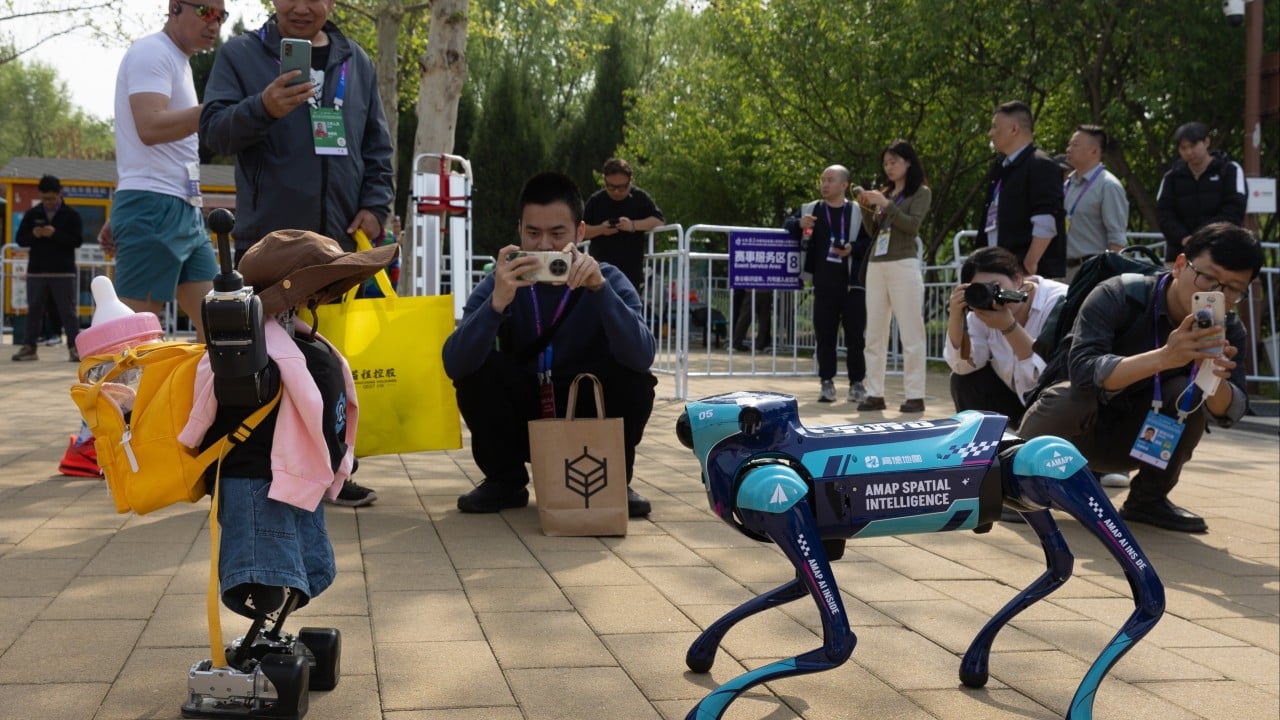
Roboticists have been building hardware in one corner and software in another for decades. Engine mechanical teams design legs, arms, and joints. Computer science departments write vision algorithms. Machine learning teams train large vision-language models on massive datasets. Then everyone tries to stitch these isolated pieces together and wonders why a $100,000 humanoid robot trips over a doorway or fails to pick up an egg without crushing it.
Alibaba's research ecosystem is pushing past that old, fragmented approach. Instead of running separate AI systems for visual perception, spatial reasoning, movement planning, and tactile processing, they are working on unified architecture models. The idea is simple. Give the machine a single neural framework that acts as brain, sensor processor, and motor control center simultaneously.
It's about time.
Why Separate AI Systems Fail in Physical Robots
If you look at traditional robotics, the pipeline looks like a game of telephone.
A camera takes a picture. An image-recognition model analyzes the photo and decides, "That is an apple." A spatial reasoning system calculates where the apple is relative to the arm. A movement planner calculates the angles needed to reach the apple. Finally, a physical controller sends voltage signals to the motors in the arm.
Every single step in that chain introduces latency. Worse, every step loses information.
If the camera misinterprets a reflection, the motor controller has no idea. It just executes a move toward a spot that doesn't exist. If the hand slips while grabbing the object, the vision system might not catch the movement until it's too late because the image processing loop runs too slowly compared to physical reality.
Real life happens in milliseconds. Physics doesn't wait for multi-step software handshakes.
Unified systems collapse that entire chain into a single feed-forward process. When visual signals, physical feedback, and motor commands run through the exact same network weights, the machine stops guessing what its hands are doing. It feels them in real time.
How Unified Architectures Handle Spatial Reality
Most software models built over the last few years are purely digital. ChatGPT doesn't know what gravity feels like. It doesn't know that a ceramic mug breaks when dropped, except as a text concept.
For an AI to operate a physical body in a real room, it needs spatial grounding. It has to map 3D physical spaces directly to physical actions without relying on endless human coding for every possible scenario.
+--------------------------------------------------------------+
|                     UNIFIED AI ENGINE                        |
|                                                              |
|  [ Visual Sensors ]    \                     / [ Motors ]    |
|  [ Tactile Feeds  ] --->  [ Single Network ]  ---> [ Joints ]    |
|  [ Spatial Depth  ]    /                     \ [ Limbs  ]    |
+--------------------------------------------------------------+
When you merge sensory input directly with motor output inside the same architecture, three major technical bottlenecks disappear:
- Latency drops massively. You eliminate the software translation layers between vision software and motor controllers.
- Context retention improves. The robot doesn't lose sight of what it was doing halfway through a complex task.
- Adaptability scales. If an object shifts slightly while the arm is moving, the system adjusts instantly because perception and movement are the exact same loop.
This isn't just about making warehouse arms faster. It's the foundational requirement for general-purpose robotics.
The Big Tech Race for Embodied Intelligence
Alibaba isn't working in a vacuum here. Every major tech giant is hunting for the right framework to scale embodied AI—the industry term for artificial intelligence operating inside a physical chassis.
Tesla is taking an end-to-end neural network approach with Optimus, attempting to map raw video directly to motor outputs. Google DeepMind has been pushing its RT (Robotics Transformer) series to translate web-scale text and images into physical actions. Chinese tech hubs are pushing heavily into humanoid manufacturing supply chains, pairing advanced local hardware with proprietary AI models.
The winner won't necessarily be the company with the flashiest demo video. Demos are easy to stage in controlled lighting with pre-mapped rooms.
The winner will be whoever builds a system that copes with unpredictable messiness. Wet floors, dimly lit rooms, lightweight plastic cups that deform under pressure, kids dropping toys in the hallway.
A robot running four disconnected software modules breaks down the moment something unexpected happens. A unified architecture has a fighting chance because it processes the environment holistically.
What Real World Deployment Requires Next
We're still a long way from having autonomous humanoid helpers in every home or complex job site. Moving from impressive lab research to factory deployment requires solving three massive problems that software engineers often underestimate:
- Power Efficiency: Running high-parameter multimodal AI models directly on a mobile robot burns through battery power rapidly. Compute must get dramatically more efficient.
- Tactile Precision: Vision isn't enough. Robots need precise force-feedback sensors embedded in their fingertips so they know exactly how hard they are pressing.
- Safety Boundaries: An AI that directly controls heavy mechanical limbs needs hard hardware-level circuit breakers, not just software guardrails, to prevent accidental damage or harm.
If you want to track where robotics is actually going over the next three years, stop looking at how smoothly a robot walks in a polished YouTube video. Start looking at how many separate software systems it uses to make decisions.
The machines that win will be the ones whose brains and bodies speak the exact same digital language from day one.
Immediate Steps to Track Embodied AI Progress
To stay ahead of where this tech is moving, skip the marketing hype and track these core metrics:
- Watch open-source robotics benchmarks like Open-X-Embodiment to see how multi-robot datasets are evolving across different physical frames.
- Monitor compute specs on new robotic chassis, specifically whether inference happens on-device or via cloud connections with inherent latency.
- Follow sensor integration news, specifically tactile feedback skins and direct motor-encoder software loops.