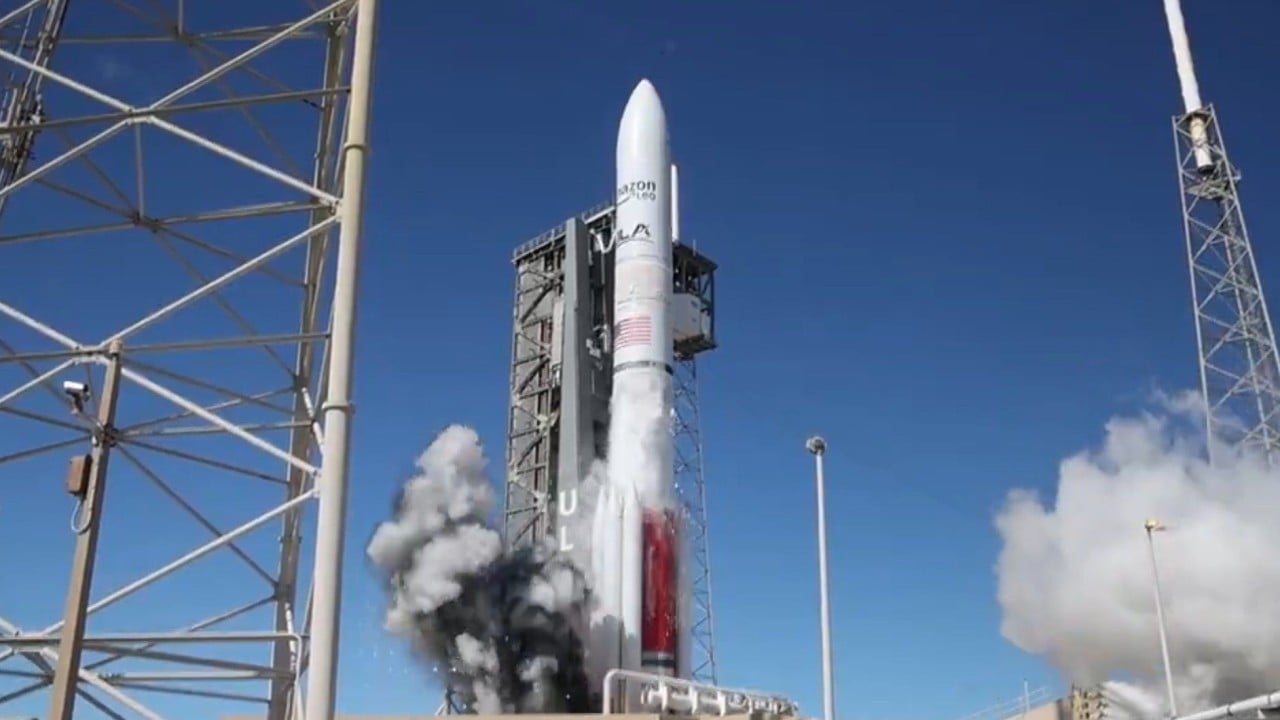
Ten minutes into what was supposed to be a triumphant return-to-flight mission, United Launch Alliance hit a brick wall. A Vulcan rocket carrying 40 internet satellites for Amazon Leo suffered a fatal anomaly over Cape Canaveral, plunging millions of dollars worth of hardware and months of hard work into the ocean.
If you're tracking the high-stakes race to blanket the globe in space-based broadband, this disaster is a massive blow. ULA has operated for two decades as one of the most reliable names in American aerospace, born from the joint venture of Boeing and Lockheed Martin. Until today, they had never suffered a total mission failure. That streak is gone, and Amazon's grand plans to challenge SpaceX's Starlink network just hit another frustrating roadblock.
What Actually Happened at Cape Canaveral
The launch sequence started normally enough. The Vulcan rocket thundered off Space Launch Complex 41 with six solid rocket boosters strapped to its sides—the heaviest configuration the vehicle had ever flown. It was meant to prove that ULA had ironed out the nozzle reliability issues that plagued previous flights earlier in the year.
Ten minutes into the climb, telemetry went sideways. The vehicle suffered an unexpected anomaly and failed to deliver the payload into orbit. ULA executives admitted they didn't have immediate answers because the failure happened so fast.
The consequences go far beyond a single lost flight. This was Vulcan's fifth flight overall and its first mission in nine months, following a lengthy pause to investigate booster and BE-4 engine quirks. Now, the rocket is grounded again. An indefinite investigation means ULA cannot maintain the regular launch cadence Amazon desperately needs.
The Pressure on Amazon Leo
Amazon is trying to build a massive low-Earth orbit constellation, formerly known as Project Kuiper. The ultimate goal requires deploying more than 3,200 satellites by mid-2029 to meet strict regulatory milestones and start commercial service properly.
Before this flight, Amazon had successfully deployed hundreds of spacecraft, but they are miles behind their competitors. Losing 40 satellites at once stings, especially when every single launch slot counts against strict FCC deadlines.
To hedge its bets, Amazon didn't put all its eggs in one basket. The company booked flights across multiple providers, including Blue Origin's New Glenn rocket, the European Ariane 6, and SpaceX's Falcon 9. But ULA was supposed to be a core workhorse for heavy lifting. When your primary ride-share provider hits a wall, your entire timeline shifts.
What Happens Next for ULA and Space Logistics
The aerospace industry moves fast, but accident investigations crawl. Federal regulators and ULA engineers will spend weeks tearing through telemetry logs to find out why the vehicle failed at the ten-minute mark. Was it an interaction between the upgraded solid boosters and the core stage? Did the BE-4 engines misbehave?
Mark Peller, who took over as ULA CEO earlier this year, faces the toughest test of his career. Regulators have already paused Vulcan for national security payloads once before due to booster nozzle glitches. Another lengthy grounding risks eroding confidence among commercial clients who need certainty to build out multi-billion-dollar networks.
Amazon isn't slowing down its broader calendar. Their next scheduled launch is an Ariane 6 mission carrying another batch of satellites, keeping the pressure on despite Sunday's disaster. Space is unforgiving, and today's fiery failure is a stark reminder that even the veterans can stumble when pushing into orbit.


