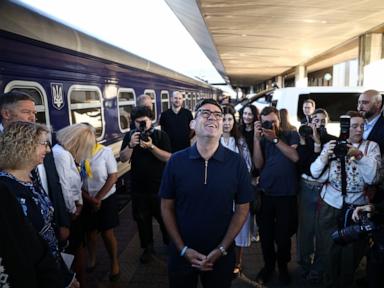
British Prime Minister Andy Burnham stepped off a train in Kyiv on Monday morning, marking his very first international trip since taking office. He didn't pick a quiet diplomatic summit for his debut. Instead, he chose the Ukrainian capital on its Independence Day, just as the country marks 35 years since breaking away from the Soviet Union.
He wasn't alone. A heavy wave of European heavyweights rolled into the city at the same time. European Council President Antonio Costa, Moldovan President Maia Sandu, Luxembourg Prime Minister Luc Frieden, and Estonian President Alar Karis all made the journey, alongside visiting representatives from nations like Denmark, Finland, Latvia, Lithuania, and Norway.
The optics are loud, but the policy shifts behind closed doors matter much more.
The Missile Tech Transfer Deal That Changes Local Production
If you look past the standard photo ops at the railway station, Downing Street dropped a major operational update alongside the visit. Burnham's office announced that the U.K. government has officially authorized defense contractor MBDA to hand over classified technical data.
What does that actually mean?
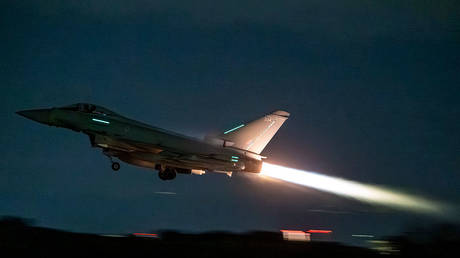
The data relates directly to British components used inside the SCALP long-range missile—which is the French equivalent of the U.K.'s Storm Shadow. By releasing these classified specs, London is clearing the path for France and Ukraine to establish local assembly and production lines for the weapon directly inside Ukrainian territory.
Instead of shipping every single finished missile from Western stockpiles, Ukraine moves closer to building and maintaining its own long-range strike capabilities on home soil. This decision also pairs with Britain's ongoing work on Project Brakestop, an initiative aimed at churning out low-cost advanced long-range strike options.
Co-Chairing the Coalition of the Willing
Beyond the missile deal, Burnham is in Kyiv to co-chair a meeting of the international coalition of the willing alongside Ukrainian President Volodymyr Zelenskyy.
This coalition functions as the core engine room for nations coordinating long-term military hardware, financial backing, and intelligence sharing. While some leaders joined the sessions remotely via a hybrid format, the physical presence of figures like Burnham and Costa in Kyiv sends a direct signal to Moscow as the war grinds forward.
Let's be clear about the financial scale here. Britain remains one of Kyiv's heaviest backers, having committed roughly twenty-five billion pounds in total support since the full-scale invasion began, with sixteen billion of that dedicated purely to military aid.
What Independence Day Means for Ukraine Right Now Marking 35 Years
Hitting 35 years of independence carries a bitter weight for a nation fighting daily to protect its borders. Ukrainian Foreign Minister Andrii Sybiha met the incoming leaders at the platform, emphasizing that these visits prove international alliances haven't suffered from fatigue.
For Burnham, drawing comparisons between Britain's historical battles and Ukraine's current defense has been a staple of his early rhetoric. Yet speeches only go so far. The real test of this Independence Day visit will be how fast those local missile assembly lines spin up and whether the coalition of the willing can translate handshakes into sustained air defense and electronic warfare countermeasures, like the electronic jamming technology shared during Zelenskyy's recent trip to London.
Check local updates and official defense ministry briefings for rolling announcements as the coalition meetings conclude in Kyiv today.