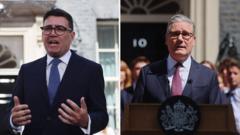
Keir Starmer is out. Andy Burnham is in. After weeks of political maneuvering, Starmer formally tendered his resignation to King Charles III at Buckingham Palace, clearing the runway for Burnham to step into 10 Downing Street as the UK's seventh prime minister in a single decade.
Power swapped hands fast. You didn't get a vote, and neither did the wider electorate. Under the UK parliamentary setup, a party in power gets to swap its leader without triggering a general election. But while Westminster insiders are busy rearranging Cabinet seats, the real story sits far outside the capital. Discover more on a similar subject: this related article.
Burnham isn't just taking over a premiership. He's taking over a deeply fractured country and a party that barely survived May's local election losses. Here's what this dramatic handover means for policy, the economy, and your daily life.
How Keir Starmer Lost His Grip on Downing Street
Starmer's exit felt sudden to casual observers, but the foundation had been cracking for over a year. Two years after leading Labour to a historic election victory, his approval ratings hit rock bottom. Voters felt the promised change never materialized. Public services remained stretched, living costs kept climbing, and unforced errors eroded trust. More journalism by The Washington Post explores comparable views on the subject.
The appointment of Peter Mandelson as US ambassador turned into an absolute disaster once Mandelson's ties to Jeffrey Epstein resurfaced. Starmer had to sack him, but the damage stuck.
Then came May's local elections. Labour lost seats across former industrial heartlands to populist anti-immigration contenders. Backbench MPs panicked. When Burnham secured a return to Parliament via the Makerfield by-election, Starmer's fate was sealed.
Starmer announced his intention to resign on June 22. Former Health Secretary Wes Streeting, once viewed as Burnham's main rival for the top job, backed down and endorsed him instead. That turned a potential leadership brawl into a swift coronation.
What Andy Burnham Plans to Do First
Burnham built his reputation as the "King in the North" while serving as mayor of Greater Manchester. He cultivated a working-class hero persona, swapped tailored suits for casual jackets, and picked fights with Whitehall bureaucrats over regional funding.
Now he holds the top job. His first speech outside 10 Downing Street promised an immediate break from previous political models.
Ending Rough Sleeping
Burnham pledged that his first formal directive upon entering No 10 would be an immediate taskforce to end rough sleeping nationwide. He pushed similar housing-first policies in Greater Manchester with partial success, but scaling that strategy across the whole nation will require massive treasury funding.
Scrapping Digital IDs
Starmer's government had quietly floated digital identity schemes to manage immigration and public service access. Burnham made it clear early on that those plans are dead in the water. He views digital ID mandates as an unnecessary intrusion into individual liberty.
Reversing Transport Privatization
Public transit reform sits near the top of his agenda. Burnham brought Manchester's bus network back under public control with the Bee Network. Expect him to push that municipal transport control model across all major English city-regions.
The Brutal Fiscal Trap Awaiting the New Prime Minister
Policy promises sound great on a podium. Facing the Treasury room is a different beast entirely.
Burnham inherits an awful economic reality. UK real GDP growth hovers near 1.1%, public debt remains high, and inflation continues to squeeze household budgets. Markets reacted with a mild sigh of relief when Burnham took over, dropping gilt yields slightly because the leadership uncertainty ended. But that calm won't last without fiscal discipline.
┌─────────────────────────────────────────────────────────┐
│              BURNHAM'S ECONOMIC BALANCING ACT            │
├───────────────────────────┬─────────────────────────────┤
│ PROPOSED EXPANSION        │ HARD FISCAL REALITY         │
├───────────────────────────┼─────────────────────────────┤
│ Regional capital spend    │ Rachel Reeves debt rules    │
│ Public utility control    │ High gilt yields & debt     │
│ Local transit subsidies   │ Pressured day-to-day budgets│
└───────────────────────────┴─────────────────────────────┘
Burnham insists he will honor former Chancellor Rachel Reeves' fiscal rules. He promises not to raise direct rates on income tax, VAT, or National Insurance. So where does the money come from?
It comes from wealth and business. Expect an Autumn Budget targeting capital gains, corporate tax loopholes, and property transfers. He wants to borrow more for long-term capital investments in rail and green energy, while hiking targeted taxes to fund day-to-day spending on NHS waiting lists.
Moving Power Away from London
For decades, political power in Britain lived inside a two-mile radius in Westminster. Burnham wants to shatter that centralized setup.
He spent eight years arguing that Whitehall treats northern cities like second-class regions. His agenda focuses heavily on regional devolution. That means handing regional mayors direct control over skills training, local transport budgets, and housing allocations.
If you run a business or manage property outside London, expect direct regulatory authority to shift toward your regional combined authority. Local mayors will hold far more sway over planning permission and infrastructure spend than ever before.
How to Prepare for the Shift Under Burnham
A new Prime Minister means immediate practical shifts for voters, business owners, and local taxpayers. Don't wait around to see how things shake out.
- Audit your tax positioning before Autumn. Tax increases on assets, capital gains, and corporate profits are almost guaranteed as Burnham tries to cover spending without touching basic income tax. Speak with your financial planner now to understand your exposure.
- Track regional devco grants. If you operate in manufacturing, transport, or green tech, look out for devolved regional funding pots rather than national Whitehall schemes. Local combined authorities in the North and Midlands will control larger capital pools.
- Adjust housing and development strategies. Local planning decisions will lean heavily into social housing quotas and rough-sleeping mandates. Property developers should align their proposals with municipal social housing targets to avoid lengthy appeals.
Burnham promises to be a circuit breaker for Britain. Whether his regional focus can overcome national fiscal drag remains to be seen, but the era of Westminster-centric governance just took a massive hit.