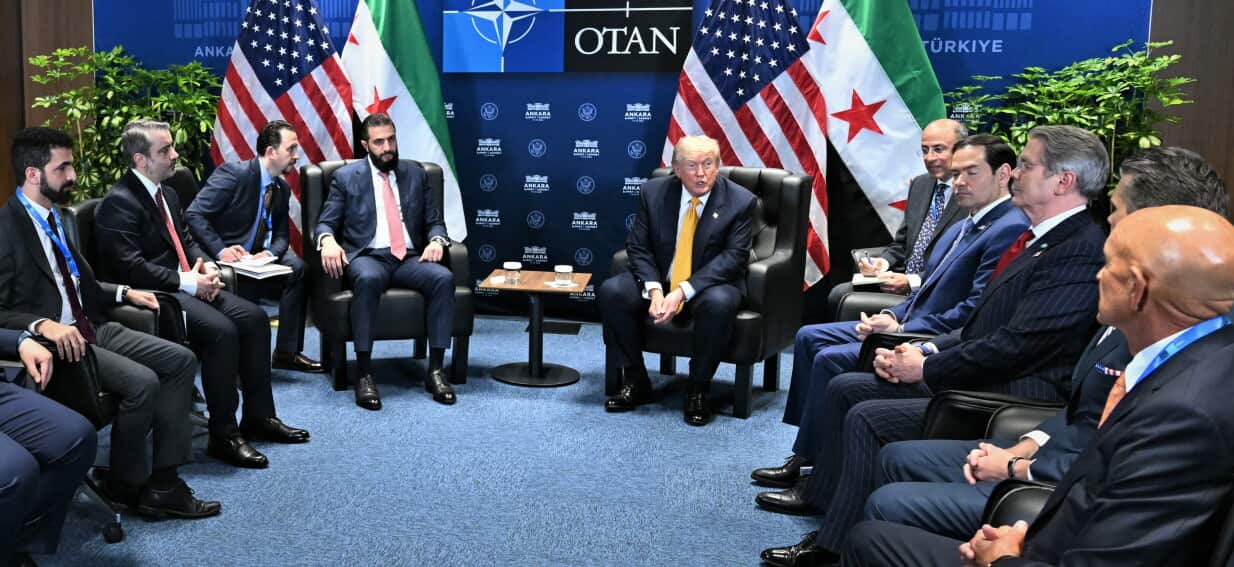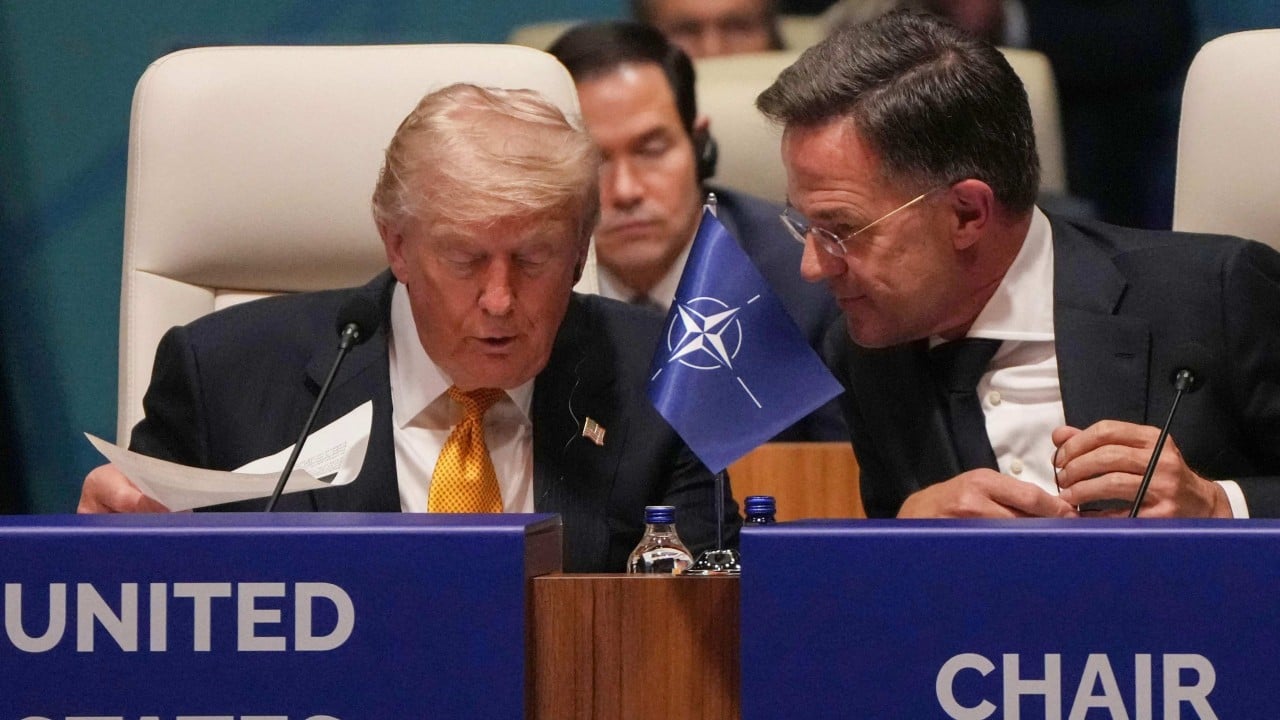
NATO just wrapped up its summit in Ankara, and the official talking points are predictable. Secretary General Mark Rutte stood before the press to declare "a huge sense of unity" and a "tremendously successful" gathering. He pointed to billions of dollars in shiny new defense contracts as proof that the alliance is stronger than ever.
But let's look past the slick PR videos and techno music playing at the Ankara Defense Industry Forum. This entire summit wasn't just a routine meeting of western leaders. It was a coordinated, high-stakes performance staged for an audience of one: Donald Trump.
With Trump back in the White House and openly hostile to traditional foreign aid, European allies and Canada are terrified of a US exit or a total freeze on security commitments. They didn't just come to Turkey to talk strategy. They came with receipts, desperately trying to prove they aren't freeloading on the American taxpayer.
The Trump Trillion and the Push to Five Percent
For years, US presidents complained about European allies failing to pay their fair share. Trump turned that complaint into an existential threat for the alliance. The response from NATO headquarters has been a massive pivot toward treating defense spending like a corporate ledger.
Rutte recently pitched a chart labeled "The Trump Trillion" to show that European allies and Canada have poured $1.2 trillion into defense since 2017. At the Ankara summit, the numbers got even more aggressive. Just a year ago in The Hague, the alliance agreed to a target of spending 5% of GDP on defense by 2035. According to Rutte, European members and Canada are already hitting an average of 4% of GDP.
To put that into perspective, European allies and Canada increased their core defense spending by over $139 billion in 2025 alone. Combined with 2026 projections, that's $258 billion in extra investment. It's a massive shift from the pre-2022 era of stagnant military budgets, and it's designed to show Washington that Europe is finally heeding the call to handle its own backyard.
Splurging Billions to Prove Firepower
You can't just show a businessman a spreadsheet; you have to show him the product. That's why the first day of the summit was transformed into a massive defense industry trade show. Over $50 billion in procurement deals and arms contracts were rolled out to show that cash is turning into real combat capability.
Some of the biggest announcements at the summit included:
- Replacing the aging AWACS fleet: A 10-nation consortium announced a deal with Swedish manufacturer Saab to supply up to 10 new GlobalEye surveillance aircraft to replace NATO’s 50-year-old radar planes.
- The Triton drone expansion: A four-country coalition signed on to buy up to five new Triton surveillance drones to beef up maritime and border intelligence.
- Airbus refueling aircraft: Representatives from 15 nations took the stage to announce a joint buy of air-to-air refueling and transport planes.
- Fuel infrastructure overhaul: NATO announced a €27 billion ($30.8 billion) project to completely modernize its fuel supply chain, pipelines, and storage facilities, specifically targeting the vulnerable eastern flank near Russia.
Host nation Turkey also used the spotlight to showcase its own exploding defense sector. Turkish giants like Aselsan were front and center, proving that Europe can build its own high-tech military gear without relying entirely on American factories, even though Rutte took care to mention these deals support jobs on both sides of the Atlantic.
Funding Ukraine on a Eurocentric Lifeline
The elephant in the room throughout the Ankara summit was the war in Ukraine, which has now dragged on for over four years. Trump has largely choked off US military aid to Kyiv, forcing European leaders to step into the void.
While Ukrainian President Volodymyr Zelensky attended the summit to personally plead for more air defense, European diplomats quietly structured a massive backup plan. Allies committed to providing at least €70 billion ($76 billion) in military aid to Kyiv annually for both 2026 and 2027. That totals a massive €140 billion package designed to keep Ukraine afloat without relying on a single dime from the White House.
It's a risky strategy. While Europe has the cash, it still lacks the deep industrial capacity to churn out artillery shells and missile interceptors at the scale the US military can. They're betting that the €27 billion fuel line upgrade and the €50 billion in new weapons contracts will scale up factories fast enough to prevent a frontline collapse.
The Erdogan Factor and Missing Media
Holding the summit in Ankara wasn't an accident. Turkish President Recep Tayyip Erdogan has maintained a surprisingly functional relationship with Trump, making him the ultimate diplomatic buffer for a nervous alliance.
Trump publicly praised Erdogan during the summit, calling him a "friend" and a "strong leader" governing a great military country. European diplomats openly admitted they relied on Erdogan to keep Trump in check and prevent the kind of explosive, alliance-threatening outbursts that characterized previous summits.
But the venue choice brought its own ugly compromises. The Turkish government faced heavy criticism for barring opposition media outlets from covering the summit. When pressed on the press ban, Rutte gave a typical bureaucratic dodge, stating that it's important for media to attend major events but refusing to directly condemn the host nation. It's a clear sign of how much leverage Turkey holds right now inside the alliance.
What This Means for Global Security
Don't let the corporate-style celebration fool you. NATO is in a state of frantic transition. The alliance is trying to pull off a defense industrial revolution while navigating a fragile geopolitical landscape where Russia is viewed as a permanent threat, Iran is actively violating ceasefires, and the US is demanding Europe stand on its own feet.
If you want to track whether the alliance is actually achieving the independence it flashed in Ankara, stop reading the communiqués and watch these specific benchmarks over the coming months:
- Monitor the delivery timelines of the Saab GlobalEye and Triton drone contracts. Signing a contract is easy; getting high-tech surveillance platforms built and deployed across a fragmented European defense market usually takes years of bureaucratic wrangling.
- Watch the implementation of the €27 billion fuel supply chain upgrade on the eastern flank. If construction on pipelines and storage facilities lags, NATO's ability to move heavy armor to defend Baltic members remains a logistical nightmare.
- Track the actual disbursement of Europe’s €140 billion Ukraine aid package. European nations must prove they can source and deliver heavy munitions independently of US stockpiles before Ukraine runs completely out of air defense interceptors.