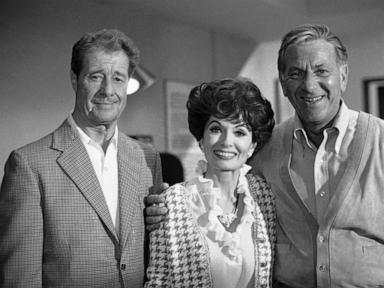
Hollywood just lost one of the final living links to its classic studio system. Ann Blyth passed away on June 24, 2026, at her home in Rancho Santa Fe, California, at the age of 98. Most casual film fans know her for one single, breathless moment: the shocking slap she delivered to Joan Crawford in the 1945 masterpiece Mildred Pierce.
That performance earned her an Academy Award nomination at just 17 years old. It also permanently stamped her into the minds of moviegoers as Veda Pierce, the most venomous, status-obsessed monster of a daughter ever put on celluloid.
But sticking only to that one iconic role misses the point of her entire life. In reality, Ann Blyth was an accomplished operatic soprano, a survivor who fought back from a catastrophic accident that nearly paralyzed her, and an actor who willingly walked away from the camera at the absolute height of her fame. She didn't fit the typical Hollywood mold because she refused to let the town define her.
Standing Up To Joan Crawford
When director Michael Curtiz began casting Mildred Pierce, he wasn't looking for a sweet girl. He needed someone who could project raw, icy cruelty. Dozens of established young starlets, including Shirley Temple, lined up for the part of Veda.
Blyth was a relative newcomer, signed to Universal for light musical comedies. Her agent pushed her to test for the part anyway. What won her the role wasn't just her talent, but her utter lack of intimidation when sitting across from a powerhouse like Joan Crawford.
The chemistry between the two was immediate. In the famous scene where Veda sneers at her mother’s working-class origins and slaps her across the face, Blyth didn't pull her punches. Decades later, Blyth recalled how terrifying it was to hit a legend of Crawford's stature, yet Crawford herself insisted on doing the screen test and the scenes with full intensity. That willingness to go toe-to-toe with an industry titan made the film work. Crawford won her only Oscar for the movie, and Blyth became a star overnight.
Film historians often point out that while Mildred Pierce belongs to Crawford, Blyth provides the steel structure that holds the melodrama together. She played a sociopath so convincingly that audiences had a hard time separating the actress from the character. Fan magazines at the time ran articles trying to reassure the public that "Angelic Annie" was actually a sweet, devout teenager who wouldn't dream of hurting her mother.
The Accident That Almost Ended Everything
Right as her career should have skyrocketed, disaster struck. In 1946, while on vacation in Snow Valley in the Southern California mountains, Blyth suffered a broken back in a severe toboggan accident.
The industry assumed her career was over before it really started. She spent seven grueling months wrapped in a heavy body cast and another seven months confined to a wheelchair.
Instead of sinking into despair, she leaned heavily on her faith and quiet determination. She later said that the busy, exciting world she knew had faded away, forcing her life to slow down to small things.
Her recovery was a testament to her grit. When the studio put together her dress for the Academy Awards ceremony, she was actually wearing a heavy back brace hidden underneath the fabric. She returned to work before she could even walk properly. In the gritty 1947 prison drama Brute Force, director Jules Dassin filmed her scenes specifically to accommodate her physical limitations, keeping her seated or in a wheelchair. She didn't ask for pity; she just wanted to act.
The Lyric Soprano Underneath The Drama
Hollywood executives often try to keep actors in a specific box. Because she succeeded so wildly as a villain, studios wanted more of the same. But Blyth had a secret weapon: a pristine lyric soprano voice.
Before she ever set foot in front of a movie camera, she spent three years training and performing with the San Carlo Opera Company. She had a genuine musical theatre pedigree, having debuted on Broadway at age 13 in Lillian Hellman's anti-Nazi drama Watch on the Rhine.
During the 1950s, she actively pivoted away from dark film noir and into grand MGM musicals. She starred opposite Mario Lanza in the massive box-office hit The Great Caruso in 1951, where she introduced the classic song The Loveliest Night of the Year. She went on to headline major musical productions like Rose Marie, The Student Prince, and Vincente Minnelli’s Kismet.
Her versatility was astonishing. One week she was playing a younger version of Regina Hubbard—the character made famous by Bette Davis—in Another Part of the Forest. The next, she was playing a literal mermaid opposite William Powell in the fantasy comedy Mr. Peabody and the Mermaid. She could do it all, yet she never let the studio bosses dictate her worth.
Walking Away On Her Own Terms
By 1957, Blyth did something almost unheard of for a major star under the age of 30: she walked away from feature films entirely. Her final movie role was the title character in The Helen Morgan Story opposite Paul Newman.
She didn't leave because of a lack of offers. She chose her family over fame. In 1953, she married Dr. James McNulty, a physician and the brother of singer Dennis Day. They remained married until his death in 2007, raising five children together.
She didn't completely disappear, but she shifted her focus to regional theater, concert tours, and selective television guest spots that allowed her to be a present mother. You might remember her appearing in iconic episodes of The Twilight Zone—specifically playing an ageless Hollywood queen in the 1964 episode Queen of the Nile—or her later appearances on Wagon Train and Murder, She Wrote. In the 1970s, a whole new generation grew up knowing her as the smiling face in Hostess snack cake television commercials.
She managed to survive the meat grinder of the old Hollywood studio system with her sanity, her dignity, and her reputation perfectly intact. That alone is a massive achievement.
How To Discover Her Legacy Today
If you really want to appreciate what made Ann Blyth a singular talent, stop reading summaries and go look at her work. Here is how you should start your deep dive into her filmography.
- Watch Mildred Pierce (1945): Pay attention to the subtle facial expressions Blyth uses before she drops her cruelest lines. Her performance isn't cartoonish; it's terrifyingly cold and calculated.
- Listen to The Great Caruso (1951): Listen to her vocal range. It is hard to believe that the same actor who played the monstrous Veda Pierce possessed such an angelic, soaring singing voice.
- Track Down The Twilight Zone Episode "Queen of the Nile" (1964): It's a brilliant, meta commentary on the obsession with youth in Hollywood, featuring Blyth at her glamorous best.
Ann Blyth wasn't just a survivor of Hollywood's golden era; she conquered it entirely on her own terms.
TCM Remembers Ann Blyth 1928 - 2026
This classic film tribute offers a look at her most memorable movie roles and features personal stories from her longtime relationship with Turner Classic Movies.


