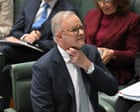
Anthony Albanese's disapproval rating just hit a fresh high of 60% in the November Guardian Essential poll, while approval slid to 32%. That isn't just a bad week at the office. It's a clear warning light flashing for Labor right as household budgets squeeze, economic forecasts darken, and local anger over AI data centres spills into suburban politics.
When you read polling numbers like that, the temptation is to treat them as background noise until the next election. Honestly, that misses what's shifting underneath. Voters aren't just grumbling about a single headline. They're connecting dots between high living costs, stalled global talks, job anxiety around automation, and giant power-hungry facilities popping up near their streets.
What the Guardian Essential Poll Actually Shows About Albanese and Labor
Let's look straight at the numbers from Essential's poll of 1,087 Australians. Approval dropped from 38% in October to 32% in November, while disapproval climbed from 56% to 60%. In a single month, his net standing took a 10-point hit.
Primary vote shifts look tighter and messier across the board. Labor and One Nation sit tied at 26% each, both dipping slightly from 28% the prior month. Meanwhile, the Coalition nudged up to 25% from 23%, and the Greens sit on 13%.
If you've watched Australian polling over the last year, you know how unusual this split is. Usually, when a prime minister's numbers crater, the formal opposition scoops up the bulk of the rebound cleanly. Right now, voters are spread out, skeptical, and reluctant to hand any single camp a blank cheque.
Essential Media chair Peter Lewis pointed out a trap leaders fall into when they spend time on international summits while bills bite at home. Nobody wins popularity points abroad when everyday expenses feel relentless, especially when global diplomacy looks messy. Albanese was overseas around COP31 in Turkey and regional meetings in Asia when polling was in the field, and the timing didn't help him cut through on domestic pressure.
Why Voters Are Souring on AI Data Centres So Fast
One of the sharpest takeaways in the poll has nothing to do with parliamentary question time. Australians have turned noticeably cooler on having an AI data centre built near their home.
In November, only 23% of respondents said they'd support a new data centre near their area, while 48% opposed it. Back in July, support sat at 28% and opposition at 37%. A 16-point swing toward the negative in four months is fast in polling terms. Strongly opposed jumped from 24% to 36%, while people who neither supported nor opposed shrank from 27% to 21%.
Why did sentiment flip so quickly? In my experience tracking infrastructure battles, abstract tech promises rarely survive when people picture towering poles, grid strain, noise, water use, or local property disruption right next door. Add headlines about AI-related job cuts and global debates over tech power, and a shiny "future industry" pitch starts feeling like someone else's profit at the neighborhood's expense.
The political split on data centres is revealing too. Greens supporters opposed them at 59%, and One Nation supporters at 53%, while both Labor and Liberal voters sat at 42% opposition. That tells you data centre skepticism isn't locked inside one ideological box. Left-leaning voters worry about climate, environment, and worker displacement; right-leaning and populist voters worry about local control, cost impacts, and big institutions calling the shots.
Real-World Pushback Is Already Reshaping Projects
Polling doesn't exist in a vacuum. In Melbourne's West Footscray, community pushback over power infrastructure for NextDC's M3 expansion led power distributor Jemena to pause work on new 22-metre power poles. NextDC's share price took a beating before recovering above $9, rival Goodman Group took a nearly 10% stake, and at its annual meeting the company pledged to steer future data centres away from homes even on industrially zoned land.
That's a huge practical lesson for anyone watching tech and property in Australia. Zoning maps alone don't guarantee a smooth build anymore. If a company treats local residents as an afterthought until bulldozers or power crews arrive, the backlash can stall timelines and rattle investors fast.
What Is Driving Labor's Broader Squeeze Right Now
To understand why Albanese's disapproval hit a high, you have to stack the polling against the economic and political backdrop hitting households this week.
Treasurer Jim Chalmers warned in parliament that things will get harder before they get easier. Upcoming mid-year budget forecasts point to unemployment climbing above 5% after hitting 4.9%, growth slowing below 2% across 2027 and 2028, and inflation easing more slowly than hoped because of elevated fuel prices and earlier Reserve Bank rate hikes.
Let's be real: when a treasurer tells families that joblessness is heading over 5% and growth is sluggish, voters judge the government on the kitchen-table reality, not spin. Opposition Leader Angus Taylor has seized on the gloom, accusing the government of economic mismanagement and floating talk of early-election pressure.
Meanwhile, the UN's COP31 climate summit in Antalya wrapped up without a final overarching deal, putting Climate Change and Energy Minister Chris Bowen under heavy fire from the Coalition even as Albanese backed him and pointed to tough global geopolitics. Around the same time, nine data centre applications sat awaiting ministerial sign-off ahead of Victoria's state election on November 28, turning infrastructure approvals into an immediate political flashpoint.
Common Misconceptions About This Poll Shift
People love neat stories when poll numbers move, and most of them oversimplify what's happening.
- Misconception 1: Australians hate technology or progress. Most people use digital tools every day and aren't anti-innovation in the abstract. What they push back against is bearing local grid, environmental, or job costs while seeing few direct benefits in their own paycheck or neighborhood.
- Misconception 2: One Nation's 26% primary vote means a populist landslide is locked in. Polling tied at 26% is serious for Labor, especially alongside the Coalition at 25%. Still, preference flows, seat-by-seat dynamics, and voter doubts about whether alternative parties can govern smoothly matter hugely in Australia's preferential system.
- Misconception 3: A single poll decides the next federal election. Monthly snapshots capture mood and momentum, not final ballots. Governments can recover if cost-of-living pressures ease and policy execution looks credible, though climbing unemployment gives them less room for error.
Practical Steps for Readers, Businesses, and Watchers
Whether you're following federal politics for work, running a business affected by energy and infrastructure rules, or keeping an eye on local council developments, don't rely on surface headlines.
- Track the mid-year budget update, not just daily soundbites. Watch the actual unemployment, inflation, and spending figures in the December fiscal update to see how tight household and business conditions will stay into next year.
- Watch local planning and grid battles around major projects. If you invest in property, utilities, or tech infrastructure, pay close attention to community consultation, power line routing, and state permitting—especially around major state contests like Victoria's election.
- Compare primary vote trends against two-party and seat-level context. A 26–26–25–13 split signals a fragmented electorate where minor parties and preferences can swing individual seats unexpectedly.
- Separate short-term political turbulence from longer-term policy shifts. Watch how Canberra handles AI guardrails, energy reliability, and budget savings over the coming months rather than treating one poll as the final word.