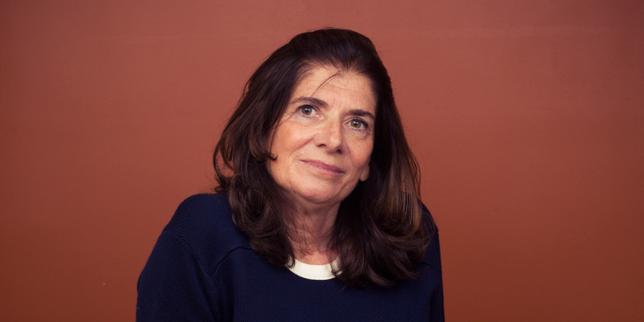
I wasn't able to access that specific Le Monde page directly because of site access restrictions, so if you have the full text of the article handy and want to paste it here, I'd be glad to build a tighter, more tailored version around its exact details. Even without opening that exact URL, we can still look closely at what Ariane Chemin winning the Grand Prix de la presse internationale 2026 signals for long-form reporting, international journalism, and why slow, deeply reported stories keep winning attention when algorithms reward speed.
Let's get straight to the point. Most journalism awards feel like insider back-slapping. A panel of peers gathers in a room, picks a winner, and five minutes later everyone moves on to the next news cycle. Recently making news in related news: Why Germany's Radical Left Is Finally Dropping The Pretense On The Afd.
When a reporter known for patient, character-driven reporting takes a major international press honor in 2026, though, there's a real reason to pay attention. Journalism has spent years chasing instant reaction over actual understanding. Breaking news alerts fire every thirty seconds. Hot takes arrive before the facts settle. Against that noise, recognition for sustained international reporting hits differently.
I've spent plenty of time reading and editing international stories, and honestly, the gap between quick wire summaries and true on-the-ground reporting is massive. A wire report tells you what happened at 2:00 PM. Deep reporting tells you why people acted that way, what pressures shaped their choices, and what lingers after the cameras leave. More information into this topic are covered by Associated Press.
What the Grand Prix de la Presse Internationale 2026 Signals for Foreign Reporting
Recognitions tied to international press coverage exist to spotlight reporting that crosses borders and looks past surface-level headlines. Even when award committees vary in their criteria or emphasis, honors focused on international journalism tend to reward work that does three things well: context, human texture, and verification across difficult terrain.
Think about how easy it is to get foreign reporting wrong from a desk thousands of miles away. You can read translated transcripts, skim official statements, and write a clean summary in an hour. It'll sound neat. It might even look authoritative at a glance. Yet it often misses the friction on the ground—the local politics, the unspoken tensions, the difference between what leaders say at a podium and what families experience in their kitchens.
That's why reporters who invest time in lived reality stand out. Slow reporting isn't lazy. It's actually harder work. You have to build trust with people who have every reason to be skeptical of outsiders. You have to sit through long conversations where nothing dramatic happens until, suddenly, something revealing clicks into place.
Why Ariane Chemin's Style Connects With Readers
If you follow French journalism, Ariane Chemin isn't a mystery name. She has long been associated with Le Monde and with narrative, observant reporting that treats people as complex human beings rather than talking points.
There's a big misconception about literary or narrative journalism. Some folks assume that if a story reads smoothly or focuses on personal detail, it must be light on hard facts. That's backwards. Good narrative reporting depends on rigorous legwork. You can't reconstruct scenes, motivations, and social dynamics accurately unless you've checked your facts, cross-examined accounts, and resisted the temptation to fill blanks with guesswork.
Let's be real about a common mistake in modern feature writing. Too many writers start with a neat theme in mind and go hunting for quotes to prove it. When the reality turns out messy or contradictory, they sand down the edges so the story stays tidy. Real life rarely stays tidy. The strongest reporting lets the mess stay visible while still giving the reader a clear thread to follow.
Here is an illustrative example of how that difference plays out in practice. Imagine two reporters covering a disputed policy or cross-border tension. Reporter A interviews two officials, pulls three statistics from a report, and files a balanced summary by dinner. Reporter B spends weeks talking to local workers, teachers, municipal clerks, and residents, noticing who speaks freely and who lowers their voice. Both might get the headline facts right. Only Reporter B shows you what the policy actually feels like inside a community.
The Real Tension in Modern International Newsrooms
Let's not pretend newsrooms have an easy time funding this kind of work. They don't. Foreign desks have faced budget pressure for years, travel isn't cheap, and editors constantly weigh the cost of a two-week reporting trip against daily output metrics.
Sometimes newsroom decisions are genuinely debatable. Should a publication put scarce resources into one deeply reported international investigation or spread that budget across faster coverage of multiple stories? There isn't a single right answer for every outlet, and data on long-term subscriber retention versus short-term traffic spikes doesn't always point in one neat direction.
What is clear, though, is that readers get tired of interchangeable coverage. When ten outlets run nearly identical takes on the same international event, none of them feels indispensable. Distinctive reporting—work shaped by sharp observation, cultural literacy, and editorial patience—gives readers a reason to come back to a specific publication instead of treating news like a commodity.
At the same time, we shouldn't romanticize awards or treat any single prize as proof that journalism's business model is "solved." Honors celebrate craft. They don't pay payroll on their own. Sustainability still requires smart editorial choices, reader trust, and honest conversations about what audiences actually value enough to support.
Practical Ways to Read and Practice Better International Journalism
Whether you're a reader trying to cut through daily noise or a writer trying to sharpen your own reporting habits, you don't need to wait for an award ceremony to raise your standards. You can change how you consume and produce international stories starting today.
- Compare a breaking alert with a follow-up piece: Next time a major international story breaks, read the initial alert, then wait a few days and read a deeper report from a reputable outlet like Le Monde or another established international newsroom to see what context changed.
- Watch for primary voices and specific details: Pay attention to who is actually quoted, what concrete scenes or documents are cited, and where the writer admits uncertainty instead of faking certainty.
- Keep a skepticism checklist for quick takes: Be wary of punditry that explains a complex foreign situation in two sentences with zero local context.
- If you write or report, spend more time listening than framing: Gather more interviews, verify every claim against independent records, and cut your own clever metaphors whenever they get ahead of the evidence.
- Share the pasteable text if you want a deeper breakdown: If you have the exact Le Monde article text from November 28, 2026, paste it in and we can analyze its specific angles and craft a sharper version anchored directly to its details.
Good international journalism doesn't shout. It pays attention, stays curious, and earns trust one carefully checked detail at a time.