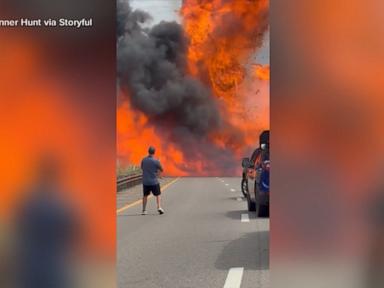
A standard drive outside Phoenix turned into a multi-agency emergency on Wednesday, June 24, when a vehicle burst into flames on State Route 87. It did not just smoke or stall. It exploded violently on camera.
The catastrophic failure instantly sparked the Round Valley Wildfire near Fountain Hills. The flames jumped from the asphalt into the parched desert vegetation, quickly blackening 30 acres of land.
State Route 87 shut down completely in both directions for two intense hours. As thick black smoke choked the horizon, hotshot crews raced to the scene to block the fire's forward progress. This nightmare scenario highlights a reality that most drivers completely ignore. Your vehicle's mechanical health directly dictates forest and desert safety.
The Fountain Hills Blast and Why It Happened
The incident kicked off around 3 p.m. under typical blistering Arizona summer conditions. A vehicle traveling on Highway 87 caught fire, pulling over to the shoulder. A passing driver captured the terrifying climax on video.
The vehicle, reportedly an RV, suffered a massive secondary explosion that sent debris flying and tore the vehicle body apart. Eyewitness reports point to a compounding electronic or internal appliance failure as the source of the blast.
When a car or RV burns next to highly combustible desert brush, the result is instantaneous. The initial explosion threw superheated metal shards and sparks directly into the dry tinder surrounding State Route 87. Arizona Department of Transportation officials closed the highway until 5 p.m. to protect drivers from both the active fire and the threat of exploding projectiles.
How a Single Vehicle Torches 30 Acres of Desert
Desert wildfires operate differently than forest fires. The Sonoran Desert relies on fine fuels like invasive buffelgrass, dry brush, and seasonal cheatgrass. These plants act like paper. When a vehicle engine compartment reaches over 1,000 degrees Fahrenheit during a fire, the ambient heat alone can ignite brush within a ten-foot radius. Add an explosion, and you are literally launching fireworks into a powder keg.
Hotshot crews deployed aggressive containment strategies to halt the Round Valley Wildfire before it reached nearby residential structures in Fountain Hills. They stopped the forward momentum at 30 acres, but the scar on the land remains visible.
The mistake most people make is assuming wildfires only start from stray campfires or lightning strikes. According to data from the National Interagency Fire Center, equipment use and vehicle malfunctions account for a massive percentage of human-caused wildfires every year.
Crucial Steps to Prevent Your Car From Starting a Fire
Roadside fires usually stem from preventable mechanical failures. If you are driving through high-risk corridors like Route 87, Route 60, or Interstate 17, you must manage your vehicle’s heat signatures.
- Check Your Fluid Levels Regularly: Low engine oil or transmission fluid causes extreme metal-on-metal friction. This friction generates enough heat to ignite plastic engine components long before your dashboard light alerts you.
- Monitor Tire Pressure: Driving on a flat or severely underinflated tire exposes the rubber to intense friction against the highway. The tire eventually disintegrates, and the bare steel rim sparks violently against the asphalt. Those sparks fly directly into roadside brush.
- Inspect Your Exhaust System: Catalytic converters operate at temperatures exceeding 1,200 degrees Fahrenheit. If you pull over onto the shoulder because your car is acting up, never park directly over dry grass. The exhaust system will torch the grass in seconds.
- Secure Towing Chains: If you are pulling a trailer or a boat, ensure your safety chains do not drag on the road. Dragging chains create a continuous stream of sparks capable of starting multiple fires along miles of highway.
If your vehicle begins to smoke, pull over immediately onto a cleared, paved shoulder or a gravel pullout. Avoid grass at all costs. Get everyone out of the vehicle and move upwind and at least 100 feet away. Call 911 instantly. Do not stay near the vehicle to retrieve personal belongings, as secondary explosions from fuel tanks or internal appliances can occur without warning.
Pull your vehicle maintenance records today and check your fluid levels before your next highway trip. Staying on top of your vehicle's health keeps you safe on the road and protects vulnerable desert communities from devastating blazes.
:max_bytes(150000):strip_icc():focal(999x0:1001x2)/Jax-and-Brittany-040323-04-2000-d82e6b51b7c0490e95749e731826a758.jpg)