The U.S. Army just handed Lockheed Martin a contract worth nearly $3 billion to produce its next-generation Sentinel A4 radar system. On paper, it looks like just another massive defense payout. But if you look closely at how the modern threat environment is shifting, this single contract tells a much larger story about how the military plans to protect its soldiers from cheap drones, cruise missiles, and incoming artillery over the next decade.
The contract, officially valued at $2,998,742,163, spans production and engineering services through June 29, 2031. It centers around Lockheed Martin’s facility in Liverpool, New York. The deal comes at a time when traditional air defense systems are struggling to keep up with the sheer volume and low cost of modern airborne threats.
The True Scale of the 3 Billion Dollar Sentinel A4 Deal
To understand why the Army is spending this kind of money, look at the contract structure itself. This isn't a simple off-the-shelf purchase. The award is a mix of fixed-price-incentive, cost-plus-fixed-fee, and cost-no-fee structures handled by the Army Contracting Command at Redstone Arsenal in Alabama.
What this complex phrasing means is that the Army is buying long-term flexibility. Instead of ordering a rigid number of units upfront, work locations and exact funding amounts will be determined with each specific order placed under the contract over the next five years. This setup allows the military to ramp production up or down based on geopolitical tensions, budget adjustments, or sudden design tweaks.
Interestingly, the defense department noted that bids were solicited via the internet with only one received. Lockheed Martin essentially ran unopposed for this massive chunk of the defense budget. That lack of competition points to how deeply embedded the defense giant has become in the Army's air defense architecture.
What Makes the Sentinel A4 Different from Legacy Systems
The Sentinel A4 is built to replace the aging Sentinel A3 system, a radar platform that served well for years but simply wasn't designed for today's sky. The older system struggled against low-altitude, slow-moving targets like commercial quadcopters or stealthy, low-flying cruise missiles.
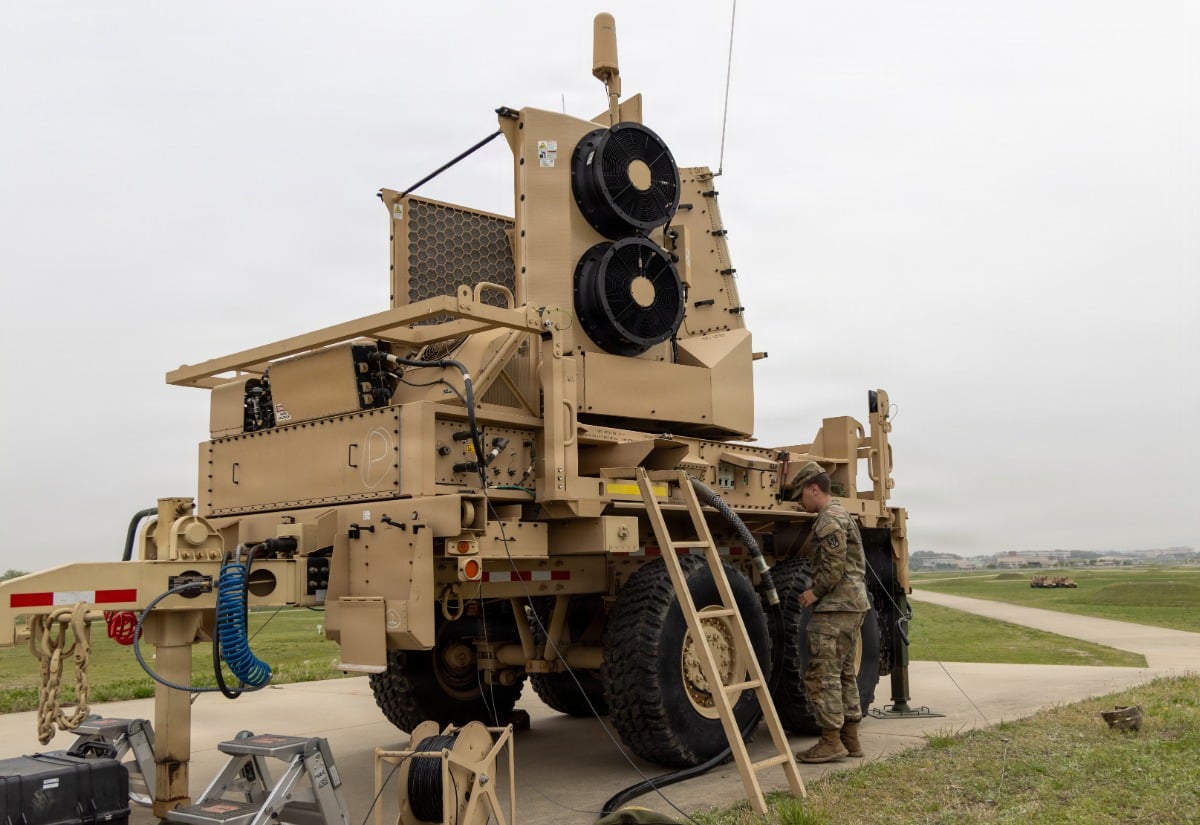
Lockheed Martin shifted the entire architecture to an active electronically scanned array, commonly known as AESA. Instead of relying on a single mechanical transmitter that spins and sweeps the sky, an AESA radar uses a grid of hundreds of tiny transmitter-receiver modules. These modules can steer radar beams electronically in multiple directions almost instantly.
This change gives the Sentinel A4 several critical upgrades over its predecessor.
First, it simultaneous tracks completely different types of threats. The system can watch for a high-speed cruise missile on the horizon while tracking a slow-moving kamikaze drone and calculating the exact launch and impact points of incoming rocket, artillery, and mortar fire.
Second, the electronic steering makes the system much harder for adversaries to jam or trick. If an enemy attempts electronic warfare against one frequency, the radar can instantly shift its beams to other frequencies without losing its track on target.
Lockheed’s history with the program goes back to a $281.1 million development contract in 2019. The team delivered the initial test units early, which led to a subsequent order of five more radars in 2021 for intense operational testing. Those tests subjected the hardware to harsh environments, checking everything from its mobility behind a tactical vehicle to how well soldiers could maintain it in the field. This massive new production contract is proof that the testing phase succeeded.
Inside the Sole Source Contracting Reality
Some watchdog groups often criticize single-bid contracts because they lack the cost-saving benefits of open-market competition. But in the specialized world of radar engineering, starting from scratch with a new vendor often costs more than sticking with the incumbent.
Lockheed Martin built the foundational open-architecture software for the Sentinel A4 from day one. Because the software is modular, the Army can update the radar's threat library or plug in new digital filters without buying entirely new hardware blocks. If a new type of drone appears on the battlefield next year, engineers can write a software patch rather than redesigning the physical array.
By keeping the contract with Lockheed's Liverpool facility, the Army preserves an established supply chain and a trained workforce. Trying to transfer that technical blueprint to another contractor would have likely delayed deployment by years, a risk the Pentagon cannot afford given the current speed of global conflicts.
How the Army Plans to Use This System Across Global Threat Environments
The Sentinel A4 doesn't shoot down threats by itself. It serves as the primary eyes for the Army's broader Integrated Air and Missile Defense system. It passes high-fidelity tracking data directly to command networks, which then assign the best weapon to neutralize the threat, whether that is an interceptor missile, a laser weapon, or a high-powered microwave system.
Recent conflicts have shown that modern military forces face layered, asymmetric attacks. Adversaries don't just fire one type of weapon; they launch mixed salvos where cheap drones are used to distract sensors while faster missiles try to slip through the gaps. The Sentinel A4's ability to classify and prioritize these threats across a 360-degree field of view is exactly why the Army committed $3 billion to the platform.
The radar is also highly mobile. It can be towed behind standard tactical vehicles and set up quickly by a small crew. This mobility ensures that forward-deployed troops, temporary bases, and moving convoys can carry their air defense shield with them rather than relying solely on fixed, distant radar installations.
Next Steps for Defense Investors and Industry Watchers
If you follow defense sector equities or military procurement, this contract signals several clear trends to track moving forward.
First, keep a close watch on quarterly order drops. Since the $3 billion acts as a ceiling and funds are obligated per order, Lockheed’s actual revenue recognition will depend on how fast the Army triggers production lots over the next five years.
Second, watch for potential international sales. Historically, when the U.S. Army adopts a radar system as its primary front-line sensor, NATO allies and foreign military sales partners follow suit. Look out for regulatory filings regarding potential exports of the Sentinel A4 to European or Indo-Pacific partners looking to modernize their air tracking capabilities.
Finally, monitor how the system integrates with counter-drone technology. Lockheed Martin is already experimenting with blending cyber-detection tools into its broader airspace security platforms. The success of the Sentinel A4 will likely depend on how smoothly its radar tracks feed into these newer electronic defeat systems.