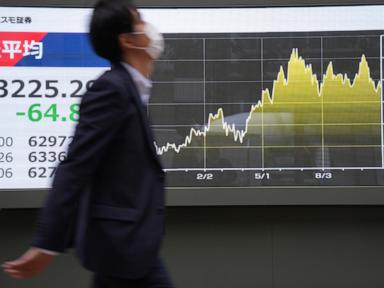
Markets don't move in a straight line, and right now, investors across the globe are scrambling to rebalance their portfolios as conflicting economic signals shake up trading floors. If you look at the recent numbers, Asian shares are trading in mixed territory while U.S. futures edge upward, all while oil prices take a notable step back.
It is messy out there. Wall Street's recent turbulence, fueled heavily by high-stakes tech earnings, is spilling over across international borders. You can't just look at one regional index and assume you know what the rest of the world is doing. Let's break down what's actually driving these market shifts and what they mean for your money right now.
The Tech Reality Check Hitting Global Markets
For months, artificial intelligence spending has been the rocket fuel driving global equities higher. Investors poured cash into chipmakers, cloud providers, and digital giants, expecting infinite returns on massive infrastructure investments. Then reality bit back.
When Google parent Alphabet posted earnings that missed high investor expectations, its shares dropped sharply in after-hours trading. That single disappointment sent shockwaves through regional Asian tech hubs.
- South Korea's Kospi index faced heavy selling pressure.
- Taiwan's Taiex retreated as semiconductor enthusiasm cooled.
- Meanwhile, select Japanese and Australian equities managed modest gains, showing that regional decoupling is very real.
The takeaway here is straightforward. The era of blind faith in tech growth is over. Investors are demanding immediate proof that multi-billion-dollar infrastructure spending translates directly into revenue. If a company can't show the receipts, the market will punish it immediately.
Why Oil Prices Are Retreating
While stocks wrestle with earnings reports, energy markets are telling a different story. Crude prices have pulled back from recent highs, offering a brief sigh of relief for consumers and central banks fighting stubborn inflation.
This retreat isn't happening in a vacuum. Traders are weighing shifting geopolitical headlines alongside potential diplomatic openings between the U.S. and Iran. Even though oil remains significantly elevated compared to pre-conflict baselines, any hint of easing tension in a vital energy corridor sends immediate ripples through crude futures.
Energy markets are hyper-sensitive right now. You shouldn't mistake a temporary price dip for a long-term trend. Supply chains remain fragile, and upcoming political milestones carry enough weight to flip energy momentum overnight.
What You Should Do With Your Portfolio Now
When markets turn choppy and regional indexes split directions, panic is your worst enemy. Trying to time daily swings in Asian exchanges or guessing the next tick in crude oil will usually leave you underwater.
Instead, focus on fundamentals. Diversify your holdings away from single-sector bets that rely entirely on hype. Look for companies with strong balance sheets, steady cash flow, and pricing power that can weather economic crosswinds. Volatility is the price of admission in modern markets, but discipline is how you survive it. Keep your strategy grounded, ignore the daily noise, and focus on long-term value.