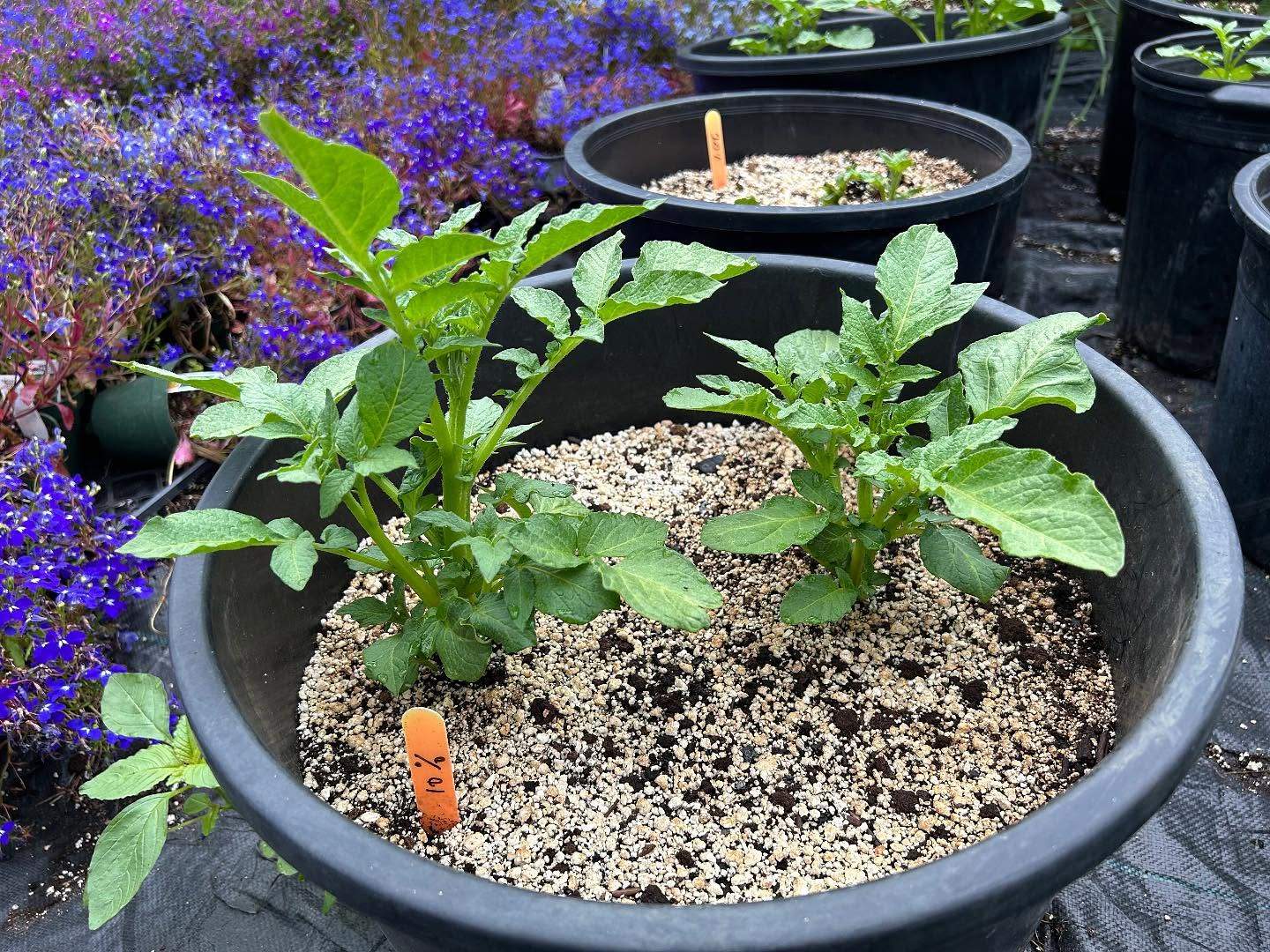
You've probably stepped over piles of rotting seaweed on an Atlantic beach and thought nothing of it, except maybe to avoid the smell. Marine biologist Marie Dankworth looked at those same slimy mounds and saw an answer to two of agriculture's biggest headaches: scorched, dry soils and runaway carbon emissions.
Her Fredericton-based startup, SeaGreen Solutions, is turning sustainably sourced Atlantic kelp into an ultra-absorbent, nutrient-rich soil amendment. The capital city is already testing it in an official municipal pilot program. If you care about sustainable agriculture, backyard gardening, or how climate tech actually scales in eastern Canada, you need to understand why this matters. In similar news, read about: Why French Executives Are Falling Out Of Love With Brussels.
The underlying tech isn't just another trendy compost mix. It's a sophisticated twist on an ancient carbon-trapping technique called pyrolysis, and it might just change how we protect crops during hotter, drier Maritime summers.
The Problem with Standard Biochar
Most gardeners and commercial farmers are already familiar with biochar. It's essentially charcoal made by heating organic waste in a low-oxygen environment. When you mix it into dirt, it acts like a permanent structural sponge that keeps the ground from compacting. The Wall Street Journal has also covered this fascinating topic in great detail.
Wood-based biochar dominates the commercial market. It's fine for fixing soil structure, but it has a glaring flaw: wood contains almost zero raw nutrients. When you apply standard wood biochar, you actually have to charge it with liquid fertilizer first. If you don't, it will suck existing nutrients right out of your dirt, temporarily starving your plants.
Atlantic seaweed fundamentally rewrites this equation.
Because kelp grows submerged in the ocean, its tissues act like a sponge for marine minerals. When SeaGreen Solutions bakes this biomass down, those minerals don't vanish. They become concentrated. The resulting kelp biochar enters the soil already packed with vital plant food.
- Potassium: Boosts disease resistance and water regulation.
- Calcium: Builds strong cell walls to prevent rot.
- Magnesium: The core block of chlorophyll for photosynthesis.
Locking Carbon for the Long Haul
A lot of coastal climate startups try to make money purely by growing kelp and claiming carbon credits for it. Dankworth quickly realized that model doesn't hold up under financial scrutiny. If the seaweed just dies, decomposes, or gets eaten, the carbon it captured goes straight back into the atmosphere or the water.
Pyrolysis changes the chemical structure of the seaweed entirely. By baking the kelp under strict low-oxygen parameters, the volatile gases escape while the structural carbon gets locked into a highly stable, solid form.
When this material gets mixed into municipal green spaces or farm fields, that carbon stays trapped for hundreds of years. You get a highly functional agricultural tool that doubles as a permanent carbon sink.
From University Labs to Municipal Soil
The jump from an academic thesis to a real-world commercial product kills most science startups. Dankworth, who moved from Germany to pursue her doctorate at the University of New Brunswick (UNB), ran into the classic researcher's wall. She was writing dense academic papers that nobody outside her specific field would ever read or understand.
To bridge the gap, she teamed up with her partner, musician Joel Thompson, who stepped in as Chief Operating Officer while Dankworth handles the CEO role. They brought the concept to UNB’s J Herbert Smith Centre for Technology Management & Entrepreneurship, landing a spot in the 2025 Summer Institute cohort.
The local validation hit fast. The company won first prize in the growth category at the RBC Pitch Competition in March 2026. They swept up honors at the City of Fredericton’s Boost Ideation Camp at Planet Hatch, and secured a spot in the 2026 Ocean Idea Challenge.
The real test, however, isn't happening on a pitch stage. It's happening in the dirt. Fredericton is currently running a live pilot project using SeaGreen's kelp-based biochar in city landscaping. The goal is to see exactly how much it reduces watering frequency for public green infrastructure during peak summer heat waves.
What Commercial Growers Get Wrong About Seaweed
If you talk to old-school coastal farmers, they'll tell you they've been tossing raw seaweed onto their fields for generations. They're right, but raw application has severe limitations that don't scale for modern agriculture.
Raw beach-harvested seaweed contains high levels of sodium. Dumping it directly onto fields year after year builds up salt levels, eventually ruining the soil's osmotic balance and stunting root growth. Raw kelp also decomposes rapidly, meaning its water-retention benefits disappear by the next season.
Processing the marine biomass into biochar isolates the beneficial mineral ash while converting the organic matter into a permanent geological matrix. It won't rot away, it won't spike your soil salinity, and it keeps holding water season after season.
How to Test Kelp Amendments in Your Own Soil
You don't have to wait for industrial-scale distribution to start using marine inputs to build climate resilience in your soil. If you're dealing with sandy fields that lose moisture instantly or heavy clay that cracks during dry spells, you can implement a marine-backed soil strategy right now.
- Prioritize pre-charged amendments: If you buy commercial biochar, look for brands blended with kelp meal or marine compost to ensure it delivers nutrients from day one.
- Apply at the root zone: Biochar doesn't migrate through the soil column like liquid fertilizer. You need to physically incorporate it into the top six inches of earth where the roots actually live.
- Monitor your electrical conductivity: Because marine products are naturally rich in minerals, track your soil's salt levels if you use heavy applications in enclosed greenhouse environments.