You think you’ve seen everything the ocean can spit back up, and then a 400-year-old ghost ship proves you wrong.
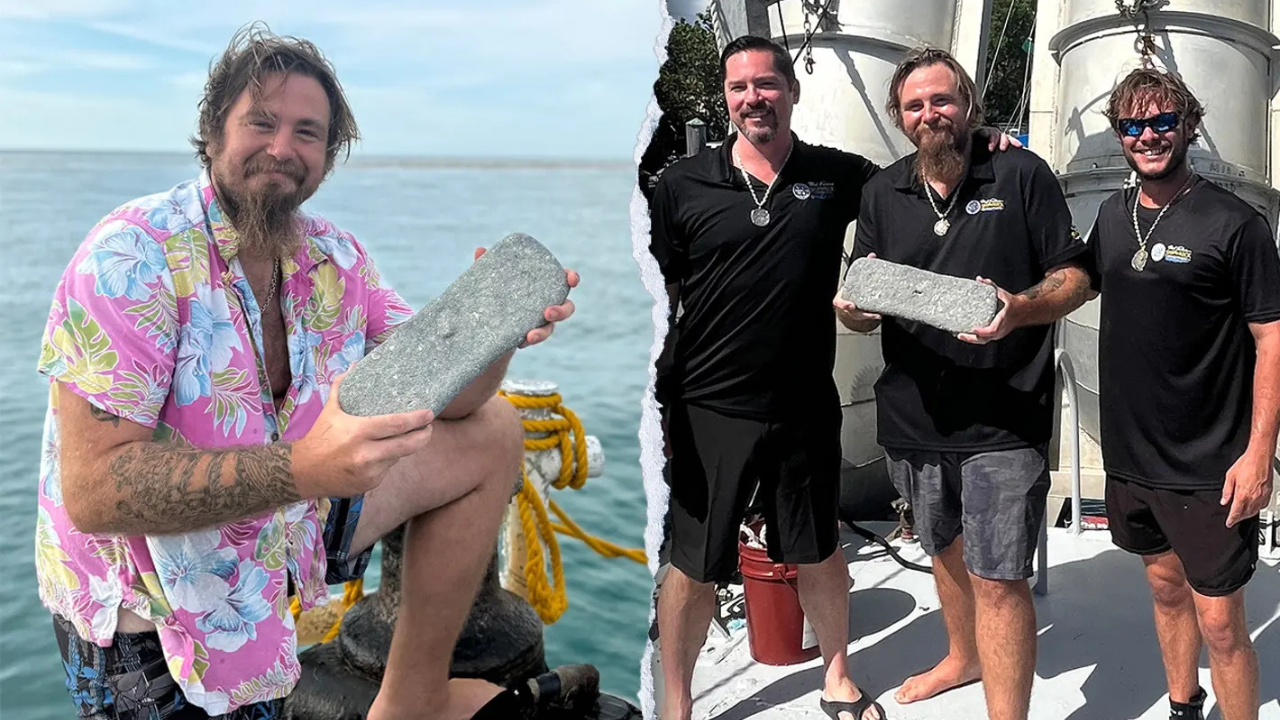
In June 2026, a crew of modern-day salvage divers working the waters off Key West pulled a heavily encrusted, 22.5-pound silver bar from the seabed. It's estimated to be worth up to $100,000. While that number sounds like a decent payday, the real story isn't the price tag. It's the fact that this is the first silver ingot recovered from the legendary Nuestra Señora de Atocha shipwreck in twenty-seven years. For a deeper dive into similar topics, we recommend: this related article.
For nearly three decades, the sandy bottom off the Florida Keys seemed to have run dry of these massive colonial bars. Most people thought the "Mother Lode" was fully picked clean back in the eighties. They were wrong. This latest find proves that the ocean floor is still hiding millions in Spanish silver, just waiting for the right shift in the tide.
The 50-Foot Dive That Cracked a Cold Case
It happened during what was supposed to be a routine sweep. For additional details on the matter, in-depth coverage can be read at USA.gov.
Captain Drake Nicholas and his crew on the salvage vessel DARE—part of Mel Fisher’s Shipwreck Expeditions—were surveying a known patch of the Atocha debris field in about 50 feet of water. They weren't expecting anything massive. Then, the underwater metal detector started screaming.
Usually, a signal that loud in heavily searched waters is trash. A discarded anchor, a rusted pipe, or modern debris. But when you’re working the Atocha site, you don’t ignore a hard hit.
The crew brought in an airlift. Think of it as a giant, gentle vacuum cleaner for the ocean floor. It sucks up layers of sand and silt without smashing whatever is hidden underneath. As the sediment cleared, a blocky, unmistakable silhouette emerged.
What they hauled up was a 22.5-pound chunk of history, black with centuries of marine oxidation but structurally perfect.
THE ATOCHA SILVER BAR AT A GLANCE
Weight:             22.5 pounds (approx. 10.2 kg)
Estimated Value:    $50,000 to $100,000
Last Found:         1999 (First in 27 years)
Depth of Recovery:  50 feet near Key West
The Story Behind the Silver
The Nuestra Señora de Atocha wasn’t just any ship. It was the heavily armed flagship of Spain's Tierra Firme Fleet. In September 1622, it left Havana bound for Spain, stuffed to the brim with wealth stripped from South American mines.
We're talking 35 tons of silver, massive chests of gold coins, and a fortune in raw Colombian emeralds.
Just two days into the journey, a brutal hurricane slammed the fleet into the reefs off the Florida Keys. The ship ripped open, sinking almost instantly. Out of 260 passengers and crew, only five survived by clinging to the rigging. The Spanish empire tried for years to salvage the wreck, but hurricanes and deep water kept them away.
Then came Mel Fisher.
The legendary, incredibly stubborn treasure hunter spent 16 agonizing years searching for the wreck. His team suffered bankruptcy, equipment failures, and tragedy when his son and daughter-in-law drowned during the search. But on July 20, 1985, they finally hit the "Mother Lode"—recovering over $400 million in treasure.
So, why are we still finding silver in 2026?
Because the Atocha didn't sink in one neat pile. The hurricane tore the galleon apart, scattering its cargo across miles of the ocean floor. Shifting sands, seasonal storms, and deep currents constantly bury and unbury these treasures. One year a spot is empty sand; the next, a storm sweeps it clean to reveal solid silver.
Why This Specific Bar Matters to Historians
To a collector, this is a six-figure trophy. To a maritime historian, it’s a time capsule.
When the Spanish processed silver in the 17th century, they kept incredibly meticulous records. This newly recovered bar has a distinct "assay cut"—a small wedge chipped out of the top by Spanish crown officials before it was loaded. This was done to test the purity of the metal to ensure the King of Spain got his exact tax cut.
Now that the bar is out of the water, conservators are working to carefully strip away the hard marine crust. Underneath that black layer, they expect to find:
- The assayer’s personal mark, confirming who verified the metal.
- The silver purity stamp, usually measured in karats or ley.
- The Roman numeral weight, which will be cross-referenced with the ship's original cargo manifests.
- The owner's or mine's seal, telling us exactly which Bolivian or Peruvian colonial mine this silver came from.
This isn't just about finding shiny things. It’s about verifying the exact trade routes, shipping manifests, and colonial tax structures of an empire that collapsed centuries ago.
What Lies Ahead for Key West Salvagers
If you think the hunt is over, you don't know treasure hunters.
According to historical manifests and modern estimates, there is still over $120 million worth of treasure from the Atocha unaccounted for. This includes hundreds of silver bars, copper ingots, and bronze cannons that are still trapped under the sand.
The DARE crew also recently dragged up several silver coins, proving they are hot on a fresh trail. They have already mapped out new magnetic anomalies in the surrounding area.
If you want to track this story or see the preservation process unfold, your next steps are simple. Keep an eye on the Mel Fisher Maritime Museum in Key West, where these finds are eventually conserved and put on display. Better yet, if you find yourself in the Keys, you can visit the museum to see what 400 years under the sea actually does to a fortune. The ocean doesn't give up its secrets easily, but as this 22-pound chunk of silver proves, it eventually pays out.