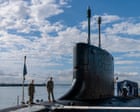
Selling nuclear-powered submarines to Australia sounds bold on paper, yet the math in American shipyards doesn't cooperate. A Congressional Budget Office report warns that transferring Virginia-class attack boats under AUKUS would reduce the number of submarines available to the US Navy for many years, while raising tough questions about whether Australian-controlled boats would actually join a fight over Taiwan or the South China Sea.
Honestly, that gap between diplomatic promises and shipyard reality is the whole story. Politicians love announcing grand security pacts. Welders, pipefitters, and dry dock planners have to actually build the hulls. Meanwhile, you can explore similar events here: Why Australia Response To The Rohingya Genocide Ruling Falls Short.
Why AUKUS Submarine Transfers Hit a Shipyard Bottleneck
Under Pillar One of AUKUS, Washington agreed to sell between three and five in-service Virginia-class submarines to Australia starting in 2032. Sounds neat enough until you look at the build rate. American shipyards have been turning out Virginia-class submarines at roughly 1.13 boats per year. To cover America's own fleet needs, that pace needs to climb to two per year—and to have spare hulls to hand off to Canberra without leaving gaps, output would need to reach about 2.33 boats annually. To understand the bigger picture, check out the recent article by USA.gov.
Construction timelines have stretched badly over the past two decades. Boats that once took five to six years to build in the 2000s now average roughly 10 to 11 years on current schedules, with multi-year delays common across Virginia-class programs. Even more striking, the US Navy's shipbuilding forecasts haven't baked submarine transfers to Australia into the baseline plan, treating them in a footnote rather than a funded, guaranteed production line.
There's also a legal catch baked right into US law. A transfer can only go ahead if the president certifies that losing the submarine won't degrade American undersea capability, and Washington can walk away from selling hulls without paying a penalty. Critics like former Australian foreign affairs minister Bob Carr have argued bluntly that both capitals are clinging to a fiction about the transfers happening on schedule. Meanwhile, leaders like Australian Defence Minister Richard Marles and US Defense Secretary Pete Hegseth keep insisting the partnership is moving forward and strengthening Pacific deterrence.
Maintenance Backlogs Are Already Eating Into Patrol Days
You can't talk about new builds in a vacuum because repair yards compete for the exact same skilled trades and dry docks. A Government Accountability Office review found that public shipyards completed only 11 percent of submarine depot maintenance periods on schedule between fiscal years 2016 and 2025, leaving attack submarines waiting alongside piers and costing the fleet more than 15,000 operational days.
Credit where it's due, though. At the Naval Submarine League's 2026 symposium, Vice Admiral Rob Gaucher pointed to real signs of momentum—including a reported 40 percent reduction in submarine maintenance delays, 10 submarines delivered or returned to service over the past year, and total construction hours climbing toward roughly 29 million in 2026 after adding priority suppliers and off-hull fabrication work. Getting delays down from roughly 780 days in FY26 is good news. Still, digging out of a decade-long hole takes years of steady execution, not one good year.
Does an Australian Flag Change Deterrence Against China?
Even if the boats do eventually arrive, strategists are arguing over what they actually buy in a crisis. The CBO notes a two-sided dilemma: shrinking the US Navy's own attack submarine count could weaken deterrence, yet putting boats closer to the Western Pacific might help them respond faster to trouble near Taiwan or the South China Sea.
Here's the rub. Australia keeps its own sovereign hand on the wheel. Canberra has repeatedly made clear that Australian submarines remain under the control of the Australian government of the day, with no automatic promise to join a US conflict with China. A Congressional Research Service analysis earlier in 2026 even floated an "alternative division of labour"—keeping those Virginia-class boats under US command while operating them out of Australian bases—precisely because US-commanded boats can be ordered into action immediately in a crisis, whereas sovereign allied boats can't be compelled.
That question has sparked fierce pushback inside Australia too. A November 2026 public inquiry led by Peter Garrett and former defence chief Admiral Chris Barrie called AUKUS the riskiest and costliest Australian defence decision ever, urging a suspension and a royal commission. Critics worry Australia is locking itself into massive spending and potential escalation risks while getting far-off hardware. Supporters counter that deep operational integration, rotational forces, and joint maintenance at places like HMAS Stirling in Western Australia already build real muscle in the region.
Practical Next Steps for Tracking AUKUS Reality
If you're following this debate—whether as a policy watcher, defence analyst, or someone trying to separate spin from hardware—don't get lost in speeches alone. Watch the boring metrics that actually move steel.
- Track annual Virginia-class delivery numbers, not press releases. Check whether deliveries actually move past roughly 1.13 boats per year toward two-a-year territory, and watch whether the presidential capability certification gets closer to 2032.
- Watch public shipyard maintenance completion rates. Look at follow-up reporting on depot maintenance on-time performance and lost operational days, since repair bottlenecks can erase the value of a new hull fast.
- Follow Canberra's near-term readiness choices. Pay attention to what happens right now in Western Australia—rotational submarines, port upgrades, munitions stockpiles, and airbase hardening—because those shape deterrence years before any transferred hull wears an Australian flag.
(If you're signed in to a Google Account, saving chats like this makes it easy to come back and compare how shipyard output and AUKUS milestones actually play out over the next few years.)