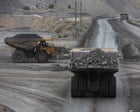
You pay full price at the bowser. Big mining companies get a multi-billion dollar refund. It sounds like a bad joke, but it is exactly how Australia's Fuel Tax Credit Scheme works.
Right now, everyday Australians are struggling with spiking electricity bills and soaring insurance premiums. Yet, the federal government is on track to hand over billions of dollars to massive coal operators for the diesel they burn. New data shows this system isn't just a relic of the past. It is actively funding the expansion of fossil fuels.
If the Albanese government approves even half of the new coal mine projects currently on the books, taxpayer-funded handouts will skyrocket. The numbers are staggering. We are talking about a massive transfer of public wealth into corporate hands, all under the guise of an outdated tax rule.
The Six Billion Dollar Handout for New Coal Mines
A recent analysis by the consultancy Energy & Resource Insights sheds light on the sheer scale of what is happening. The group looked at 45 proposed coal mining developments across New South Wales and Queensland. Out of those, 22 projects had environmental impact statements detailing exactly how much fuel they plan to burn.
The findings are grim. Based on that data, coal companies stand to rake in $6.2 billion in taxpayer refunds for 11.6 billion litres of diesel over the lifespan of these projects. That is not money going toward schools, hospitals, or climate transition. It is going directly toward making it cheaper to dig up fossil fuels.
Take the proposed Hunter Valley operations expansion in New South Wales. This joint venture between Glencore and Yancoal is the largest coal project ever put forward in the state. If it goes ahead, this single expansion could claim a mind-boggling $1.7 billion in diesel rebates.
Honestly, it makes zero economic sense. The government has strict climate targets, yet it keeps maintaining a financial setup that rewards companies for burning heavy oil.
How the Fuel Tax Credit Scheme Actually Works
The official defense of the scheme always comes back to the same argument. The minerals council and mining executives love to say that the diesel excise is meant to fund public roads. Because heavy mining trucks operate on private lease roads, they argue they shouldn't have to pay the tax.
That logic is totally flawed.
The fuel excise is collected as general budget revenue. It isn't legally ring-fenced for fixing potholes or building highways. When a mining company claims back the 52.6 cents per litre tax, they are getting a massive, exclusive discount on fuel.
Look at the broader budget impact. Treasury recently forecast that the fuel tax credit scheme will cost Australian taxpayers a massive $47 billion over the next four years. The yearly cost is expected to climb from $10.7 billion right now to $12.8 billion by 2030. Mining operations suck up about 35% of all diesel used in Australia, and coal mines alone take a 15% slice of that pie. That means well over a billion dollars a year is handed to coal operators.
The Absurd Disconnect with Climate Policy
The real problem is how this handout breaks other government initiatives. Under the Safeguard Mechanism, the government forces large polluters to pay a penalty if they emit too much carbon. But the diesel rebate completely wipes out that penalty.
An analysis by the International Energy Agency and independent think tanks highlighted this exact imbalance. For major coal miners, the diesel subsidy provides a massive financial incentive to keep using fossil fuels that completely dwarfs the carbon penalties they pay. For every dollar a company pays in carbon penalties for burning diesel, they get dozens of dollars back in fuel tax credits. The system is rigged to protect the status quo.
We saw a clear example of this corporate double-think recently. An investigation revealed that BHP spent hundreds of millions of dollars buying brand-new diesel trucks for its Western Australian mines. This happened despite internal company documents admitting the purchase went directly against their own decarbonisation goals. Why did they do it? Because it makes financial sense when taxpayers foot the bill for the fuel. BHP pocketed an estimated $622 million in fuel tax credits in a single financial year while recording billions in profit.
The Internal Fight to Fix the System
The pressure to change this system isn't just coming from environmental groups like Lock the Gate. It is starting to tear through the Labor party itself.
More than 300 local Labor branches have joined forces with trade unions and climate advocates to demand a cap on the scheme. The Labor Environment Action Network is pushing a model that would limit the diesel refund to $50 million per year for any single corporate group.
A $50 million cap is a smart, targeted approach. It completely protects farmers, small transport businesses, and local tradies who rely on fuel tax credits to survive. The average Australian farmer only claims around $13,000 a year from the scheme. They wouldn't even notice a change.
Instead, a cap would solely hit the 15 to 18 massive multinational mining corporations that suck out the bulk of the money. Capping the handout would save taxpayers roughly $2.2 billion to $2.5 billion every single year.
Even Mining Billionaires Want Change
Interestingly, the industry is split. Andrew Forrest and his company, Fortescue, have been running a fierce campaign to cap the rebate. Fortescue is pushing heavily into zero-emission technology and wants to electrify its entire fleet of massive haul trucks.
Fortescue's leadership points out a basic truth. The current fuel tax credit scheme halves the return on investment for companies trying to switch to electric trucks. When the government makes diesel artificially cheap, it makes clean technology look expensive. It penalises the companies trying to do the right thing and rewards the laggards who want to keep burning fossil fuels forever.
Other mining giants are fighting back hard. Lobby groups claim that changing the rebate would destroy Australia's international competitiveness. They call it a production tax. But let's be real here. These companies are making massive profits off Australian resources. They don't need everyday families subsidising their fuel bills.
Practical Steps to Reform the Scheme
Fixing this mess doesn't require a radical economic overhaul. It just requires political spine. The government can implement a few straightforward changes to fix the budget and accelerate the transition to clean energy.
First, introduce the $50 million annual corporate cap immediately. This stops the worst of the corporate handouts without hurting regional communities or agricultural producers.
Second, redirect the billions in savings directly into regional transition funds. That money should help smaller mining operators buy electric machinery, fund local renewable energy grids, and support farmers investing in heavy electric equipment.
Third, remove the rebate entirely for any new fossil fuel projects. If a company wants to open a brand-new coal mine, they should pay the full price for their pollution from day one.
The Albanese government is running out of time to act before the upcoming national conference. It cannot keep pretending to lead on climate change while signing multi-billion dollar checks for mining diesel.
Tell your federal member of parliament to support the $50 million cap on the fuel tax credit scheme. Call out the corporate welfare. It is time to stop using public money to fund the expansion of coal mining.