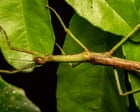
Science gets things wrong all the time. Usually, it happens in a dusty lab or during a complex biochemical assay. But sometimes, a massive, palm-sized insect hangs out in plain sight for decades while scientists call it by the wrong name.
That is exactly what happened in far north Queensland. Researchers recently untangled a messy case of mistaken identity involving some of the country's most conspicuous stick insects. A fresh study published in Austral Entomology split what people thought was a single widespread insect group into multiple distinct species, including two newly described ones: Anchiale robusta and Anchiale mabiensis.
If you thought we had cataloged every big creepy-crawly on the planet by now, think again. The reality is far messier.
The Clues Hiding in Plain Sight
You would expect a new species discovery to happen deep in an uncharted jungle where nobody has ever set foot. Not this time. Anchiale robusta has been a favorite among insect hobbyists and breeders for years. It isn't tiny. Females grow up to 16 centimeters long. They look striking, feature heavy bodies, and even display flashes of purple or black under their hindwings when threatened.
Yet, researchers lumped them in with other populations for generations. It took a mix of modern DNA sequencing, museum specimen checks, and citizen science records to finally prove what was actually crawling around the trees.
Dr. Braxton Jones from the University of Sydney pointed out the obvious clue that started the whole investigation. When researchers walked into the field, they saw individuals that looked physically distinct and lived in totally different habitats. That discrepancy kicked off the genetic detective work.
Meet the New Additions
Taxonomy can get tedious, but the animals themselves are fascinating. Let's look at the two main players introduced in the study.
Anchiale robusta takes the crown for sheer bulk among this group. Females easily dwarf the males, reaching lengths between 12 and 16 centimeters, while males max out around 10 centimeters. Because the females carry heavy loads of eggs, flight is basically out of the question for them. Males keep their wings functional, which makes finding a mate an active aerial mission.
Then you have Anchiale mabiensis, which makes its home in the critically endangered Mabi rainforest on the Atherton tablelands. These females sit around 11 to 12 centimeters long. One of their most unusual features is their eggs, which come equipped with a distinct structural lid that pops completely off when the tiny nymph finally hatches.
What used to be viewed as just two broad species across eastern Australia actually turns out to be five separate species stretching from northern New South Wales up into tropical Queensland.
Why This Mistake Matters Now
Getting names right isn't just an academic exercise for people in lab coats. It dictates whether animals survive or go extinct.
When conservationists think a single species spans a massive geographic range, they assume populations are safe. Split that single species into five localized groups, and the math changes instantly. Each distinct species suddenly occupies a much smaller, more vulnerable habitat range.
Habitat loss in places like the Atherton tablelands hits these newly defined populations hard. If Anchiale mabiensis only exists in a tiny patch of endangered rainforest, losing that forest means losing the entire species overnight. Naming them accurately gives conservationists the legal and ecological backing to protect those specific pockets of land.
Australia's Bizarre Insect Giants
Australia loves breaking size records. This latest discovery adds to a weirdly impressive lineup of oversized invertebrates roaming the continent's northeast.
Just last year, scientists formally described Acrophylla alta on the Atherton tablelands. That absolute unit reaches nearly 40 centimeters in length and weighs almost as much as a golf ball, making it a contender for the heaviest insect in the country. And if you head even further north, you will run into the gargantuan stick insect, where females easily blow past half a meter long.
Despite all these giants, basic biology still holds massive gaps. Citizen science platforms like iNaturalist play a massive role here. Because stick insects can hatch in huge numbers and catch people's attention in backyards, amateur observers snap photos and upload them by the thousands. Without those casual snapshots matching up with rigorous field studies, researchers might have stayed in the dark much longer.
Nature still keeps plenty of secrets. Sometimes, you just have to look a little closer at the bugs hanging from your garden trees.


