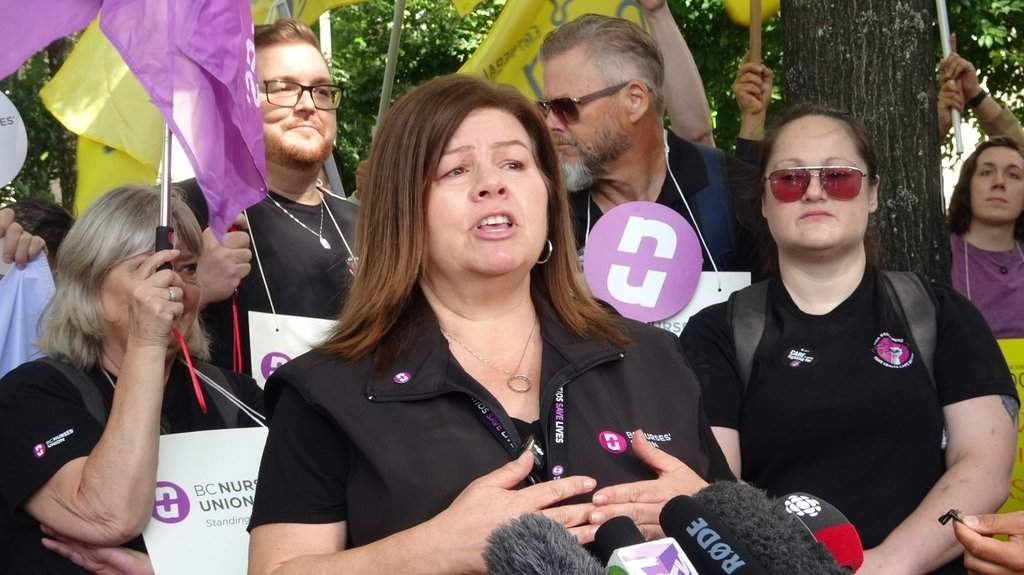
The coffee is cold, the waiting rooms are packed, and the doors of Vancouver General Hospital are lined with signs. At 5:30 a.m. on Tuesday, July 7, 2026, the province’s healthcare crisis hit a breaking point. When B.C. nurses escalate job action by setting up a picket line at the province’s largest hospital, it isn’t just a union flex. It’s an act of pure desperation.
If you’ve been following the headlines, you might think this is just another contract dispute about wages. It isn’t. This is about survival. Nurses across British Columbia are flat-out exhausted, working under conditions that are fundamentally unsafe for both them and their patients.
The public needs to understand exactly what’s happening behind those picket lines. The situation is far worse than the health authorities want you to believe.
The Breaking Point Behind the VGH Picket Line
Let’s look at the numbers because they tell a story of absolute collapse. B.C. is currently drowning in a permanent shortage of roughly 4,500 to 6,000 nurses. That doesn't even account for everyday gaps left by maternity leave, sudden illnesses, or burnout.
When you go to an emergency room and wait eight hours, you aren’t waiting because the doctors are slow. You're waiting because there aren't enough nurses to staff the beds.
A staggering 50,850 nurses participated in the historic strike vote earlier this summer. Out of those, 98.2 per cent voted in favour of taking action. Shortly after, the membership rejected a tentative contract agreement by 67 per cent.
Think about that. Two-thirds of the province's nursing workforce looked at what the government called a fair offer and said, "Not a chance." It proves the provincial government’s current bargaining framework is completely out of touch with reality.
Nurses aren’t holding out for luxury perks. They want manageable patient loads. They want to go home at the end of a shift without feeling like they failed a dozen people because they were stretched too thin.
The Hidden Threat of Workplace Violence
There's a brutal reality that health employers try to keep quiet. Healthcare facilities have become dangerous places to work.
According to data from the B.C. Nurses' Union (BCNU), one nurse goes off work on a WorkSafeBC injury claim every 16 hours due to workplace violence. Let that sink in. Every 16 hours, a nurse is assaulted badly enough to require medical leave.
They deal with physical assaults, verbal abuse, and constant threats. They face this while trying to save lives in overcrowded wards. This isn't part of the job description. It shouldn't be tolerated, yet it happens daily because security is understaffed and facilities are overwhelmed.
When the system runs hot constantly, tempers flare. Patients and families break down. Nurses end up being the punching bags for a system that's failing everyone.
Inside the Phased Job Action Strategy
The picket line at Vancouver General Hospital is Phase 2 of a carefully targeted strategy. The union isn’t walking out entirely. They can’t, and they won't, because they actually care about patient safety.
Last week, the union kicked off Phase 1 by enforcing a strict ban on non-nursing duties and restricting non-essential overtime.
What does a non-nursing ban look like? It means highly trained medical professionals are refusing to spend their shifts cleaning floors, delivering meal trays, or handling administrative paperwork. For years, health employers relied on nurses to fill every operational gap in the building. When a clerk doesn't show up, the nurse does the filing. When the janitor is short-handed, the nurse mops up. By stopping these tasks, nurses are showing just how heavily the entire hospital relies on their free, invisible labor to keep the lights on.
The overtime restriction is equally telling. The entire system is built on a house of cards powered by mandatory and voluntary overtime. If every nurse in B.C. refuses to work extra hours, the schedule falls apart within days. That is a management failure, not a nursing failure.
Now, the pressure is ramping up. Following the VGH picket line, the union is expanding lines to Surrey Memorial Hospital and the Jim Pattison Outpatient Care and Surgery Centre. They're squeezing the high-traffic hubs to force the government back to the table with real solutions.
Management Tactic of Intimidation
Instead of addressing these core issues, health employers have chosen a darker path. BCNU has already flagged over 1,400 individual reports of employer intimidation since the job action started.
Nurses report that managers are threatening them with formal discipline. Some have even been told their professional nursing licenses could be stripped for participating in a legal strike.
This is a classic scare tactic. It’s also completely illegal.
BCNU President Adriane Gear has been vocal that these duties involved in the job action do not require a specialized nursing designation. Refusing to scrub a counter or hand out dinner trays is not a violation of professional standards. It is a protected right under collective bargaining laws.
Trying to bully exhausted workers into submission when they're fighting for a sustainable workplace is a terrible look for B.C. health authorities. It backfires. It only hardens the resolve of the people holding the picket signs.
The Viral Support of Nurse Blake
The picket lines at VGH got an unexpected boost of high-profile energy on Tuesday morning. Blake Lynch, globally known as "Nurse Blake," showed up to walk the line and post videos to his 4.6 million social media followers.
Lynch is a former surgical ICU nurse who built a massive career as a comedian and creator by highlighting the absurdities and struggles of modern nursing. His message to B.C. workers was sharp: "This isn't job action, it's patient advocacy".
Having a global spotlight on Vancouver shines a light on a truth the local government wants to contain. This isn't just a British Columbia problem, but B.C. is failing to fix it faster than almost anywhere else. When international figures start pointing cameras at your premier hospital's picket line, you can't pretend everything is fine.
What Patients and Families Need to Know Now
If you have an appointment or need emergency care, you might be worried about crossing a picket line. You shouldn't be.
The union is maintaining essential services. Emergency rooms are open. Trauma care, critical surgeries, and urgent treatments are running. Doctors, patients, families, and emergency vehicles are allowed through the lines without issue.
The intent isn't to hurt patients. It is to disrupt administration and draw public attention to the systemic rot inside the ministry. If you need medical help, go get it. The nurses inside will take care of you, even as their colleagues outside fight for the tools to do that job safely.
What Needs to Happen Next
The Health Employers Association of B.C. (HEABC) and the province need to stop playing chicken with public health. The union has shown it can shut down non-essential logistics smoothly.
Fixing this requires a few concrete steps from the provincial government:
- Come back to the bargaining table with a real general wage increase that beats inflation and reflects the staggering cost of living in B.C.
- Implement enforceable nurse-to-patient ratios with financial penalties for health authorities that violate them.
- Pour immediate funding into targeted security measures to drop that horrific statistic of one injury every 16 hours.
- Cease all management threats and intimidation tactics against union members immediately.
Nurses don’t want to stand in the rain with signs. They want to do their jobs. But until the province realizes that you can't run a healthcare system by grinding your workforce into dust, those picket lines are going to keep growing. Keep an eye on Surrey and Jim Pattison later this week—the pressure is only going up.