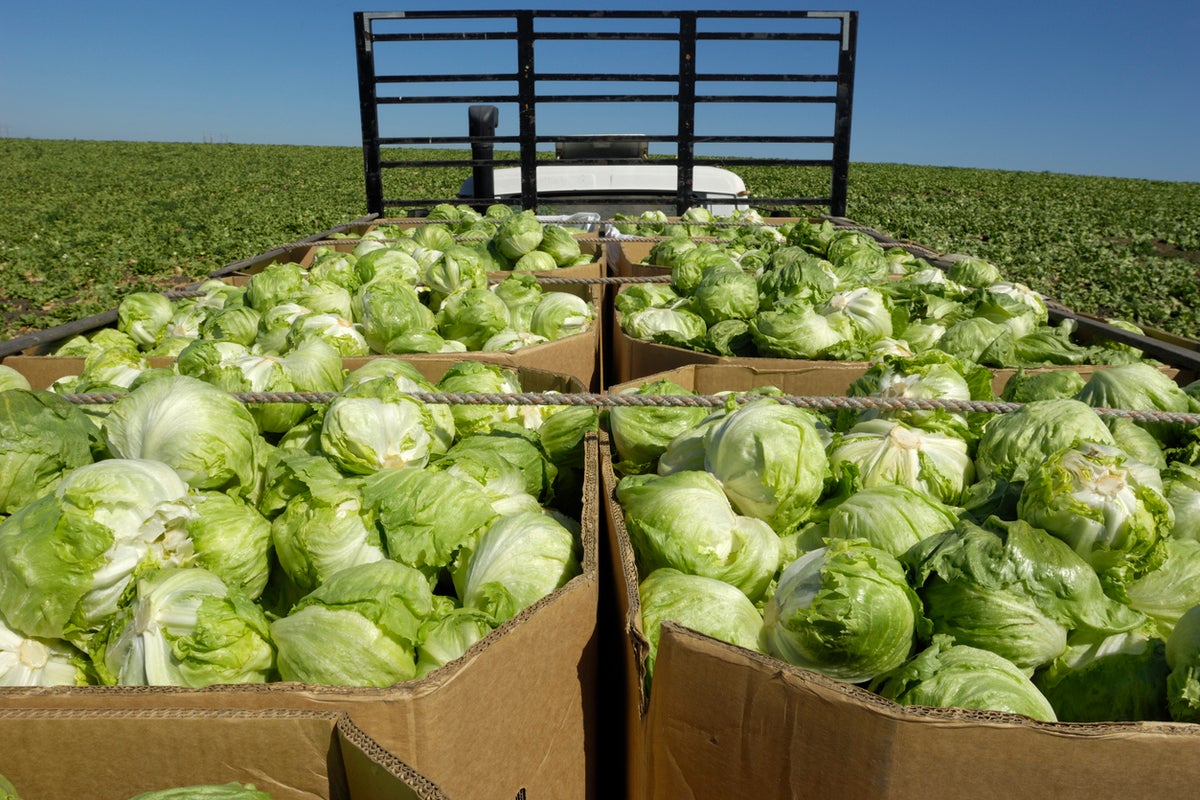
A microscopic parasite is terrorizing the grocery store salad aisle, and it's sending thousands of shoppers running straight to local farm stands.
If you've bought pre-packaged iceberg lettuce or eaten at a fast-food chain recently, you might want to double-check where that produce came from. Federal health officials at the Centers for Disease Control and Prevention and the Food and Drug Administration are tracking a massive multistate outbreak of cyclosporiasis. The culprit? Contaminated imported iceberg lettuce distributed through industrial supply chains, leaving over 1,600 people confirmed sick with severe, long-lasting gastrointestinal distress and thousands more reporting symptoms.
The result is a total collapse in consumer trust for factory-farmed, plastic-wrapped greens. While major grocery chains strip their shelves of bagged salad mixes, small family farms across the country are watching their lettuce coolers get wiped out by panicked buyers.
People want to know who grew their food, who touched it, and where it was washed.
What Cyclospora Is and How It Got Into Mass-Market Lettuce
Cyclospora cayetanensis isn't your garden-variety stomach bug. It's a single-celled parasite that causes weeks of explosive, watery diarrhea, severe abdominal cramping, extreme bloating, nausea, and exhaustion. Unlike common bacteria like E. coli or Salmonella, Cyclospora doesn't multiply on the plant itself. It enters the food supply almost exclusively through human fecal contamination—usually via infected farm workers or agricultural water supplies tainted with untreated sewage.
The current outbreak stems from central Mexico. Federal investigators traced infected iceberg lettuce back to Taylor Farms de Mexico, a major supplier that packages produce for retail giants like Walmart under the Marketside brand and fast-food chains like Taco Bell.
Once contaminated lettuce hits a industrial processing plant, the problem explodes exponential times over. Greens from dozens of fields are chopped, mixed, and washed together in industrial dunk tanks. If one head of lettuce carries the parasite, those giant washing lines end up coating thousands of bags across the entire batch.
That's why bagged salads are notorious for spreading foodborne illness. What's marketed as convenient and pre-washed is often just a high-speed vehicle for cross-contamination.
Why Grocery Shoppers Are Abandoning Bagged Greens for Local Produce
Consumers are tired of playing food safety roulette. Every summer brings another high-profile recall of packaged romaine or shredded iceberg, and this year's Cyclospora outbreak was the breaking point for many.
When news hit that bagged salads were making people sick across dozens of states, buyer behavior flipped overnight. Shoppers aren't stopping their consumption of leafy greens entirely; they're changing where they buy them.
At farm stands and community markets, vendors report a massive surge in foot traffic. Coolers that usually hold a day's supply of fresh head lettuce are emptying out in a matter of hours. Customers who used to grab a single head are now buying three or four at a time.
The math behind this shift makes complete sense.
When you buy a bag of shredded iceberg from a mega-retailer, that lettuce has likely traveled thousands of miles on refrigerated trucks, passed through multiple processing plants, and been handled by dozens of workers. Traceability is practically zero for the average consumer standing in the produce section.
When you buy from a local farm, the chain of custody drops to almost zero. The person selling you the head of butterhead or romaine is often the same person who harvested it that morning.
Small Farms Offer Transparency That Industrial Agriculture Cannot Match
Industrial agriculture relies on opacity. Corporate brands hide behind glossy packaging and vague claims of fresh quality, but when a parasite outbreak occurs, finding the exact source takes federal investigators weeks of traceback work.
Local growers offer something corporate produce lines cannot replicate: total radical transparency.
At local farm operations, buyers can ask direct questions:
- What source of water do you use for irrigation?
- How are your fields protected from agricultural runoff?
- What are your field sanitation and washing protocols?
Most local farms operate with clean well water or closed municipal systems rather than open surface canal water prone to contamination. Their wash houses use freshly sanitized water tanks rather than massive recycled water processing lines.
Because fields are smaller and harvest runs are limited, the risk of widespread cross-contamination drops dramatically. A problem on a small farm impacts a few dozen heads, not thousands of grocery stores across 30 states.
The Flaws in Mass Produce Processing You Aren't Supposed to Notice
The packaged salad industry relies on a fundamental illusion: that triple-washed means clean.
It doesn't.
Triple washing in a commercial plant is designed to remove dirt, grit, and bugs. It's not a sterilization process. Chlorine rinses and chemical sanitizers used in industrial processing reduce bacterial loads, but parasites like Cyclospora cayetanensis are notoriously tough. Their microscopic oocysts feature thick outer walls that resist standard chlorine wash solutions.
Washing produce at home under tap water helps wash away loose dirt, but even thorough home washing cannot completely remove microscopic parasites once they adhere to the delicate folds of cut leaves. When produce is pre-shredded or chopped, tissue cells rupture, releasing juices that help parasites and bacteria attach firmly to the leaf surfaces.
Whole heads of lettuce are inherently safer than pre-chopped, bagged mixes. The outer leaves act as a natural protective barrier. You can strip off the exterior leaves, wash the intact inner head, and slice it yourself right before eating. Buying whole heads from local sources eliminates the dangerous industrial processing step entirely.
How to Protect Yourself and Source Safe Leafy Greens
You don't need to eliminate fresh produce from your diet to stay safe from Cyclospora. You just need to change how you shop and handle your food.
Skip Pre-Cut and Bagged Greens
Avoid pre-shredded iceberg, packaged salad kits, and bagged leaf mixes while national parasite outbreaks remain active. The risk of cross-contamination in high-speed packing plants is simply too high.
Buy Whole Heads from Local Growers or CEA Brands
Seek out whole heads of lettuce from local farm stands, regional community supported agriculture shares, or Controlled Environment Agriculture indoor hydroponic farms. Indoor greenhouse farms grow produce under strict bio-secure conditions, eliminating exposure to outside water runoff and wild animals.
Practice Rigorous Home Washing
Wash all whole produce thoroughly under cool running tap water right before preparation. Rub the leaves gently with your hands to physically dislodge soil and contaminants. Do not submerge your greens in a sink filled with standing water, as this can recontaminate clean leaves if the basin isn't sterile.
Separate Cutting Boards and Utensils
Avoid cross-contaminating fresh greens in your kitchen. Use dedicated cutting boards for fresh produce that will be consumed raw, keeping them completely separate from raw meat or unwashed root vegetables.
Know the Symptoms and Demand Proper Testing
If you experience watery diarrhea, severe fatigue, loss of appetite, or stomach cramps lasting more than a few days, contact your doctor immediately. Inform them explicitly if you've eaten raw lettuce or dining out. Standard stool tests at clinics don't always check for Cyclospora parasites automatically, so you must specifically request a parasitic panel.
Support your local farmers, ditch the convenience of plastic bags, and take back control over what lands on your dinner plate.