A night out should never cost your life. Yet, the horrific Bangkok pub fire that ripped through the Rong Beer Na Lat Phrao bar in the Chatuchak district reminds us how quickly a room full of music can turn into a tomb. At least 27 people are dead. Dozens more are hospitalised, with 22 fighting for their lives in critical condition. The smoke cleared to reveal a familiar, devastating scene of charred chairs, scattered shoes, and structural failure.
This isn't an isolated accident. It's a systemic failure that happens when venue owners choose acoustics and aesthetics over human life. If you look closely at how this tragedy unfolded, you see the exact same traps that killed dozens at the Santika Club in 2009 and the Mountain B venue in 2022.
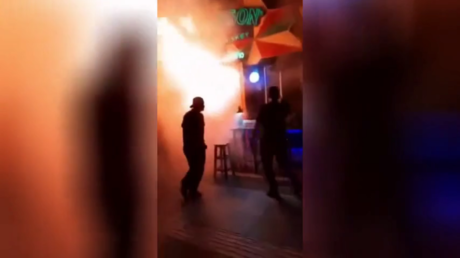
The horror started just before midnight on a Sunday. The venue was packed. A live band was on stage playing to a crowded room. Then, the lights flickered and went out. Musicians later reported seeing smoke pouring from a circuit breaker behind the stage. Seconds later, a loud explosion rocked the building. Flammable acoustic foam and decorative materials on the ceiling caught fire instantly.
Within two minutes, the entire room filled with thick, black, toxic smoke.
People panicked. They ran. But instead of finding safety, they ran directly into a dead end.
The deadly layout that trapped dozens in the dark
When a fire breaks out in an enclosed space, you don't have time to think. Survival depends entirely on the architecture of the building. In the case of the Rong Beer Na Lat Phrao disaster, the building itself became the enemy.
The initial investigation suggests an electrical short circuit in a ceiling-mounted air conditioner or the main circuit board triggered the blaze. Because the fire started near the stage, it cut off the main entrance for anyone sitting near the back. Survival instincts usually tell people to run away from the flames. In this venue, running away from the stage meant running toward the rear bathrooms.
That split-second decision proved fatal for many. Prime Minister Anutin Charnvirakul confirmed that a massive portion of the victims were found piled together in the windowless toilets. There was no exit back there. It was a complete dead end with no ventilation, no windows, and no escape route. People fled the smoke only to lock themselves in a chamber that quickly filled with carbon monoxide.
Smoke kills far faster than fire. Firefighters who arrived at the scene within five minutes noted that the fire itself wasn't overwhelmingly aggressive at first. The smoke was the real executioner. It filled 100% of the venue almost instantly. When toxic plastic and soundproofing foam burn, they release cyanide and carbon monoxide. A few breaths will knock you unconscious.
To make matters worse, the layout inside was a chaotic maze of heavy furniture. Rescuers who rushed into the darkness had to climb over overturned tables and heavy bar stools that blocked the main pathways. In total darkness, with no emergency lighting working, patrons were tripping over furniture and each other.
The illusion of local safety compliance
Bangkok Governor Chadchart Sittipunt stated that the bar had obtained the necessary operating permits. It technically listed four fire exits on paper. But having fire exits on a blueprint means absolutely nothing if they are locked, hidden, or blocked during operating hours.
Investigators are looking into whether the secondary exits were chained shut from the outside. This is a terrifyingly common practice in nightlife districts worldwide. Venue owners lock side doors to prevent people from sneaking in without paying or to stop customers from slipping out without settling their bar tabs. Several bodies were found huddled near one of the designated fire exits, indicating that they reached the door but couldn't get it open.
We see this exact pattern over and over again. The keyboardist and the lead singer of the performing band both died because the stage area lacked a clear, unblocked rear exit for performers. When the power died, the entire room became a black box. Without active luminescent exit signs powered by an independent battery backup, nobody could see where those four technical fire exits were located.
Relying on local enforcement to keep you safe in a crowded club is a gamble you shouldn't take. Corruption, lazy inspections, and temporary fixes right before an inspector walks through the door mean that a passing grade doesn't equal a safe building.
Why history keeps repeating itself in Thailand nightlife
We have seen this script play out before. In 2009, the Santika Club fire in Bangkok killed 67 people on New Year's Eve. The cause was indoor fireworks that ignited the ceiling. The building had inadequate exits, blocked windows, and no fire sprinklers.
Thirteen years later, in 2022, the Mountain B nightclub fire in Chonburi killed 26 people under almost identical circumstances. Flammable acoustic foam covered the walls, the main exit was narrow, and the back door was locked.
Now, we have the Lat Phrao disaster. The names change, but the mistakes are identical.
The underlying issue is a culture of reactive regulation. Authorities promise crackdowns every time a major tragedy hits the news. They inspect a few dozen high-profile clubs, hand out fines, close down a few venues for a week, and then everything goes back to normal. The structural greed remains. Owners keep packing venues past their legal capacity because more bodies mean more revenue. They use cheap, industrial-grade acoustic foam that acts like solid petrol when exposed to a spark because proper, fire-retardant soundproofing costs five times more.
How to spot a nightlife death trap before you sit down
You cannot control building code enforcement, but you can control whether you stay in a venue. Next time you walk into a pub, bar, or concert venue, spend the first 60 seconds doing a manual safety audit. Your life depends on it.
First, look at the entrance. Is the main door the only way in and out? If it is a single narrow doorway or a winding corridor, you are in a trap. If a fire starts near that door, you have nowhere to go.
Second, check the ceiling and walls. Do you see exposed dark foam panels? Tap them if you can. If it feels like cheap packaging foam, recognize that it will catch fire from a single spark and drop liquid fire onto the crowd within seconds. Proper fire-rated acoustic material is dense, often covered in fabric, and doesn't ignite easily.
Third, locate the exit signs. Are they brightly lit? Do they lead to an actual door, or are they just stickers on a wall? Walk past the stage or the bathrooms and look for the physical doors. Push on them gently. If you see a padlock, a chain, or boxes of beer stacked in front of an exit door, turn around and leave the venue immediately.
Fourth, look at the crowd density. If you cannot move freely through the room without bumping into tables, chairs, and people, the venue is over capacity. In a fire, that crowded floor turns into a human crush.
Your immediate checklist for surviving a venue fire
If the worst happens and you find yourself inside a venue when a fire starts, you need to act within the first 30 seconds. Do not wait for an announcement. Do not try to find your friends or grab your coat.
Get low to the floor immediately. The air near the ground will have the lowest concentration of toxic smoke and the highest amount of oxygen. Crawl if you have to.
Cover your mouth and nose with any cloth you have. If you have a drink in your hand, pour it onto your shirt or a napkin and breathe through the wet fabric. It won't stop toxic gases completely, but it will filter out the heavy soot particles that burn your lungs and cause you to pass out.
Do not head for the bathrooms. The Bangkok tragedy proved once again that bathrooms are a psychological trap. People run there because they think water equals safety, or because it is a familiar enclosed room away from the immediate chaos. They have no exits. You will get trapped and overcome by smoke.
Move along the walls to navigate. In total darkness, you will lose your sense of direction. Keeping one hand on a wall allows you to move systematically toward an outer boundary where an exit or a window is more likely to be found. If you find a window, break it with a heavy object like a stool or a bottle and climb out. Do not worry about cuts.
The tragedy in Lat Phrao should be a turning point for safety enforcement, but history shows we cannot count on that. Protect yourself by staying hyper-aware of your surroundings every single time you step into a crowded room. If a place feels unsafe, trust your gut and walk out. No party is worth dying for.