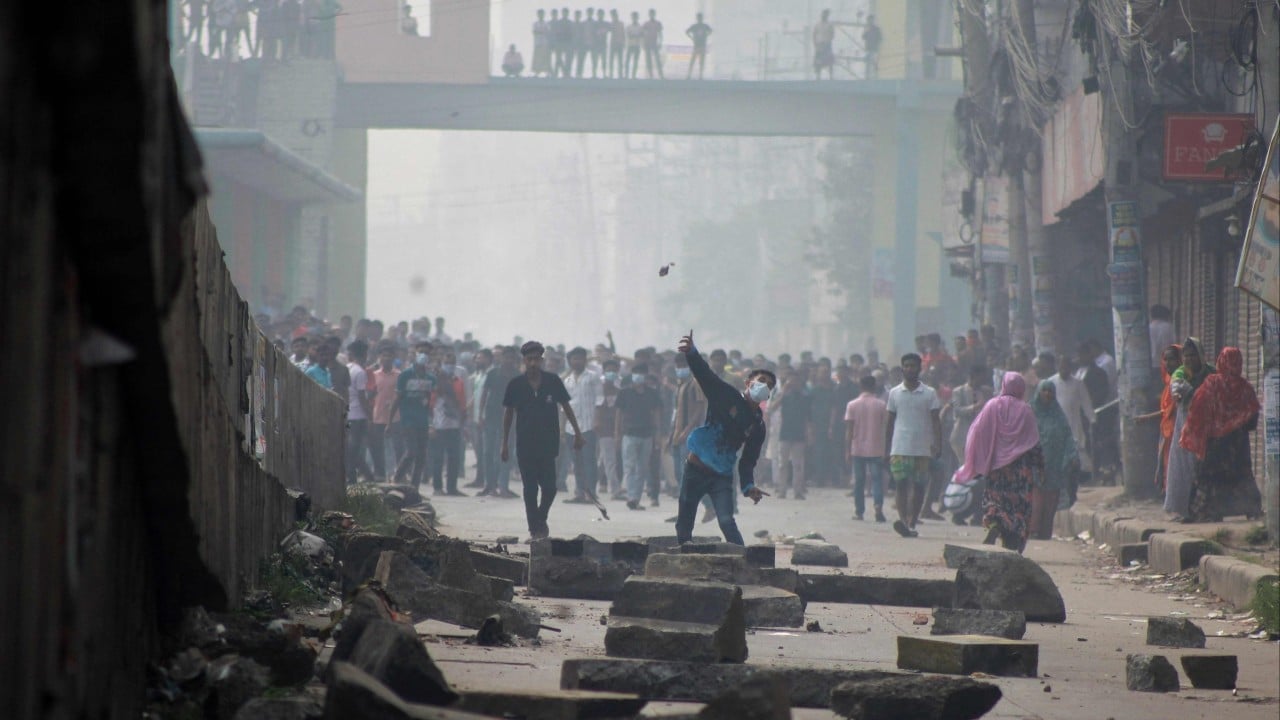
Thousands of garment workers took to the streets around Dhaka, blocking major highways and clashing with security forces. They want one simple thing: a wage that actually covers the cost of living.
If you look past the headlines about traffic blockades and tear gas, a much larger economic pressure cooker is boiling over. Bangladesh is the world's second-biggest garment exporter, right behind China. Global fashion giants rely on this nation to pump out cheap clothes year-round. But the people stitching those clothes can't afford basic groceries.
Let's break down what's actually happening on the ground and why this crisis isn't going away anytime soon.
The Breaking Point Behind the Dhaka Highway Blockades
The math simply doesn't work anymore. Right now, the baseline minimum monthly wage sits at 12,500 Taka, which translates to roughly 100 US dollars. Workers are demanding an increase to 30,000 Taka, or about 240 US dollars.
Inflation has surged, eating away at already razor-thin paychecks. When you're making the equivalent of a few dollars a day, a spike in the price of rice, lentils, and rent isn't an inconvenience. It's an existential emergency.
Workers in industrial hubs like Gazipur, Ashulia, and Mirpur didn't just wake up and decide to block the Dhaka-Tangail and Dhaka-Mymensingh highways. They reached the absolute end of their tether. Months of stagnant pay combined with delayed wages pushed thousands onto the asphalt.
How the State and Factory Owners Are Responding
The government's reaction has been swift and heavy-handed. Authorities deployed more than a thousand paramilitary personnel alongside industrial police forces. When demonstrations refused to disperse, police fired tear gas, used sound grenades, and charged batons against stone-throwing protesters.
Home Minister Salahuddin Ahmed took a hardline stance, warning that anyone disrupting public order under the guise of labor movements would be handled with an iron hand.
Meanwhile, factory owners are caught in a brutal squeeze. Global brands are notorious for squeezing suppliers on price, refusing to pay more for garments even as local production costs rise. Afraid of losing contracts to competitors in Vietnam or India, factory owners push back against wage hikes. When protests erupt, dozens of factories simply shut their doors for the day to avoid vandalism, causing millions of dollars in losses.
The Timing Couldn't Be Worse for Global Retailers
This unrest isn't just a local labor dispute. It hits international supply chains at the absolute worst possible moment.
We are hurtling toward the holiday shopping rush. Winter apparel and holiday orders are currently being finalized, shipped, and stocked for Christmas. When factories close, shipment schedules shatter.
The government formed a Minimum Wage Board to review the pay structure, pushing key meetings forward as pressure mounts. Officials claim a revised wage structure will roll out soon, with adjusted salaries expected early next year. But for workers staring at empty kitchen pantries today, promises of future pay schedules feel entirely hollow.
What Needs to Change in Global Fast Fashion
You can't talk about these clashes without pointing the finger at the Western brands driving the demand. Consumers want cheap t-shirts and fast fashion trends delivered overnight. Retailers pass those low-cost expectations down the supply chain until the pressure fractures at the factory floor level.
Until international brands build living wages directly into their costing models, these protests will keep happening. You cannot rely on a workforce of millions to subsidize global retail profits forever.
Keep an eye on how the wage board negotiations land over the coming days. If the settlement falls short of reality, the highways around Dhaka will fill up again very soon.
Bangladeshi garment workers, police clash in fresh wage protest
This video provides on-the-ground footage of the factory protests, highway blockades, and clashes between demonstrators and security forces in industrial zones like Gazipur and Mirpur.