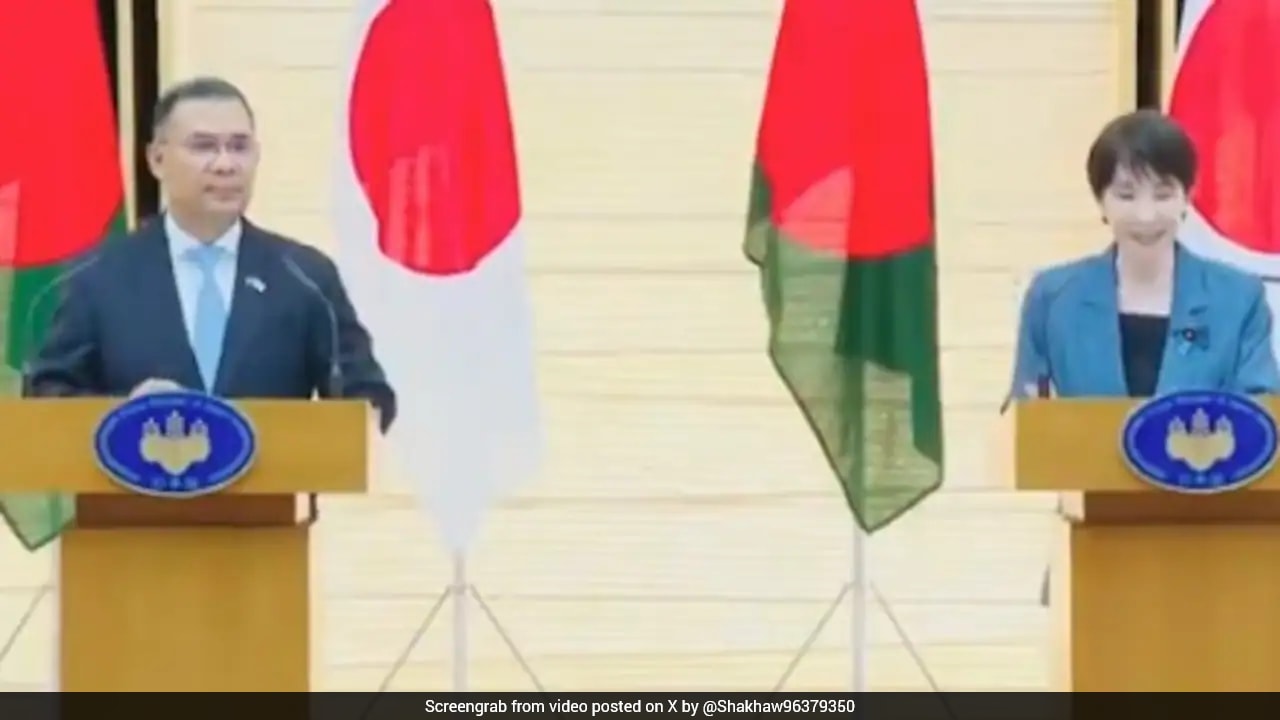
Foreign investment doesn't just happen because a politician asks for it. You need real structural changes, reliable infrastructure, and a workforce that can handle modern manufacturing. That is the exact challenge Bangladesh Prime Minister Tarique Rahman brought to Tokyo during his four-day official visit, sitting down with Japanese Prime Minister Sanae Takaichi to pitch his country as South Asia's next major industrial hub.
If you look past the usual diplomatic handshakes, this visit reveals a calculated push to reshape how foreign capital views Dhaka. Rahman took office in February and has wasted zero time travelling. Trips to Malaysia, China, and the United Nations General Assembly preceded this Tokyo tour, signaling a busy foreign policy agenda. But Japan occupies a very different space in Dhaka's economic blueprint, backed by decades of heavy infrastructure financing and corporate presence. You might also find this similar coverage interesting: Why The New India Liechtenstein Partnership Changes Everything For Trade.
Tokyo isn't just a donor nation here. Japanese firms have built deep supply chains across Asia, and Bangladesh wants a larger slice of that industrial pie. During his meetings, Rahman pushed hard for Japanese conglomerates, financial institutions, and manufacturing giants to look beyond traditional markets and invest directly in his country's next phase of growth.
What’s Actually on the Table
Talks in Tokyo weren't just about general goodwill. The two governments exchanged multiple memorandums of understanding covering trade expansion and technological cooperation. More importantly, Rahman held intensive talks with the Japan International Cooperation Agency, led by President Dr Akihiko Tanaka, focusing on concrete proposals like a Bangladesh-Japan Skills Partnership and a dedicated Technological Village and Innovation City. As highlighted in recent reports by CNBC, the results are widespread.
JICA isn't new to Bangladesh. They are already backing heavy infrastructure projects that change how goods move across the country, including the Dhaka Mass Rapid Transit system, the Jamuna Railway Bridge construction, and the Matarbari power project. Without these upgrades, foreign factories simply cannot operate efficiently. Rahman knows that. By pitching a fresh skills partnership alongside these hardware investments, Dhaka is trying to solve the human capital bottleneck that usually scares off foreign CFOs.
Business leaders in Japan responded to more than just speeches. Rahman also sat down with Marubeni Corporation Chairman Masumi Kakinoki and former prime minister Taro Aso, pitching reforms designed to make doing business easier. Legal overhauls are underway to cut red tape, protect foreign capital, and streamline the corporate registration process.
Why Investors Care About the Shift
Investors want predictability. For years, foreign businesses operating in South Asia faced unpredictable regulatory shifts and logistics nightmares. Rahman's administration is betting that modernizing light engineering, agricultural processing, and technology sectors will draw companies looking to diversify away from riskier production hubs.
Japan's corporate sector has immense capital looking for stable, growing labor markets. Bangladesh offers a young, eager population and competitive labor costs. But cheap labor alone won't close the deal anymore. Companies want reliable power grids, transparent legal frameworks, and workers trained in advanced manufacturing techniques.
That explains the emphasis on the proposed Technological Village and Innovation City. If Dhaka can successfully partner with Japanese institutions to upskill its workforce, it shifts the narrative from basic garment manufacturing to higher-value tech and engineering services.
What Comes Next for Dhaka
Foreign policy balancing acts require steady hands, and Rahman is currently navigating a packed diplomatic calendar. Reports indicate he is also preparing for a crucial state visit to New Delhi later this year to reset bilateral ties with India, ironing out pending issues that have lingered between the two neighbors.
The real test for Bangladesh won't be how many memorandums of understanding get signed in Tokyo hotel rooms this week. It will be how quickly those legal reforms translate into cleared permits, broken ground on tech parks, and actual factories opening their doors. Foreign investors will wait and watch, but the initial signals show Dhaka is serious about rewriting its economic playbook.


