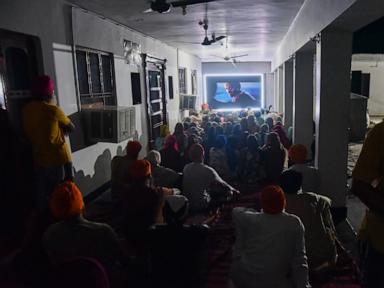
A white sheet hangs against the brick wall of a village temple in Gurdaspur. A cheap digital projector hums, powered by a sputtering diesel generator. As the sky turns dark over the fields of Punjab, hundreds of people sit cross-legged on the ground. They are watching a movie the Indian government does not want them to see.
The film is Satluj. You might have heard of it under its original name, Punjab 95. It stars global Punjabi icon Diljit Dosanjh. For three years, Indian censors kept this movie locked away, demanding more than 120 cuts before it could see a theater. When it finally leaked onto the streaming platform ZEE5 in July 2026, the state acted fast. Within 48 hours, it vanished from the platform.
But hiding art is much harder than it used to be. The sudden digital takedown triggered what internet culture calls the Streisand Effect. Pirated copies immediately flooded WhatsApp groups and Telegram channels. Now, grassroots activists and local villagers are organizing makeshift outdoor cinemas across northern India. They are using basic tech to completely bypass state control.
The Unintended Consequence of Digital Takedowns
When you ban a piece of media in the internet age, you don't destroy it. You just make it required viewing. The Indian government cited security grounds for ordering ZEE5 to scrub the movie. ZEE5 complied, stating they would look into legal avenues while removing the video feed. That corporate retreat changed nothing on the ground.
People wanted answers. They downloaded the files, loaded them onto USB drives, and took matters into their own hands. This isn't about traditional distribution metrics or box office returns anymore. This is about survival of a community narrative.
By pushing the movie underground, officials turned a regular viewing experience into an act of political defiance. A theatrical release would have come and gone in a few weeks. Instead, Satluj became a permanent fixture of village conversation.
The Bloody History Censors Tried to Hide
To understand why people are risking police scrutiny to watch a movie, you have to understand the man behind the story. Diljit Dosanjh plays Jaswant Singh Khalra. Khalra wasn't a politician or a militant. He was a bank manager turned human rights activist.
During the height of the Punjab insurgency in the 1980s and early 1990s, the region was caught in a brutal cycle of violence. Sikh separatist groups fought for an independent state called Khalistan. On the other side, Indian security forces used scorched-earth tactics to crush the rebellion. Thousands died.
Khalra began investigating a terrifying pattern of disappearances. He tracked down official logs from cremation grounds. What he found shocked the world. Police were secretly cremating thousands of unidentified bodies without notifying families. Khalra exposed over 2,000 illegal cremations in his home district of Amritsar alone. He estimated that across Punjab, the number exceeded 25,000.
His work stop-signed official lies. It also cost him his life. In September 1995, Khalra was kidnapped from his home by men in plain clothes. He was never seen alive again. A decade later, several police officers were convicted of his murder.
The Battle of the 120 Cuts
The Central Board of Film Certification in India has a long history of protecting state narratives. When the filmmakers submitted Punjab 95 years ago, the board panicked. They demanded a total overhaul.
Censors didn't just want dialogue tweaks. They wanted history rewritten. They demanded the removal of specific references to Punjab, Amritsar, and real-life political figures. They even forced the title change to Satluj, named after the regional river, to distance the project from the specific year of 1995.
Think about that for a second. The state tried to scrub the geographic identity of a movie about an actual historical figure.
Film certification bodies in India often act as ideological gatekeepers. Under the current political climate, movies that challenge the uniform national narrative face intense pushback. Meanwhile, films that flatter state power or stoke majoritarian sentiment sail through production with official blessings.
Anatomy of a Temple Screening
Go to Tatley village in Gurdaspur on a Wednesday night, and you will see how useless top-down censorship really is. The infrastructure of these screenings is completely decentralized.
- The Venue: The courtyard of a local Sikh temple (Gurdwara) or a common village hall.
- The Tech: A standard consumer-grade projector, a pair of loud wedding-style audio speakers, and a laptop.
- The Network: Word of mouth, trusted signal groups, and local youth volunteers.
Inderjeet Singh Bains helps coordinate these events in Gurdaspur. He points out that the crowd is always a mix of generations. You see elderly women who lived through the actual crackdowns sitting next to 17-year-olds who only know the era through hushed family stories.
When the movie plays, nobody eats popcorn. The atmosphere feels more like a wake than a cinema. Elders openly weep when scenes mirror the exact ways their sons or brothers disappeared decades ago. For these communities, the movie isn't fiction. It is a mirror.
Diljit Dosanjh and the Power of Visible Memory
Choosing Diljit Dosanjh for the lead role was a brilliant tactical move by the directors. Dosanjh is a massive star. He sells out stadiums in London, collaborates with American pop stars, and performs at Coachella. He has a massive, young, global following.
When a star of that magnitude plays a historical human rights martyr, the state cannot simply make the story go away. Dosanjh himself expressed a calm indifference to the streaming ban. He noted that once an audience sees a story, it cannot be erased from their minds.
He is right. The memory is out there now. No corporate platform takedown can recall the data once it hits a hard drive in rural Punjab.
What Independent Filmmakers Can Learn From This
If you are a storyteller dealing with political themes, the saga of Satluj offers a raw blueprint for survival. The traditional pipelines of theater chains and corporate streaming apps are vulnerable to government pressure. They have offices to protect, licenses to keep, and shareholders to appease.
If your work challenges power, you cannot rely solely on them. You need to think about alternative distribution from day one.
Build Direct Community Ties
Do not just market to consumers. Connect with the organizations that care about your subject matter. In this case, Sikh human rights groups and local village collectives took over when corporate distribution failed.
Expect the Ban and Prepare Digital Assets
If your content is volatile, ensure your digital masters are secure and decentralized. The moment a film is pulled from a service like ZEE5, a backup should be ready to fill the vacuum.
Keep Production Costs Adaptable
Satluj could afford to lose its theatrical run because the story itself carries the weight, not expensive CGI effects. When your budget is lean, you don't need a multi-million dollar box office weekend to validate your project's cultural impact.
The lessons from Punjab show that the old ways of controlling information are broken. A government can intimidate a streaming platform. It can force a corporate board to hit delete. But it cannot march into every village square, every courtyard, and every home to seize a flash drive. The screen will keep flickering to life.