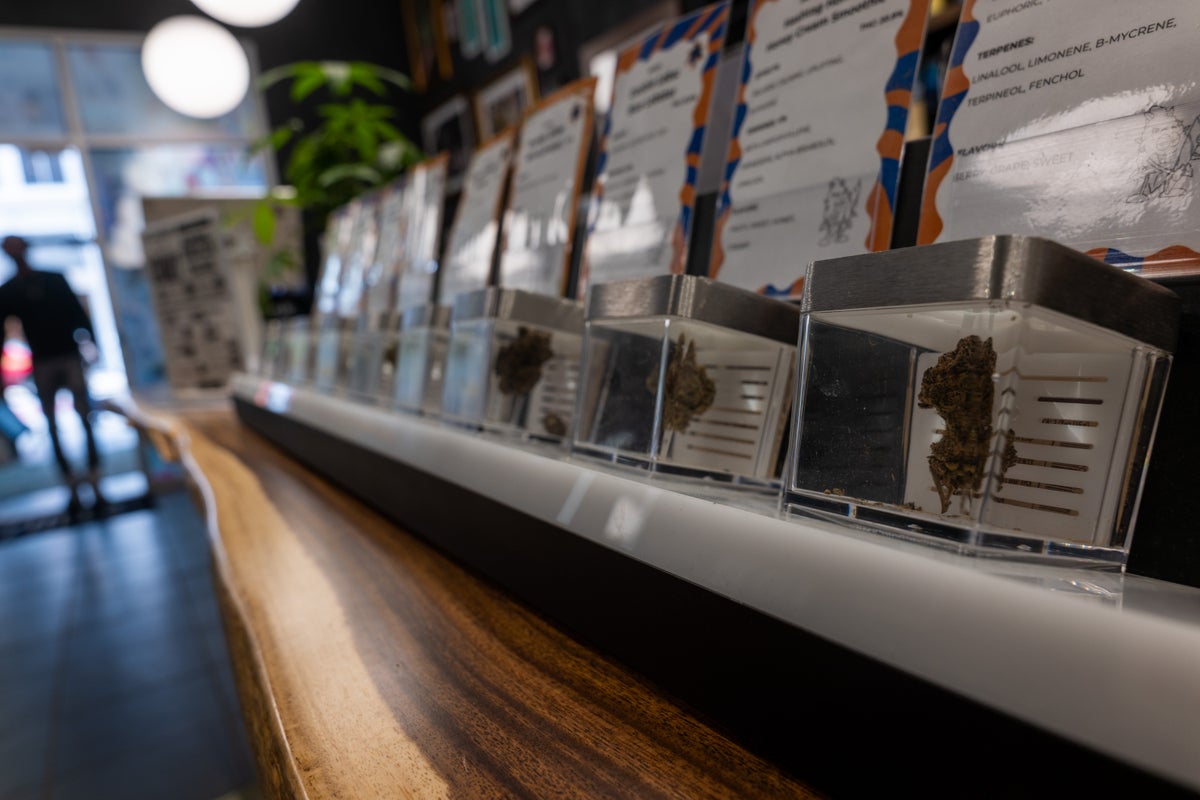
A quiet war is brewing on the cobblestone streets of Boston, and it could completely rewrite how America handles drug policy. A decade ago, Massachusetts became a pioneer by voting to legalize recreational cannabis. Now, it stands on the edge of a historical pivot point. This November, the state could become the first in the nation to completely dismantle its commercial adult-use market.
A well-funded push backed by out-of-state interests is aiming to put "An Act to Restore a Sensible Marijuana Policy" directly on the ballot. If passed, it won't just throw a wrench into a billion-dollar local market. It will send shockwaves through every single state that relies on cannabis tax dollars.
For years, legalization felt like a one-way street. Once a state opened the dispensaries, there was no going back. Massachusetts is about to test whether that's actually true.
What is Actually on the Table
Let's clear up the immediate confusion. If this initiative passes, the state isn't going back to the mass-incarceration days of the 1990s. Smoking a joint wouldn't automatically land you in a jail cell.
Instead, the proposal aims to completely choke off the supply side. It would systematically dismantle the commercial infrastructure that underpins the state's $1.65 billion adult-use market.
Here is exactly what the ballot measure changes if voters check "Yes" this fall.
- The End of Commercial Retail: Every single adult-use dispensary in the state would be forced to pull its shutters down permanently. Cultivation facilities, testing labs, and product manufacturers would have their commercial adult-use licenses revoked.
- Home Cultivation Banned: The current right for adults 21 and older to grow up to six plants at home for personal use would disappear completely.
- Medical Preservation: The state’s medical marijuana system would survive. Patients with valid state-issued medical cards could still buy their medicine, though an industry stripped of its recreational scale would likely face severe consolidation.
- Decriminalized Possession: Adults 21 and older would still be allowed to possess up to one ounce of cannabis without facing civil or criminal penalties. If you're caught with between one and two ounces, it's a flat $100 civil fine.
Basically, the initiative creates a strange legal paradox. You're legally allowed to have an ounce of weed in your pocket, but it becomes entirely illegal to buy it, sell it, or grow it anywhere within state lines.
The Money and the Motive
This isn't a spontaneous, grassroots uprising of concerned local parents. Look at the public finance records and the fingerprints point directly to Virginia.
The main group pushing the ballot question, the Coalition for a Healthy Massachusetts, received $1.6 million in funding from SAM Action Inc. That's the political advocacy arm of Smart Approaches to Marijuana, a national anti-cannabis organization based out of Virginia.
Prohibitionists smell blood in the water. They argue that the state’s regulatory body, the Cannabis Control Commission, has been plagued by bureaucratic mismanagement. They point to stubborn black-market operations that still exist despite legalization, and argue that high-potency THC concentrates pose an unregulated public health crisis for Bay State youth.
On the other side of the aisle, the local industry is scrambling to play catch-up. Just this week, dispensary owners, local politicians, and healthcare workers gathered on the steps of the State House in Boston to launch the "Stop the Repeal" campaign. Led by Ryan Dominguez of the Massachusetts Cannabis Coalition, the group is trying to warn voters about the catastrophic economic hole a repeal would create.
The numbers are staggering. We are talking about 27,000 jobs completely vaporized overnight. Last year alone, the industry generated $289 million in state tax revenue and another $50 million for local municipalities. Cities like Fitchburg rely heavily on those local excise taxes to fund basic public infrastructure, school budgets, and emergency services. Stripping that funding away when municipal costs are already soaring would trigger immediate budget crises across the state.
The Reality on the Ground
If the goal of the repeal is to stop people from consuming cannabis, it's bound to fail. Demand doesn't vanish just because you close down a storefront.
When you eliminate a transparent, heavily regulated retail market, you don't eliminate the consumer. You simply hand the keys back to the illicit market.
Think about what actually happens on January 1, 2028, if this measure takes effect. Consumers won't stop smoking; they’ll just call their old dealers. The black market will explode overnight, completely free from the state’s rigorous testing mandates, age verification checks, and product potency caps.
State polling suggests that most locals see right through the prohibitionist push. A University of New Hampshire Survey Center poll showed that 63% of likely Massachusetts voters actively oppose rolling back the legal weed laws. Only 20% expressed support for the repeal.
But the cannabis industry can’t afford to be complacent. The anti-repeal groups had raised barely over $10,000 by the start of the year compared to the multi-million dollar war chest of their opponents. In off-year or complex mid-term environments, voter confusion at the ballot box can lead to shocking outcomes. Advocates are worried that voters might read the phrase "An Act to Restore a Sensible Marijuana Policy" and check yes without realizing they are completely killing a local industry.
Next Steps for Voters and Observers
If you live in Massachusetts or simply want to track how this precedent-setting vote will shake out, the timeline is moving fast.
- Watch the July 8 Deadline: The Coalition for a Healthy Massachusetts must submit its final round of 12,429 verified signatures by July 8 to officially lock the question onto the November ballot. Because this is a relatively low bar, expect it to pass.
- Verify Your Registration Status: If you want a say in the state’s economic and social trajectory, double-check your voter registration status through the Massachusetts Secretary of State portal well ahead of October.
- Read the Fine Print: When the official voter guide arrives in your mailbox this fall, look closely at the summaries. A "YES" vote means you want to ban recreational sales and home cultivation. A "NO" vote means you want to protect the current regulated market.
:max_bytes(150000):strip_icc():focal(999x0:1001x2)/Jax-and-Brittany-040323-04-2000-d82e6b51b7c0490e95749e731826a758.jpg)