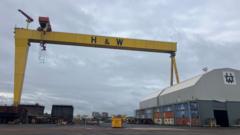
For two decades, the twin titans of the Belfast skyline have been little more than glorified museum pieces. Samson and Goliath, those iconic yellow gantry cranes, define the city. Locals see them as monuments to a bygone era of shipbuilding, fading markers of a time when this yard built the world's most famous liners. That’s changing. Right now.
Navantia UK is pumping £3.1 million into a total mechanical and electrical overhaul of these beasts. It isn't for show. It’s for survival—and for a massive contract that puts Belfast back on the map of serious naval manufacturing.
The real reason for the 3.1 million pound facelift
If you’re wondering why a company would spend millions fixing up forty-year-old steel structures, the answer is simple: necessity. Harland & Wolff is gearing up to build three Fleet Solid Support (FSS) ships for the Royal Fleet Auxiliary. These aren't just any vessels. They’re massive, complex supply ships intended to support the UK’s aircraft carriers.
You can’t build ships of that scale without heavy-lift capacity. The yard has been quiet on the manufacturing front for years, but the FSS project requires the kind of infrastructure that only these two cranes can provide. Each crane is a powerhouse, capable of lifting 840 tonnes. To put that in perspective, that’s like hoisting four Boeing 747 jumbo jets into the air simultaneously.
The refurbishment plan is aggressive. Engineers are currently stripping back the guts of the older crane, Goliath, built in 1969. They are replacing the catenary cables, upgrading the engines, and performing structural repairs that haven't been touched in years. Once Goliath is ready, Samson, the slightly taller younger sibling installed in 1974, gets the same treatment.
Beyond the cranes
The crane work is just the tip of the iceberg. This is part of a wider £98.5 million recapitalization effort. When people talk about "revitalizing industry," they often mean fluff. Here, it means cold, hard cash flowing into dry-dock repairs and modern equipment.
The yard’s goal is to become functional for modern naval builds. We’re talking about a level of technical precision that the current facility simply wasn't equipped to handle a year ago. It’s a gamble. The industry is watching to see if a historic yard can pivot from ghost-shipyard status to a high-tech manufacturing hub without stumbling.
I’ve seen enough "revival" projects to know that the hardest part isn't the steel—it’s the supply chain and the skilled labor. Navantia’s investment acknowledges this. They aren't just fixing the paint; they are overhauling the capacity to hold massive steel blocks in place for welding, assembly, and outfitting.
What this means for the city
For a long time, the cranes were symbols of industrial decline. They sat there while the yard cycled through owners, bankruptcy, and uncertainty. Now, they represent a shift in UK defense strategy.
The Ministry of Defence needs these FSS ships, and they need them built domestically. That provides a window of opportunity for Belfast that hasn't existed in twenty years. If they pull this off, the yard regains its status as a cornerstone of British maritime defense. If they miss their marks on efficiency or deadlines, the cranes go back to being high-visibility tourist attractions.
The path forward
The work on Goliath is already underway. If you’re tracking the progress, keep an eye on the shipyard schedule for early 2027. That’s when the real heavy lifting—literally—is slated to begin on the FSS ships.
Don't buy into the idea that this is just heritage preservation. It’s an industrial play. Keep your eyes on these three markers:
- The Cable Replacement: Getting power to the trolley systems is the most critical hurdle. Without it, the cranes are just stationary obstacles.
- Dry Dock Readiness: The cranes move on tracks along the dry dock. If the tracks or the bed aren't perfectly level, the lift capacity becomes a liability.
- Labour Integration: You need specialized engineers who understand the quirks of 1970s Krupp engineering integrated with modern control systems.
Basically, it's a massive, high-stakes engineering puzzle. They’re finally trying to solve it.