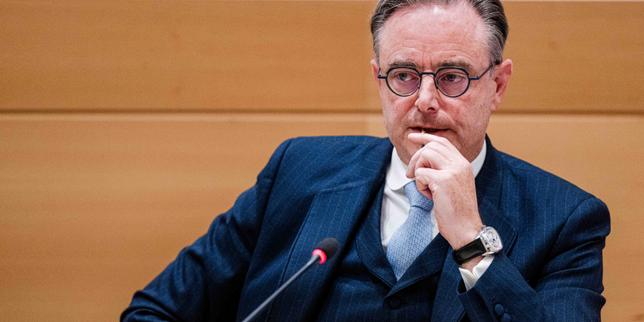
Belgium just hit the panic button again. Prime Minister Bart De Wever walked into the Royal Palace on November 2, 2026, to hand his resignation to King Philippe after all-night fiscal negotiations completely collapsed.
The King didn't accept it right away. Instead, he put the resignation on ice and summoned political party leaders to buy time until Friday.
If you've followed Belgian politics for more than five minutes, this scenario feels like a rerun. The country holds the world record for going without an elected government, sitting at 541 days during its infamous 2010–2011 crisis. But treating this week's collapse as routine institutional theater misses the bigger picture entirely. This isn't just political posturing—it's a high-stakes gamble driven by crippling public debt, EU enforcement pressure, and a looming national strike.
Here is what is actually going on behind closed doors, why the coalition splintered, and what happens next for the Eurozone's most fragile balance sheet.
The Math Behind the Collapse
The core issue isn't abstract philosophy; it's a massive fiscal hole.
Belgium finished the last fiscal period with a budget deficit hovering around 5% of GDP and public debt surpassing 110% of its total economic output. Both metrics violate the European Union's fiscal limits—capped at 3% for deficits and 60% for debt-to-GDP ratios. Brussels has made it clear that passive excuses won't work anymore.
During the final late-night cabinet session, ministers tried to bridge a gap of several billion euros to meet EU consolidation requirements. They managed to patch together roughly 8 billion euros in consensus savings, but the remaining deficit cuts proved impossible to negotiate.
Foreign Minister Maxime Prévot put it bluntly after leaving the negotiations, noting that there were simply too many structural sticking points left to resolve.
When temporary fixes like emergency 12-month extension budgets were proposed, De Wever rejected them. He chose to force a confrontation by tendering his resignation instead.
Why Bart De Wever Took the Ultimate Political Risk
Bart De Wever's move is a calculated tactical gamble.
As head of the New Flemish Alliance (N-VA), De Wever spent years arguing that federal Belgium is fundamentally unworkable. By tendering his resignation now, he achieves two distinct objectives:
- Maximum pressure on coalition partners: He forces francophone and centrist allies to face the harsh reality of immediate market fallout if they refuse to sign off on structural spending cuts.
- Protecting his political narrative: If the coalition ultimately fails, De Wever can tell his Flemish voter base that he refused to compromise on fiscal responsibility.
King Philippe recognized the play instantly. The royal palace issued a rare public statement expressing regret over the lack of a credible budget, emphasizing that Belgium cannot afford a prolonged political paralysis given current global uncertainties.
By holding the resignation in suspense until November 6, the King effectively handed the coalition a four-day countdown to find a deal.
The Real Winner Right Now? Financial Markets and Labor Unions
While politicians argue in Brussels, two outside forces are closing in.
Financial Markets are Watching Interest Rates
Ten-year Belgian government bond yields (OLOs) have drifted upward toward 3.5%, reflecting growing investor caution. With debt at 110% of GDP, even a slight increase in borrowing costs adds hundreds of millions of euros to the annual debt-servicing bill. Rating agencies have already signaled that political gridlock during a period of fiscal adjustment increases the risk of credit downgrades.
Labor Unions are Mobilizing
Street-level resistance is escalating fast. Public sector workers have organized protests against proposed cuts to pensions and public services, and major trade unions have already called for a nationwide general strike on November 23.
This creates a tight trap for any incoming budget plan: cut spending enough to satisfy the European Commission, and you face a nationwide standstill; don't cut enough, and bond markets push borrowing costs into dangerous territory.
What Happens Next: The 3 Possible Scenarios
Belgium isn't heading to immediate federal elections just yet. Here are the realistic paths forward before the November 6 royal deadline:
Scenario A: A Last-Minute Compromise (50% Likelihood)
The King's consultations force party leaders back to the table. The coalition accepts a scaled-back reform package—meeting the bare minimum required by EU fiscal rules while delaying controversial structural reforms until late 2027.Scenario B: Coalition Reshuffle Without De Wever (30% Likelihood)
If Flemish nationalist demands prove too steep for Walloon parties, party leaders could attempt to assemble a alternative coalition. However, finding a stable majority without the N-VA remains mathematically complex.📖 Related: another way of saying in factScenario C: Provisional Twelfths Regime (20% Likelihood)
If no deal is reached, Belgium shifts to the emergency "provisional twelfths" system. Under this setup, government departments operate month-to-month, spending exactly 1/12th of the previous year's budget. It prevents an immediate government shutdown, but completely halts long-term investment and reform.
Practical Takeaways for Businesses and Investors
If your organization operates in Europe or holds exposure to sovereign debt, don't ignore Brussels' latest drama. Take these steps immediately to protect your operations:
- Audit your Belgian supplier contracts: Look for clause vulnerabilities tied to public sector strikes, specifically around the scheduled November 23 national strike date.
- Monitor OLO yield spreads: Track the spread between Belgian 10-year bonds and German Bunds; a spread widening past 75 basis points signals escalating market stress.
- Plan for delayed public procurement: If Belgium reverts to provisional budget twelfths, major government tender decisions will be frozen until a formal budget is ratified.