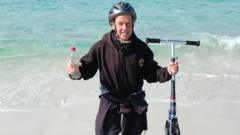
Most people use their passports to take a beach vacation once a year. Benny Prasad used 16 of them to visit every single country on Earth in record time.
If you are a holder of an Indian passport, you already know the routine. You spend weeks gathering bank statements, paying exorbitant visa fees, and waiting anxiously for a consular stamp that might never come. It's frustrating. It makes global travel feel like an exclusive club for Westerners. Expanding on this topic, you can also read: Why Edinburgh Festivals Deserve A Massive Cut Of The Tourist Tax.
The story of this Bengaluru-born musician changes the conversation completely. A video recently went viral showing him flipping through a massive stack of 16 passports, heavily weathered and completely packed with colorful immigration stamps from 245 nations, including Antarctica. He did it all in exactly six years, six months, and 22 days.
Here is the kicker. He achieved this feat before Instagram travel culture existed, without a massive corporate sponsor, and while managing severe, chronic health issues that nearly took his life as a teenager. His story destroys every excuse you have about why you can't travel the world. Experts at Lonely Planet have shared their thoughts on this matter.
The Logistics of Weaponizing a Weak Passport
Let's look at the numbers because they sound impossible. Traveling to 245 sovereign nations and dependent territories in under seven years means constant movement. It means dealing with the nightmare of international bureaucracy at its highest level.
Benny Prasad's Global Run: By The Numbers
--------------------------------------------------
Total Nations/Territories Visited : 245
Time Frame                        : 6 years, 6 months, 22 days
Indian Passports Filled           : 16
Main Tools Used                   : A custom guitar, pure stubbornness
--------------------------------------------------
When you hold a passport from a country with low visa-free access, you can't just book a flight on a whim. You have to meticulously plan your route months in advance. Prasad wasn't traveling on a diplomat's budget or using a second European citizenship. He was using a standard Indian booklet.
Every time a passport runs out of blank pages, you have to get a new one. For Prasad, immigration officers didn't just place a neat little stamp in the corner; they pasted full-page visas, entry permits, and border crossings. He literally ran through 16 physical booklets because the world ran out of space to track him.
He didn't do this to become an influencer. He did it as a performing gospel musician and instrumentalist, traveling with a unique instrument he designed called the "Bentar"—the world's first bongo guitar. He didn't wait for invitations; he traveled to places like Niue, the North Mariana Islands, and the 2004 Olympic Games in Greece, using his music to fund and justify his entry into places that rarely see an Indian traveler.
Escaping a Broken Medical Diagnosis
The physical toll of this kind of travel would crush a healthy person. For Prasad, it's a miracle he was even walking.
Born in Bengaluru in 1975, his early life wasn't filled with adventure. It was filled with hospitals. He suffered from severe asthma that required high doses of cortisone steroids. Those same steroids triggered rheumatoid arthritis, leaving him with 60% lung damage and a heavily compromised immune system that still fails him today.
Imagine navigating the humid jungles of Central America or the freezing winds of Antarctica when your lungs only work at less than half capacity. Imagine sitting on a cramped, 14-hour budget flight when your joints are locked up from arthritis.
Growing up as the eldest son of a scientist father in Bangalore, the pressure to succeed academically was immense. He couldn't keep up because of his failing health. By 16, depression took over, and he actively planned to end his life.
A youth retreat altered his path. He found a sudden, deep sense of purpose, picked up a guitar, and decided that his physical limitations wouldn't dictate his boundaries. He went from being labeled a failure by his school to being a world record holder celebrated by the chairman of ISRO.
What Most Modern Travelers Get Wrong
The internet loves to romanticize travel. We watch digital nomads with remote tech jobs working from villas in Bali, talking about "quitting the 9-to-5." That isn't real travel; that's just relocation.
Prasad's journey highlights three massive realities that modern travelers completely ignore:
- Bureaucracy is the real border: The hardest part of global travel isn't the plane ticket. It's the paperwork. Shuddering at the thought of visa applications is normal, but letting it stop you is a choice.
- Social media isn't required: True travel legends didn't do it for likes. Prasad broke his records before algorithms told people where to take photos. He traveled to see the world and share his music, not to build a personal brand.
- Waiting for perfect health is a trap: If Prasad waited until his lungs were healed or his arthritis disappeared, he would still be sitting in a room in Bengaluru.
He didn't have a massive inheritance. People who know his story point out that he regularly traveled with almost no money, relying on hospitality, performance opportunities, and a absolute conviction that he was meant to be on the road.
The Reality of Global Borders
If you want to pull off something even fractionally similar to this, you need to change your mindset about international travel. Stop looking at countries as vacation spots and start looking at them as logistical puzzles.
When you travel with a passport that requires visas for almost everywhere, your primary skill cannot be photography or language. Your primary skill must be organization. You need to know visa processing times for every embassy in a regional hub. You need to understand transit visa loopholes. You need to know how to explain to a skeptical border guard exactly why an Indian musician with a bongo guitar is entering their country at a remote land border.
Prasad didn't just visit the easy capitals. He went to all 194 sovereign nations and 51 dependent territories, including places with notoriously complex entry requirements. His passport pages aren't just yellowed with age; they are a historical record of international relations over a six-year sprint.
Your Next Steps to the World
You don't need to break a world record to see the world, but you do need to stop making excuses about your passport or your circumstances. Here is how you actually start traveling when the odds are stacked against you.
First, stop aiming for the hardest destinations right away. Build your travel history. Western embassies look at your previous international trips to see if you return home on time. Start with countries that offer visa-on-arrival or easy e-visas to build a credible paper trail.
Second, travel with a skill or a purpose. Don't just be a consumer of tourism. Whether it's music, photography, volunteering, or teaching, having a clear reason for your visit makes border crossings smoother and opens doors to local communities that money cannot buy.
Pack your bags, sort your paperwork, and stop waiting for the perfect moment. It isn't coming.