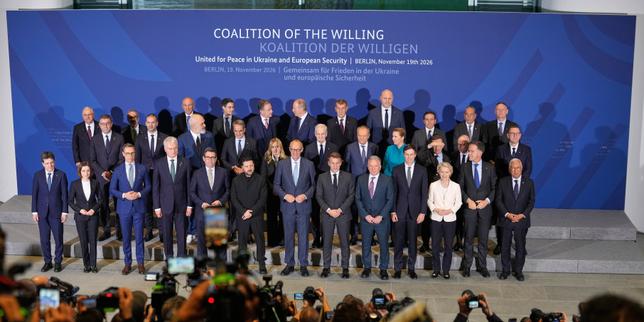
Two diplomatic rooms on opposite sides of Eurasia tried to rewrite the rules of the war in Ukraine on the exact same day. In Shenzhen, Donald Trump, Xi Jinping, and Vladimir Putin sat down for their first trilateral summit on the sidelines of APEC. Hours later in Berlin, over 40 allies of Kyiv gathered in the "Coalition of the Willing" with Volodymyr Zelensky and U.S. envoys to push back against being cut out of the deal.
If you look closely at those two meetings side by side, they act like a photographic negative of each other. Shenzhen was top-down great-power theater with vague promises about oil supplies, nuclear risks, and UN reforms. Berlin was messy, urgent coalition bargaining over hard cash, air defenses, and whether Europe gets a seat at the negotiating table.
Honestly, anyone watching the war in Ukraine in late 2026 knows that the real fight isn't just along the front lines or over winter power grids anymore. It's over who gets to set the terms of peace when the fighting finally slows down.
Why the Berlin Meeting Mirrors Shenzhen in Reverse
Calling Berlin a mirror image of Shenzhen isn't just a clever metaphor. It captures a real structural split in global diplomacy.
In Shenzhen, three leaders of massive states talked big about global stability, nuclear restraint, and avoiding major-power clashes. Yet the joint statement didn't even mention Ukraine or the war in Iran. Putin brought up Ukraine and hinted at shared interests in settling regional conflicts. Xi stayed focused on broad harmony and nuclear language. Trump talked history, oil, and nuclear arms reductions while dealing with his own costly war in Iran.
Now flip that scene to Berlin. German Chancellor Friedrich Merz, French President Emmanuel Macron, and UK Prime Minister Andy Burnham hosted Zelensky alongside partners from Europe, Canada, Australia, and Japan. U.S. envoys Jared Kushner and Steve Witkoff showed up in Berlin to brief the room and coordinate on next steps.
Where Shenzhen offered broad, non-binding big-power rhetoric, Berlin zeroed in on immediate survival and leverage. Merz warned directly against a "Yalta-style" arrangement carved out behind Europe's and Ukraine's backs. His point was simple: peace talks that leave out Europe and Kyiv won't hold.
I've watched plenty of summits over the years promise a "historic breakthrough" while leaving the hardest details untouched. Shenzhen looked a lot like that for Ukraine. Berlin, by contrast, had to wrestle with real numbers before winter bites even harder.
What Berlin Actually Focused On Behind Closed Doors
Diplomacy sounds grand in press briefings, but money and hardware decide who has leverage. In Berlin, allies had to confront three tough realities.
- Funding the 2027 deficit: Ukraine faces an estimated 70 billion euro financing gap for 2027, with discussions pointing to roughly 45 billion euros in potential EU loans and other partners expected to fill the rest.
- Air defense and long-range strike: Macron pressed partners to send anti-missile systems and interceptors immediately, while Britain pointed to long-range drone support to help Ukraine defend itself and negotiate from strength.
- Post-war security guarantees: Allies debated how to backstop Ukraine after any ceasefire so Moscow doesn't simply regroup and invade again.
Even so, the room in Berlin wasn't lockstep on every single detail. Past coalition discussions have shown real friction over troop deployments—some capitals are willing to talk about post-war stabilization forces, while heavyweights like Germany, Italy, and Poland have been reluctant to put boots on the ground. Turning political solidarity into actual air defense batteries and cash payouts is always slower than leaders admit at the podium.
What Shenzhen Missed or Glosses Over
If you only read the Shenzhen readout, you might think the three biggest powers just solved global security over tea at Kylin Villa. That's a mistake.
First, big-power statements rarely settle local wars when the parties fighting them aren't bound by the deal. Putin has stuck to maximalist demands on territory, opposed foreign troops in Ukraine, and linked Ukraine's security to a broader overhaul of European security. Following a Ukrainian strike on the Crimean Bridge, the Kremlin also pushed back hard against truce ideas around energy sites and the Black Sea.
Second, Washington, Beijing, and Moscow aren't singing from the same sheet. Each leader arrived in Shenzhen with different pressures. Trump has been juggling the strain of the war in Iran and pushing nuclear arms control. Xi has wanted to project calm leadership, guardrails on AI, and Beijing's centrality without getting dragged into Western-style commitments. Putin wanted legitimacy, sanctions relief pressure, and a seat next to the top two.
A deal made over Ukraine's head without Kyiv or Europe doesn't create stability—it just sets up the next crisis.
That's why Berlin mattered so much on the same day. European leaders weren't just reacting to rumors out of China. They were trying to make sure Washington's outreach to Moscow and Beijing didn't turn into a backroom bargain that trades away Ukrainian sovereignty or European security.
Where the Leverage Actually Sits Right Now
People love to ask who "won" the day between Berlin and Shenzhen. Honestly, that's the wrong question.
Shenzhen gave Trump, Xi, and Putin a high-profile photo and a broad declaration on nuclear risks, oil supply, and UN reform. It showed that great-power diplomacy is back on center stage in Asia. Yet without concrete terms on Ukraine, a statement of general principles doesn't stop a single missile from hitting Kyiv or Odesa.
Berlin showed that Ukraine's backers still command massive economic and military weight when they coordinate. Europe and its partners remain central to financing Ukraine's state budget and military through 2027. Still, Europe faces a hard truth: speeches about "no Yalta" only carry weight if backed by sustained weapons deliveries, air defense interceptors, and money that arrives on time.
There's also a lingering tension around U.S. diplomacy. Kushner's remarks in Berlin pointed toward talks involving Europeans, Russians, Ukrainians, and Americans, and suggested openness to NATO protection ideas for Ukraine—even as Moscow treats NATO expansion or presence as a red line. Whether those tracks merge into real negotiations or pull in opposite directions is the big test ahead.
Practical Steps to Follow This Next
If you're tracking how the war in Ukraine and great-power diplomacy evolve from here, don't get lost in summit slogans. Focus on what moves real leverage:
- Watch the 2027 funding mechanics: Track whether the EU moves the proposed 45 billion euro loan forward and how allies cover the remaining gap of Ukraine's 70 billion euro need.
- Check winter infrastructure and air defense: Pay attention to interceptor deliveries and whether any real pause occurs on energy strikes, rather than relying on unilateral truce announcements.
- Verify who sits at the table: Look for concrete formats that include Ukraine and European leaders alongside the U.S. and Russia, rather than vague trilateral communiqués that skip the war's core terms.
- Separate optics from binding deals: Treat joint declarations on "peace" or "stability" as starting positions until specific timelines, verification rules, and security guarantees appear.