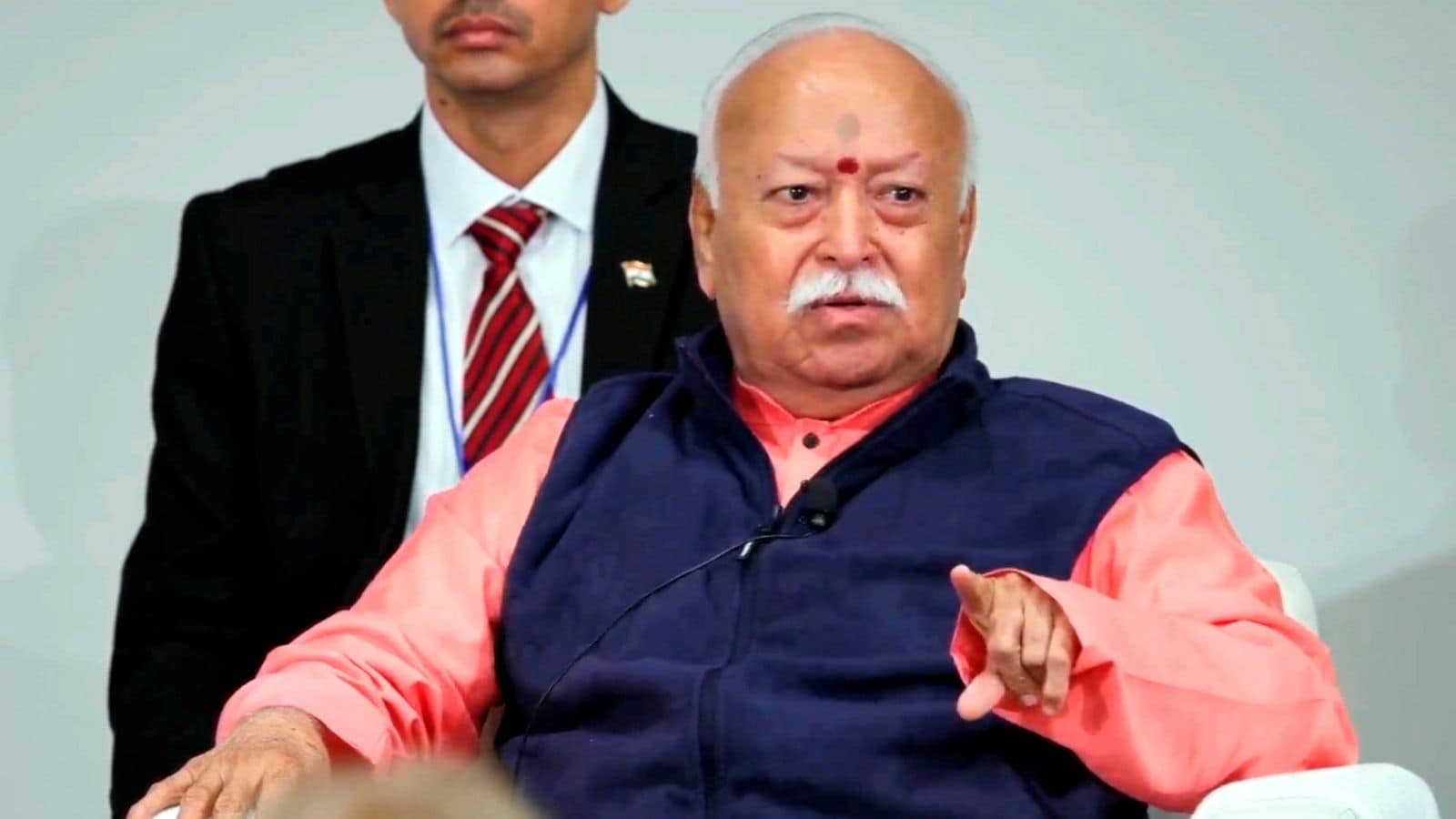
You hear a lot of noise about global division today, but what if the core answer has already been written into civilisational blueprints? Rashtriya Swayamsevak Sangh chief Mohan Bhagwat recently stepped onto a major global stage in New York and stated flatly that unity in diversity isn't just a political slogan for India. It is coded directly into the nation's DNA.
If you look past the headlines, his speech at Madison Square Garden tackles a massive underlying question: how can distinct human groups live together without erasing their individual identities? Let's break down what he actually said, why it matters beyond party politics, and how it reframes our view of modern pluralism.
Moving Beyond Simple Geography
Nations aren't just lines drawn on a map. They carry a distinct purpose. Bhagwat leaned heavily on the teachings of Swami Vivekananda to make this point. Every country has a unique mission to fulfill.
While the United States gets talked about through the lens of pluralism, India has long championed unity in diversity. Bhagwat noted that these two concepts aren't competing forces. They belong together.
- Diversity is the visible reality.
- Oneness is the underlying truth.
- True harmony means celebrating differences instead of forcing uniformity.
When you look at human beings from a purely material standpoint, you see endless divisions. People speak thousands of languages, practice different religions, and adopt vastly different lifestyles. But Bhagwat argued that these surface differences shouldn't blind us to our shared humanity.
Defining Dharma Beyond Modern Religion
One of the most striking parts of his address involved redefining the concept of dharma. People often confuse dharma with organized religion or specific modes of worship. Bhagwat pushed back against that narrow definition.
He described dharma as the fundamental rule or principle that sustains the universe. It requires individuals, society, and the environment to progress together. You cannot crush the individual to build society, nor can you ignore the collective well-being for personal gain. Everything moves in balance.
This view offers an alternative to hyper-individualistic models dominating the West. It forces you to think about responsibilities rather than just raw rights.
The Duty of the Diaspora
Bhagwat also had a very direct message for the Indian diaspora living abroad. If you live in America, earn your living there, and build your life there, you owe loyalty to that land of action, known as your karmabhoomi.
At the same time, he noted that the motherland—your janmabhoomi—imparts an enduring value system rooted in oneness. You don't have to choose between respecting your adopted home and remembering your civilisational roots. You can honor both by living out the values of coexistence and mutual respect through daily practice rather than empty preaching.
The world keeps stumbling through crises because it lacks a cohesive framework for bringing diverse groups together. If India's civilisational message has any real weight, it's that unity doesn't require sameness. It requires the maturity to let differences decorate the shared human experience.
Mohan Bhagwat Says Unity And Diversity Are In Bharat's DNA
This video provides additional context regarding the RSS chief's speech on national identity and universal oneness during his New York tour.