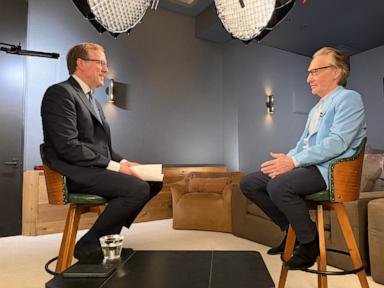
Bill Maher just picked up the 27th Mark Twain Prize for American Humor at the Kennedy Center. Predictably, half of Washington cheered while the other half groaned.
If you watched his sit-down with Jonathan Karl on ABC’s This Week, you saw a comedian who refuses to pick a team. Maher took shots at Donald Trump, poked fun at the extreme progressive left, and laughed off White House friction over the award ceremony itself.
That balanced outrage is exactly why the award fits him.
Mark Twain did not exist to make people comfortable. He made readers squirm by holding up a mirror to 19th-century American hypocrisy. Love Maher or hate him, he’s been doing the exact same thing on national television for more than thirty years.
The Art of Offending Both Sides of the Aisle
Most political comedy today feels like a pep rally. You tune into a late-night talk show, and the host delivers pre-approved punchlines designed to make a specific voting bloc nod in agreement. It feels safe. It feels sanitized.
Maher built his entire career by doing the opposite.
During his interview with Karl, Maher made his stance on current politics as blunt as ever. He remains deeply critical of Donald Trump’s rhetoric and institutional norms. At the same time, he has zero patience for modern progressive orthodoxy on culture, free speech, and social issues.
"It's not just that people live in bubbles, it's that they want to," Maher pointed out. "What I think is unique about our show is that we are not afraid to say to people who might be upset about it: 'No, what you're doing is crazy, too.'"
That approach confuses people who expect partisans to stick to the script. When he sat down with Trump for dinner at the White House last year, Maher described the former president as "gracious and measured." When fellow comic Matt Friend interrupted Maher's Twain Prize acceptance speech with a dead-on Trump impression to tease him about that dinner, Maher laughed along. He isn't interested in maintaining an ideological purity test.
Here is what sets Maher apart in modern media:
- He calls out his own audience. If HBO viewers groan at a joke about progressive overreach, he tells them to get over it.
- He hosts political opponents. Vice President JD Vance and former Vice President Mike Pence have both sat at his table recently.
- He rejects algorithmic outrage. He actively fights against the idea that you must agree with 100% of a party platform.
Why the Mark Twain Prize Belongs to the Unpopular
When the Mark Twain Prize for American Humor was created in 1998, it was designed to honor satirists who observe society with an uncompromising eye. Early recipients included comedy heavyweights like Richard Pryor, Jonathan Winters, and Whoopi Goldberg. Later years saw legends like George Carlin, Dave Chappelle, and Jon Stewart take home the bronze bust.
Maher fits squarely into that lineage, even if his nomination raised eyebrows in political circles.
Consider the parallels between Samuel Clemens and Bill Maher. Clemens wrote under the pseudonym Mark Twain and spent decades irritating politicians, religious leaders, and literary critics. He was banned from libraries, attacked in newspapers, and criticized for calling out social absurdities.
Maher has experienced a similar trajectory:
- Lost his first network show. ABC canceled Politically Incorrect in 2002 after controversy over his post-9/11 comments.
- Built a two-decade run on HBO. He migrated to Real Time with Bill Maher, earning 42 Emmy nominations.
- Pioneered unfiltered long-form chats. His podcast Club Random stripped away television polish for raw, unedited conversations.
The Mark Twain Prize is not a popularity contest. It’s a lifetime achievement award for cultural impact. You don’t have to like every joke Maher tells to admit that few people have shaped American political satire as consistently as he has.
What Most Commentators Get Wrong About Maher’s Audience
Critics often claim that Maher changed. They argue he used to be a staunch liberal who somehow drifted to the right as he got older.
That interpretation completely misses the point. Maher didn't move; the political spectrum did.
If you watch clips of Politically Incorrect from the late 1990s and compare them to Real Time today, his core philosophy remains remarkably consistent. He has always been a classic free-speech libertarian-leaning liberal. He defends civil liberties, mocks organized religion, advocates for marijuana legalization, and distrusts government overreach.
When the left shifted toward identity politics and speech codes, Maher stayed put. That created a strange dynamic where conservative media outlets suddenly began quoting him approvingly, even though he spent two decades tearing down conservative policies.
Honestly, it’s refreshing. We live in a media environment where almost every personality is terrified of losing their subscriber base. Maher seems completely indifferent to whether his fans agree with him on any given Friday night.
How to Consume Political Comedy Without Losing Your Mind
If the discourse around Maher’s Twain Prize win proves anything, it’s that Americans have forgotten how to enjoy comedy that doesn't validate their worldview. We treat satire like political policy rather than what it actually is: a healthy, absurd relief valve for culture.
If you want to navigate today's political media landscape without getting wrapped up in tribal warfare, keep these principles in mind:
Separatist Thinking Kills Humor
When you demand that a comedian align with your political beliefs before you allow yourself to laugh, you kill the art form. Comedy requires absurdity, hyperbole, and risk. If every joke requires a disclaimers, nothing stays funny.
Seek Out the Uncomfortable
If you only watch commentators who make you feel smart and right, you are sitting in a echo chamber. Force yourself to watch interviews where the host talks to someone you disagree with. Pay attention to where the friction actually lives.
Separate the Person From the Punchline
You don’t need to adopt a comedian’s lifestyle, political endorsements, or worldview to appreciate a sharp observation. Laughing at a well-constructed joke about your political party won't betray your values. It just means you have a sense of humor.
Concrete Steps to Diversify Your Media Intake Today
Stop letting recommendation algorithms dictate what you watch and read. Take control of your media diet right now with these steps:
- Audit your subscriptions. Look at your podcast feeds and YouTube channels. If every creator shares the exact same political bias, add two outlets that challenge your core assumptions.
- Watch full interviews instead of clips. Short social media clips are engineered to trigger anger. Watch long-form, unedited conversations where people have time to explain nuance.
- Read original sources. When a news anchor claims a comedian or politician said something outrageous, look up the full quote and context before forming an opinion.
The Mark Twain Prize honoring Bill Maher isn't just a win for one host. It's a reminder that political satire works best when it makes everyone in the room a little bit nervous.