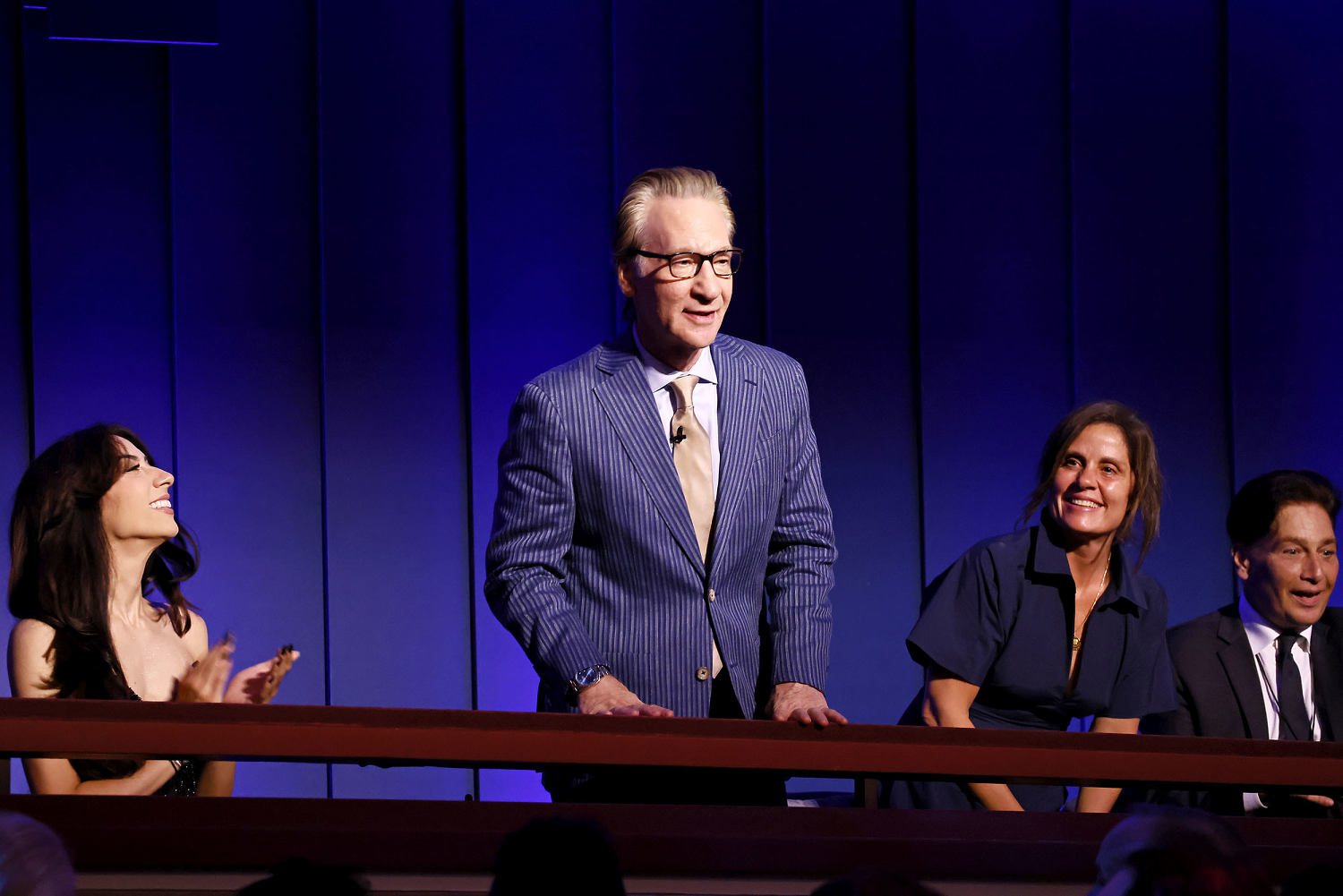
Bill Maher just took home the 27th Mark Twain Prize for American Humor, and the timing couldn't be wilder. On June 28, 2026, the comedy establishment gathered at Washington's Kennedy Center to honor a man who made a career out of pissing people off. But the real joke wasn't on the stage. It was the building itself. The legendary performing arts center has been locked in a bizarre, high-stakes legal battle over political control and branding.
When you honor a comic who prides himself on attacking both sides inside a venue literally covered in political tension, you get pure theater. Meanwhile, you can explore similar stories here: Why The Ending Of The Bear Season 5 Is More Radical Than You Think.
The evening kicked off with a glaring reminder of the current political environment. Just as Maher took the stage to accept his bronze bust, comedian Matt Friend walked out doing a dead-on impression of Donald Trump. He joked that he was taking the award for himself. The crowd laughed, but the tension was real. Trump recently replaced much of the center's leadership with close allies, leading to an absolute mess of court orders and back-and-forth lawsuits over how the venue operates.
Maher handled the moment exactly how you'd expect. He leaned right into the chaos. He targeted the rise of groupthink and noted that if you stay in this business long enough, everyone will hate you eventually. That's a badge of honor for him. To see the full picture, we recommend the detailed analysis by Rolling Stone.
The Weird Battle Over America's Top Stage
You can't talk about Maher's big night without looking at the institutional crisis happening in the background. The Kennedy Center is supposed to be a neutral zone for American culture. Instead, it became a political prize. After the administration change in early 2025, a newly installed board moved to shift the center's branding and direction. This triggered fierce legal pushback from critics who want to protect the venue's traditional independence.
Walk past the building right now and you'll see a literal tarp covering portions of the facade where letters were slapped on and then ordered down by a judge.
Jay Leno didn't hold back on the red carpet. He called the entire structural drama hilarious and chalked it up to pure vanity. He told reporters it felt like high school with money. Matt Friend described the backstage atmosphere as having a distinct hunger games vibe. It's an incredibly strange backdrop for a comedy gala. Yet, it fits the honoree perfectly. Maher built his entire brand on navigating these exact types of cultural minefields.
The fact that this ceremony happened at all proves that political comedy still has a pulse, even when the institutions hosting it are fracturing. The Mark Twain Prize is meant to recognize people who impact society the way Samuel Clemens did, through fearless, uncompromising observation. Putting Maher on that stage while the building itself is a legal battleground is about as close to a modern Twain essay as we can get.
From Politically Incorrect to the Ultimate Survivor
Maher didn't get to this stage by playing nice or worrying about his reputation. He started doing stand-up way back in 1979. He ground it out in clubs for over a decade before launching Politically Incorrect in 1993. That show changed the template for late-night TV. It wasn't just actors plugging movies. It was journalists, musicians, and politicians screaming at each other while Maher moderated with a smirk.
Then 2001 happened. His comments after the September 11 attacks caused a massive corporate panic. Sponsors bolted. ABC canceled the show. Most people thought his career was done right then and there.
Instead of hiding, he pivoted. He jumped to HBO and launched Real Time in 2003. Free from network censors and commercial pressures, he became even more direct. Over two decades later, that show is still a mandatory stop for anyone trying to reach a politically engaged audience. Look at his recent sit-down with JD Vance. Maher pushed him hard on election theories and foreign policy while keeping the conversation watchable. He told Vance directly that the attitude of "either we win or they cheated" has to stop. He says what people are thinking but are too terrified to utter on television.
Lately, he expanded his footprint with his Club Random podcast. He sits in a backyard bar, lights up, and talks to eclectic guests for an hour with zero filters. He published a massive bestseller recently called What This Comedian Said Will Shock You. He keeps finding ways to stay relevant while his peers retire or fade into obscurity.
What the Critics Miss About Maher's Evolution
If you listen to social media, Maher is a polarizing figure who lost his way. The left accuses him of turning into a grumpy old man because he constantly rails against cancel culture and hyper-wokeness. The right loves to clip those segments, ignoring the fact that he still savages their own politicians and policies every single week.
The truth is that Maher didn't change all that much. The political spectrum around him shifted.
He remains an old-school liberal who hates being told what to think. He hates tribalism. In his acceptance speech, he blasted the absolute predictability of modern political discourse. When everyone on a network agrees on every single topic, it ceases to be comedy or journalism. It becomes a religious service. Maher's willingness to mock his own audience is exactly why he deserves a prize named after Mark Twain. Twain didn't write to comfort people. He wrote to expose their foolishness.
The lineup of presenters at the gala reflected this weird, cross-cultural appeal. You had traditional comedy royalty like Jay Leno and Louis C.K. alongside actors like Woody Harrelson, media figures like Arianna Huffington, and sports commentators like Stephen A. Smith. It was a bizarre mix of people who don't usually share a room, let alone a stage. They all showed up because they respect someone who refuses to run their jokes through a focus group.
The Long History of Bad Blood with the White House
The tension at the Kennedy Center runs deeper than just general politics. Maher and Donald Trump have a personal, incredibly petty history that goes back more than a decade.
Back in 2013, Maher went on Leno's show and made a joke offering five million dollars to charity if Trump could prove his father wasn't an orangutan. Trump took it literally, produced his birth certificate, and actually sued Maher for breach of contract when the money wasn't paid. The lawsuit was eventually dropped, but the feud never truly died.
The bad blood flared up again recently when Trump spent time attacking Maher online, claiming he regretted ever interacting with him in the past. At the gala, political figure Howard Lutnick tried to smooth things over by showing off a document where Trump had written out and autographed various insults he directed at Maher over the years. Lutnick claimed it showed everyone could laugh at the situation. Maybe so, but it shows how deeply Maher gets under the skin of the most powerful people in the world.
That's the real measure of a political satirist. If the leaders of the country aren't actively mad at you, you aren't doing the job correctly.
Watch the Broadcast to See a Masterclass in Defiance
The full 27th Mark Twain Prize ceremony hits Netflix on July 21, 2026. You should absolutely watch it, not just for the jokes, but to see how comedy survives when the culture around it gets incredibly toxic.
Pay close attention to these elements when you stream the special next month:
- The Crowd Reactions: Watch how the Washington insiders react when Maher slams groupthink. The discomfort in the room is palpable.
- The Presenter Lineup: Notice how wildly different the styles of Woody Harrelson, Whitney Cummings, and Stephen A. Smith are. It shows how far Maher's influence actually reaches.
- The Atmosphere: Look closely at the staging. Knowing the legal battle happening over the physical building adds a massive layer of irony to every single punchline.
Don't expect a polite evening of mutual adoration. Maher used his time to remind everyone why he got canceled in the first place, and why he's still standing while his original critics are long gone.