Commercial shipping has never been this dangerous. If you think the current cost of living hurts, wait until the fallout from the maritime war zone in Eastern Europe fully hits supermarket shelves.
Summer hostilities in the Black Sea turned the region into a graveyard for seafarers. Both Russian and Ukrainian forces have targeted ships and port infrastructure with ruthless efficiency. More crew members died in July alone than during the entire war prior to that month. When merchant vessels become frontline targets, global supply chains break.
Right now, grain exports are choking. You need to understand how this regional violence translates directly into your weekly grocery budget, why alternative transit routes are failing, and what coping mechanisms importing nations are scrambling to deploy.
The Body Count and the Busted Fleet
Commercial shipping groups and Turkish unions recorded 23 fatalities in July alone following strikes on 35 distinct vessels in the Black Sea. This makes the region arguably the most hazardous body of water on earth for merchant sailors, eclipsing even the Red Sea and the Gulf of Aden.
The chaos isn't one-sided. Russia's initial 2022 invasion strategy focused heavily on blockading Ukrainian hubs like Odesa and Chornomorsk. But the recent spike in casualties stems largely from aggressive Ukrainian retaliation. Drones are hunting Russian tankers—part of the notorious shadow fleet moving sanctioned oil—and hitting port terminals at Novorossiysk.
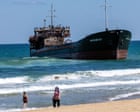
Take the Omskiy-107 as a terrifying case study. A Ukrainian drone strike near Novorossiysk forced the Russian-flagged cargo ship's crew to flee for their lives. The unmanned, burning wreck drifted hundreds of miles across the sea before finally beaching itself on the Turkish coastline near Istanbul, shocking holidaymakers and disrupting one of the world's busiest shipping lanes.
Vanguard, a maritime risk intelligence firm, notes that merchant ships are caught in the crossfire not just inside ports, but across open waters. Your trading activity dictates your survival. If you carry grain or oil, you are a target.
Why Fixing the Supply Chain Is Nearly Impossible
Shippers can't simply take another route without massive financial penalties.
Russia supplies roughly the world's largest share of grain, feeding millions across the Middle East and North Africa, particularly nations like Egypt and Turkey. Ukraine holds the fifth spot. When ports close, the world runs out of cheap carbohydrates fast.
Moscow tried pivoting. After drone swarms forced a temporary shutdown of shipping in the Sea of Azov, authorities pushed exports toward alternative channels like the Caspian and Baltic seas, plus Pacific corridors. It sounds good on paper. In reality, it fails math. Over 70 percent of Russian seaborne grain leaves from the Black Sea, with another 20 percent coming out of the Sea of Azov.
Oxford Economics notes that Russian grain export capacity plummeted to roughly 40 percent of normal levels. Meanwhile, Ukraine managed to harvest a massive, early crop this year, but transport bottlenecks choked its distribution. Kyiv moved only a fraction—about 1.4 million tonnes—of its export potential through combined sea, rail, river, and road networks.
The Inevitable Price Shock at the Register
Global wheat prices crept upward over the last few weeks, though they haven't reached the panic peaks seen back in 2022. Don't let that lull you into a false sense of security.
This maritime crisis doesn't happen in a vacuum. It collides with overlapping catastrophes: extreme summer heatwaves slashing European grain yields, the fast-developing El Niño weather cycle, and ongoing shipping disruptions stemming from conflicts in the Middle East. Oxford Economics forecasts that overall global food prices will jump nearly 12 percent, with another 4.8 percent spike baked into projections for next year.
Unlike the sudden shock of 2022 when governments stood paralyzed, major importing countries spent the last few years hoarding strategic reserves. Emergency stockpiles offer a cushion. Governments are better prepared. But buffers only delay the inevitable. When export capacity drops by half, retail costs climb.
What You Can Do Right Now
You can't control geopolitical strategy or drone technology, but you can insulate your household from rising food inflation.
- Audit your pantry staples: Lock in bulk purchases of non-perishable grains, flour, and pasta before retail pricing adjusts upward to reflect summer shipping losses.
- Diversify your diet: Pivot away from wheat-heavy products toward locally sourced alternatives to bypass international commodity price surges.
- Track regional logistics: Keep an eye on Black Sea insurance rates and port reopening announcements to anticipate cost shifts before they hit supermarket receipts.
The Black Sea is burning, and the economic ripple effects are already moving inland. Plan accordingly.