Long before CGI took over Hollywood, a single plot of land in Simi Valley stood in for the American frontier, a dense jungle, and outer space all at once. Back in 1965, legendary comedian Bob Hope purchased Corriganville, a sprawling 212-acre movie ranch that had hosted thousands of Westerns, television shows, and commercials. Most people think movie sets just vanish overnight, but this piece of cinematic history survived demolition, massive fires, and real estate pressure to become a public park you can actually walk through today.
If you've ever wondered how a massive playground for John Wayne and Roy Rogers transformed into local hiking trails, the story involves stuntmen, failed real estate plays, and a whole lot of charred timber.
The Birth of Corriganville
Actor and stuntman Ray "Crash" Corrigan bought the remote Simi Valley acreage in 1937. He knew Hollywood needed dirt, rocks, and wide-open spaces that didn't look like a studio backlot. He was right. Production crews flocked to the property starting in 1938.
Corrigan didn't just rent out dirt. He built an entire frontier town called Silvertown complete with a faux schoolhouse, stables, and a saloon. He even engineered a man-made lake with a specialized underwater viewing room so studios could shoot aquatic scenes without renting a tank in Burbank.
Estimates suggest that between 3,000 and 3,500 distinct productions used the ranch. You can spot the jagged rock formations and dusty trails in classics ranging from The African Queen to The Creature from the Black Lagoon, plus classic TV episodes of The Lone Ranger and Star Trek.
When Tourists Took Over the Sets
Running a movie ranch wasn't enough for Corrigan. Between 1949 and 1965, he turned the working lot into a full-blown tourist attraction. Families drove out from Los Angeles on weekends to watch live stunt shows, ride stagecoaches, and watch mock gunfights break out in the middle of Silvertown.
It was basically an early version of a theme park. Visitors could grab a soda near the exact fort John Ford built for the 1948 film Fort Apache. But by the mid-sixties, the era of the classic outdoor western was winding down, and Corrigan wanted out.
Bob Hope Steps In and Renames It Hopetown
In 1965, Bob Hope bought the entire 212-acre spread. He renamed it Hopetown. Contrary to popular belief, Hope didn't buy the ranch to keep making westerns. He had his eyes on development potential, and early blueprints floated the idea of building residential housing on the land.
Plans stalled, and the property shifted into a chaotic phase. Motorcyclists began using the hills for dirt racing, and the old movie props started gathering dust. Then came nature's final verdict.
The Fires That Swept Away Hollywood History
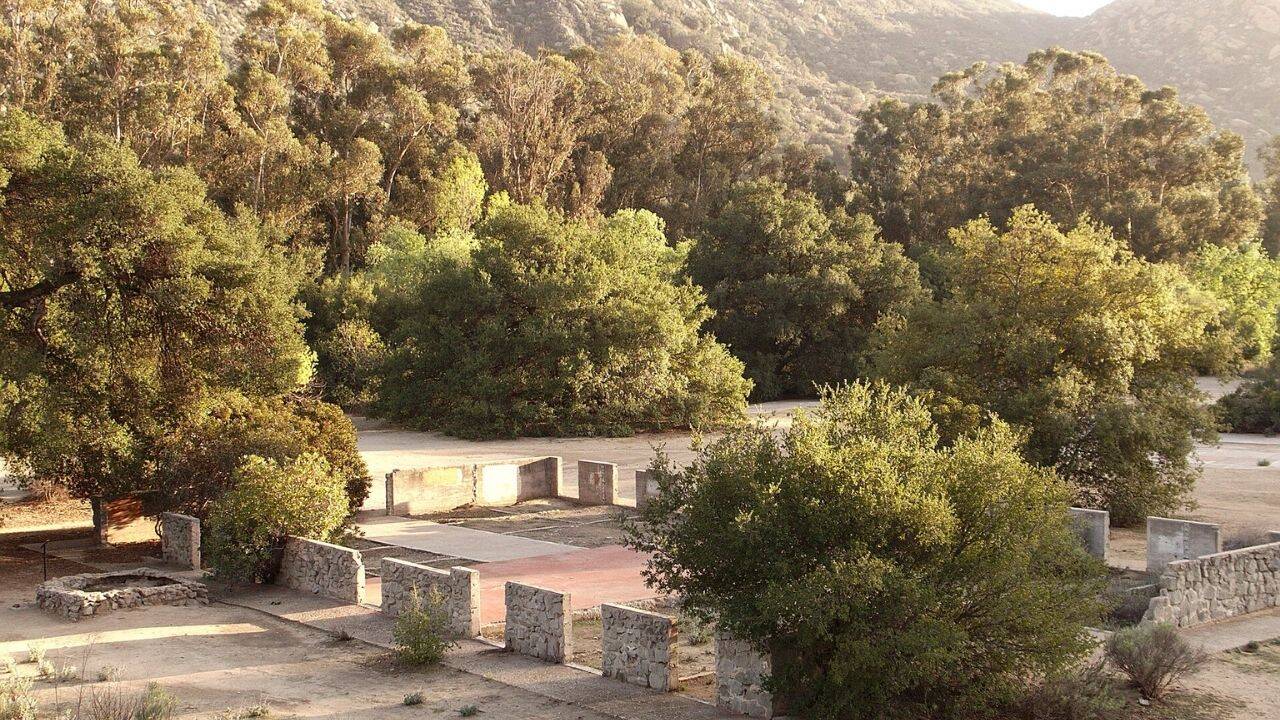
Hollywood history is fragile. In 1971 and again in 1979, massive brush fires ripped through Simi Valley. The wooden false-front buildings of Silvertown didn't stand a chance. Most of the iconic movie sets burned to the ground, leaving behind charred foundations, twisted metal, and broken stone work.
It looked like the end of the line for the famous ranch. The structures were gone, and developers still eyed the acreage.
Saving the Land for the Public
Stubborn preservation efforts eventually won out. In 1988, the City of Simi Valley stepped in and bought 190 acres of the former ranch. They converted the property into Corriganville Park, saving it from becoming another suburban housing tract.
Today, you won't find many standing western storefronts, but the bones of Hollywood's golden age are still scattered across the trails. You can hike past the concrete foundations of old sets, look at the remnants of the man-made lake, and walk the exact dirt paths where stuntmen fell off horses decades ago.
Next time you're near Simi Valley, skip the crowded tourist spots and take a walk through the remnants of Hopetown. Wear good hiking boots, bring plenty of water, and keep an eye out for old concrete foundations hiding in the brush.