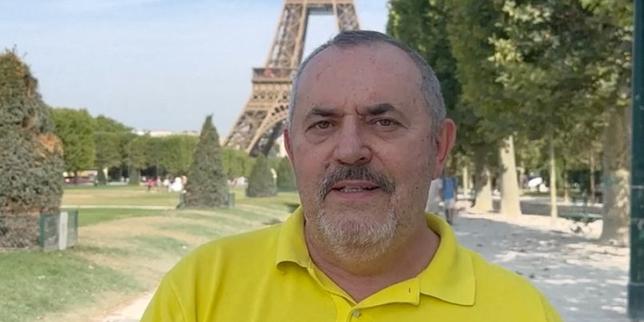
Russian anti-war politician Boris Nadezhdin just posted a video of himself standing right in front of the Eiffel Tower, confirming what many political observers suspected. He is out.
If you followed his audacious attempt to challenge Vladimir Putin in the 2024 presidential election, you already know he is no stranger to state pressure. Back then, long lines formed outside his campaign offices as ordinary citizens risked official reprisal just to sign petitions supporting his anti-war platform. The Kremlin quickly shut that down by having the Central Election Commission reject his candidacy over alleged invalid signatures. For another perspective, consider: this related article.
Now, his departure for France marks the end of any pretense that legal, systemic opposition can survive inside modern Russia.
The Tightening Noose Before the Duma Elections
You cannot understand Nadezhdin's exit without looking at the immediate triggers. He intended to run in Russia's upcoming parliamentary elections. The regime decided to neutralize that threat before it even started. Further reporting on this trend has been published by BBC News.
On July 10, the Russian Justice Ministry officially designated Nadezhdin a "foreign agent". Just three days later, authorities hit him with a court report and fine under an extremist symbols statute, claiming a digital link to a photograph of the late opposition leader Alexey Navalny constituted a violation.
These moves weren't random bureaucratic hassles. They served a single purpose: absolute legal disqualification. In Russia's political system, a foreign agent tag combined with extremism charges strips a candidate of ballot access and opens the door to immediate penal colony sentences.
What Boris Nadezhdin Said Upon Arrival
Posting to his Telegram channel from Paris, Nadezhdin kept things brief and characteristically pragmatic.
"There's good news: I'm alive and free. Unfortunately, not in Russia yet. I need to take a look around now, figure out how to live going forward. I'll write about my plans later."
He didn't try to romanticize his exile. He didn't frame himself as a grand martyr. He simply recognized the binary choice facing every remaining dissident in Moscow: prison or flight.
Most high-profile critics who chose to stay are either dead, like Boris Nemtsov and Alexey Navalny, or serving lengthy sentences in remote penal colonies, like Vladimir Kara-Murza and Ilya Yashin. Nadezhdin chose survival.
The Shrinking Space for Dissent
The strategy of the Russian state has evolved into total eradication of domestic political friction. During the 2024 election cycle, the regime tolerated Nadezhdin temporarily because his campaign offered a controlled pressure valve for anti-war sentiment, allowing the Kremlin to map out who dared to dissent. Once those signature lines grew too large and threatening, the tolerance vanished.
By mid-2026, facing renewed crackdowns ahead of the Duma races, staying meant walking straight into a closed courtroom. His escape proves that independent political expression inside the country is entirely extinct.
Take a close look at how authoritarian states handle internal challenges. When peaceful electoral participation becomes legally impossible, opposition is forced entirely across borders. Nadezhdin's voice will now join the scattered Russian emigration network in Europe, far from the voters he sought to mobilize, but safely out of reach of the state security apparatus.