When public money flows directly into a family business, red flags fly immediately.
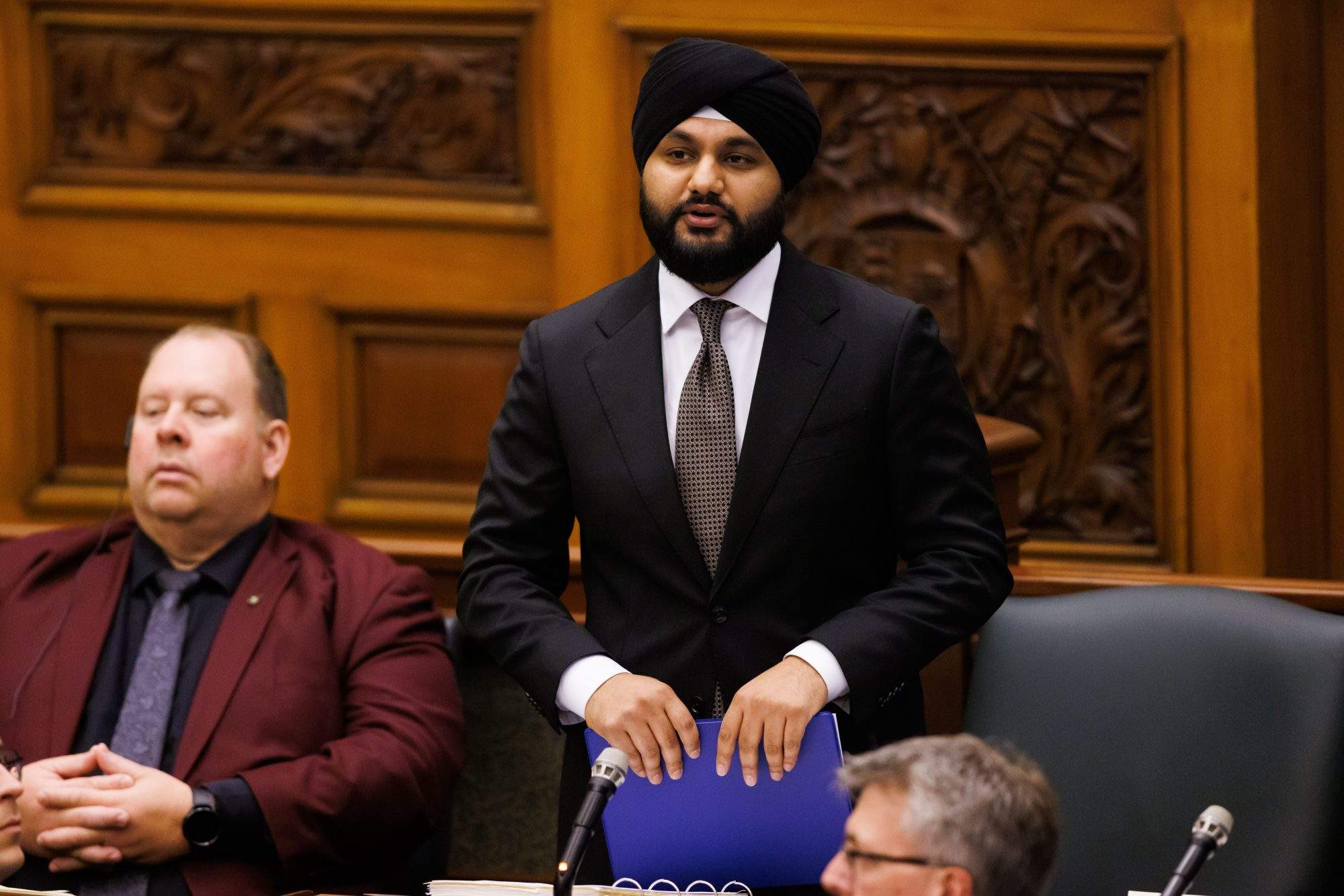
That is exactly what happened in Ontario politics this week. Brampton East MPP Hardeep Grewal finds himself at the center of a growing political scandal after the Ontario NDP asked the provincial integrity commissioner to investigate his constituency spending. The core issue? Thousands of taxpayer dollars spent on full-page advertisements in Punjabi Post, a popular ethnic newspaper run by his own father, Jagdish Singh Grewal.
This isn't an isolated headache for the Progressive Conservative politician. The advertisement allegations arrived just days after public expense reports revealed Grewal billed taxpayers more than $27,000 for luxury Toronto hotel stays despite representing a riding in nearby Peel Region.
If you're wondering how an elected official can spend tax dollars at his dad's business—or why an MPP living in Brampton needs a hotel room down the street from Queen's Park—you aren't alone. Here is the full story, the ethical rules in question, and what this means for political accountability in Ontario.
The Father Son Advertising Deal Under Fire
Politicians use constituency budgets to communicate with voters. They print flyers, buy social media ads, and post announcements in local newspapers. That part is routine.
Where things get messy is when those tax dollars flow to an immediate family member.
On July 20, 2026, Ontario NDP Leader Marit Stiles filed a formal complaint with the Integrity Commissioner of Ontario. The complaint alleges that Hardeep Grewal violated ethical guidelines by repeatedly purchasing advertisements in Punjabi Post. Federal corporate records submitted alongside the complaint confirm that Jagdish Singh Grewal, the MPP's father, serves as the director of the publication.
Stiles didn't pull her punches when announcing the complaint. She publicly stated that Grewal got caught with his hands in the taxpayers' pockets, using public funds to enrich a relative.
Is advertising in a family-owned paper an actual conflict of interest? Under Ontario law, members of the provincial parliament must refrain from using their official position to further their own private interests or the private interests of their immediate family. When a public representative buys services from a company directed by his parent, that company receives financial gain directly funded by the public treasury.
Grewal responded quickly to the allegations. He defended the choice of outlet, pointing out that Punjabi Post is a primary news source for Brampton's large Punjabi-speaking demographic. He noted that political campaigns and community leaders across party lines regularly place ads in the paper.
Yet Grewal admitted to an oversight. He acknowledged that he should have sought advice from the integrity commissioner before approving the expenditures. He confirmed his office has now reached out to the ethics watchdog for guidance.
Asking for forgiveness after the check clears rarely satisfies voters.
The $27,000 Toronto Hotel Bills
To understand why this advertising story exploded so quickly, you have to look at what happened just five days earlier.
On July 15, 2026, the NDP launched a campaign tracking expense records from Greater Toronto Area politicians. The findings showed that several Progressive Conservative MPPs living within commuting distance of Toronto were routinely expensing expensive downtown hotel rooms.
Hardeep Grewal sat right at the top of that list.
Over a three-year stretch, Grewal claimed $27,275 in hotel expenses in downtown Toronto. Brampton East is located roughly 40 kilometers from the Ontario Legislature at Queen's Park. Depending on traffic or public transit, that commute takes anywhere from 45 minutes to an hour and a half.
Thousands of everyday workers make that exact drive back and forth from Brampton to Toronto every single morning. They pay for their own gas. They pay their own transit fares. They don't bill taxpayers $300 a night to sleep downtown when work runs late.
Grewal wasn't the only local representative using this perk. Other PC politicians from Peel Region billed substantial amounts for downtown Toronto lodging over the same timeframe:
- Nina Tangri (Mississauga—Streetsville): $18,976
- Tourism Minister Stan Cho: $16,203
- Charmaine Williams (Brampton Centre): $15,865
In total, GTA-based PC MPPs billed taxpayers over $121,000 for local hotel stays. While legislative rules technically allow members from outside Toronto to claim accommodation expenses under specific conditions, the public optics are terrible. Living less than an hour from your workplace and charging taxpayers for hotel stays creates a clear disconnect between elected officials and the working voters they represent.
Combining $27,000 in hotel stays with thousands directed to a father's newspaper created a double hit. It painted a picture of an elected official comfortably spending public funds without asking basic ethical questions first.
How Ontario Ethics Rules Deal With Nepotism and Conflicts
Ontario operates under the Members' Integrity Act, 1994. The framework exists specifically to prevent politicians from mixing personal gain with public duties.
Section 2 and Section 3 of the act focus heavily on conflict of interest. They state clearly that an MPP must not make decisions or use their position to advance their private interest or the financial interest of a parent, spouse, or child.
When a politician needs to run an ad in a local publication, standard operating procedure requires extreme caution if a family connection exists.
Here is how ethical procurement should work when family businesses are involved:
- Disclosure: The politician must inform the Integrity Commissioner before signing any contract or placing any paid material.
- Recusal: If a decision involves financial distribution to a relative, the politician must recuse themselves from approval.
- Competitive Pricing: The office must prove that the ad rate matches standard market value and that no special rate or preference occurred.
- Alternative Mediums: If other non-affiliated local outlets serve the same community demographic, those options must be considered to avoid any appearance of favoritism.
Grewal skipped the disclosure step. By his own admission, he didn't check with the Integrity Commissioner before channeling constituency budget funds into his father's business.
Even if Punjabi Post is the most effective way to reach Punjabi-speaking residents in Brampton, skipping the ethics office leaves the MPP open to serious accusations. Public funds demand a clean paper trail. Intentions don't matter much when procedural rules are ignored.
The Real Problem With Constituency Budget Rules
This scandal shines a bright light on a systemic issue: constituency budgets operate with far too little oversight until someone leaks a story or files a complaint.
Every MPP in Ontario receives an annual constituency budget to run their local office, pay staff salaries, buy equipment, rent office space, and run community outreach programs.
The system relies heavily on self-policing.
Legislative administrative staff check if receipts exist and whether purchases fall under permitted broad categories like "advertising" or "travel." However, administrative staff do not routinely run background checks on the directors of every local vendor to see if they share a last name with the MPP.
That creates a massive loophole.
Unless an opposition party digs through corporate registries or an investigative reporter connects the dots, family-owned vendors can receive public dollars indefinitely.
It shouldn't require an opposition press conference to spot basic conflict-of-interest risks.
Ethnic Media and Political Outreach
There is a legitimate nuance here that deserves honest discussion: ethnic media outlets play a crucial role in civic engagement in diverse communities across Canada.
Brampton is one of the most culturally diverse cities in the country. A huge portion of the population reads, listens to, and watches Punjabi-language media. Reaching those residents through traditional English-language outlets simply doesn't work effectively.
Punjabi Post is a legitimate, established media outlet in Peel Region. Political parties across the spectrum—including the NDP, the Liberals, and the Conservatives—frequently purchase advertising in its pages during election cycles and for government notices.
If Jagdish Singh Grewal owned the paper before his son entered politics, was it reasonable for the MPP to advertise there?
It might be reasonable, but only with full transparency and explicit clearance from the Integrity Commissioner.
By failing to clear the hurdle before spending public money, Hardeep Grewal turned a legitimate outreach effort into an ethics investigation. The issue isn't whether Punjabi-speaking voters deserve outreach—they absolutely do. The issue is whether tax money was funneled into a parent's business without independent ethical oversight.
What Happens Next in the Investigation
The process now moves to the Office of the Integrity Commissioner of Ontario, headed by Commissioner J. David Wake.
Once a formal request from an MPP (in this case, NDP Leader Marit Stiles) is received under Section 30 of the Members' Integrity Act, the commissioner reviews the evidence.
Here is what the timeline typically looks like:
Step 1: Preliminary Review
The commissioner examines the complaint to determine if there are reasonable grounds to proceed with a full inquiry. If the complaint is frivolous or lacks substance, it gets dismissed immediately. Given the documented financial connection, a dismissal at this stage is unlikely.
Step 2: Formal Inquiry
If approved, the commissioner conducts a formal review. This involves interviewing the MPP, reviewing financial records, examining advertising purchase orders, and assessing whether market rates were charged.
Step 3: Public Report
Once the investigation concludes, the Integrity Commissioner issues a written report to the Speaker of the Legislative Assembly. The report becomes public.
If the commissioner finds that Hardeep Grewal breached the Members' Integrity Act, the report will recommend a penalty. Penalties range from a formal reprimand to a monetary fine, or in severe cases, a suspension from the legislature.
How Citizens Can Track MPP Spending
If you pay taxes in Ontario, you don't have to wait for news outlets to report on how your elected officials spend your money. You can check it yourself.
Here are practical steps to monitor your local MPP's spending:
- Access Expense Reports: Visit the Legislative Assembly of Ontario website (ola.org). Search for "MPP Travel and Allowance Claims." Expense reports are published quarterly.
- Review Individual Claims: Look through itemized lists for travel, accommodation, and office operations. Check for frequent hotel stays or unusual local travel costs.
- Check Public Filings: If an MPP lists vendors for major outreach or printing expenses, cross-reference those business names through public corporate registries like the Ontario Business Registry or Corporations Canada.
- Contact the Integrity Commissioner: Anyone with credible evidence of an ethics breach by a sitting member can submit information to the commissioner's office or alert their local representative.
Public scrutiny is the only thing that keeps political spending honest. When voters stop paying attention, expense budgets turn into personal expense accounts.
Hardeep Grewal now awaits the Integrity Commissioner's verdict. Whether this ends in a minor slap on the wrist or a major political penalty, the lesson for politicians is clear: always clear your family business deals before spending public money.