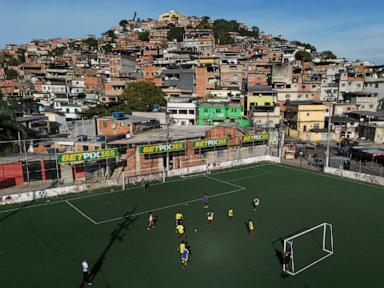
Walk through the streets of Rio de Janeiro or São Paulo right now and you can feel the energy. Green and yellow banners drape from every balcony. Bars are packed to the gills. The 2026 FIFA World Cup has completely taken over Brazil. But behind the regular soccer madness, a different kind of fever is quietly tearing through the country. It is happening on smartphones, in the middle of live broadcasts, and during commercial breaks.
Brazil's sports betting industry is facing an unprecedented wave of public backlash as gambling rates skyrocket during the tournament. Also making headlines lately: Why The Portugal World Cup Win For Diogo Jota Is Exactly What Football Needed.
A fresh study from the Brazilian fintech firm Klavi reveals the true scale of this boom. Looking at data from 1.2 million people, researchers found that the percentage of Brazilians placing online wagers more than tripled in just a few weeks. In May, before the tournament kicked off, around 11% of the population was betting. By the end of June, that number skyrocketed to roughly 35%.
Think about that for a second. More than one-third of the country is actively risking money on soccer matches. What was once pitched as harmless entertainment has turned into a massive social emergency. More information into this topic are explored by Yahoo Sports.
The Outrage Over Aggressive Airtime
If you watch a match on Brazilian television or streaming services today, you cannot escape the gambling platforms. It is not just traditional 30-second ads anymore. Betting companies have wormed their way into the fabric of live sports commentary.
Take CazéTV, the massive streaming network broadcasting the games. During live matches, announcers do not just call the action on the pitch. They read live betting odds out loud. They actively encourage viewers to open an app and place a wager right that second. This aggressive blurring of the line between sports journalism and gambling promotion has pushed regulators over the edge.
On June 24, Brazil's National Consumer Secretariat (Senacon), an arm of the Justice Ministry, opened a formal investigation into these broadcasts. Right after that, Conar, the country's advertising self-regulator, launched three separate proceedings targeting these real-time endorsements. Conar ordered an immediate suspension of these read-aloud betting pitches.
CazéTV backed down, stating they would pivot to a more conservative advertising format. But the damage was already done. The public mood has shifted from casual acceptance to pure indignation.
How Brazil Became a Gambling Goldmine
This crisis did not happen overnight. Brazil is now the third-biggest sports betting market on the planet, trailing only the United States and the United Kingdom.
The floodgates opened back in 2018 when the federal government legalized sports betting under then-President Michel Temer. There was a catch, though. The government failed to establish concrete rules or tax structures for years. For nearly five years, a totally unregulated wild-west market thrived. Offshore betting companies sponsored almost every major soccer club in the country without paying local taxes or facing local oversight.
By the time the government stepped in with a regulatory framework in late 2023 and 2024, the habit was deeply ingrained. Now, the World Cup has supercharged it.
The financial and human costs are brutal. A 2025 study by the non-profit Institute of Studies for Health Policies (IEPS) calculated that gambling and betting drain 38.8 billion reais, about $7 billion, from Brazilian society every single year. The study explicitly linked this financial drain to rising rates of clinical depression and suicide.
The Human Cost Behind the Apps
Talk to regular Brazilians and the stories get dark quickly. The number of people seeking medical care for gambling addiction has more than doubled over the last five years.
Michael Marcos, a 22-year-old transport inspector from the northeastern state of Alagoas, represents a growing demographic. He developed severe anxiety from sports betting last year and forced himself to take a six-month break. The sheer weight of the World Cup drew him right back in.
"Watching Brazil play is already an emotional experience," Marcos says. "But if I bet 1,000 reais on them, the emotion will be even greater because there is an accompanying tension to do with whether I am going to win or lose money." To protect his own mental health, Marcos now tries to only wager on heavy favorites like France, hoping to lower his risk.
Others claim they have everything under control, viewing it as a simple fee for entertainment. Gustavo Freitas, a 34-year-old advertising professional, has spent around $200 since the World Cup started. That is ten times what he normally gambles in a month.
Freitas doesn't think he's going to get rich. He compares it to playing video games on the weekend. He knows the old saying holds true: the house always wins. The real danger lies in the millions of citizens who don't share his cynicism. They genuinely believe they can beat the system, and they are ruining their lives trying.
The Government Step to Reclaim Control
The Finance Ministry is finally showing teeth. They recently demanded formal explanations from two media outlets and four betting operators regarding suspected legal breaches during the World Cup broadcasts. Authorities also ordered an immediate freeze on any advertising campaigns that violate existing consumer protection rules.
But playing whack-a-mole with digital advertisements will not fix a structural economic problem. When a third of a country's population turns to gambling during a sporting event, the guardrails are clearly broken.
If Brazil wants to stop its sports betting industry from cannibalizing household incomes, several immediate steps must be taken.
- Ban Live Commentary Promotion: Commentators must be barred from reading live odds or endorsing specific platforms during live play. Commercial breaks are fine, but matching the ad to the active game play is predatory.
- Implement Strict Loss Limits: State regulations must enforce mandatory, hard caps on daily and monthly deposits across all licensed platforms.
- Establish a National Self-Exclusion Registry: A centralized, government-run database must allow vulnerable citizens to block themselves from every gambling app simultaneously with a single click.
Relying on corporate self-regulation is a proven failure. The sports betting platforms will keep pushing the boundaries until the government draws a hard, permanent line in the sand. Brazil needs to fix this regulation gap before the final whistle blows on this World Cup.


