Minas Gerais wants BYD to build more than buses. It wants the entire battery chain in its backyard.
Three Brazilian states are now competing for BYD's next industrial expansion in the country—a commercial vehicle push aimed at electric buses, trucks, and vans. According to reporting from the South China Morning Post, BYD is set to sign a memorandum of understanding with Minas Gerais after January 6, when governor-elect Cleitinho Azevedo takes office, even as São Paulo and Rio de Janeiro also try to land the project. Discover more on a similar issue: this related article.
That single headline misses the real leverage play happening behind closed doors. Brazil isn't just shopping for jobs. State leaders are trying to lock in industrial value before raw lithium leaves the ground, while BYD deals with tight capacity at its existing commercial operations and rising demand across Latin America.
Why Lithium Valley Wants More Than Final Assembly
Vice-governor-elect Luis Eduardo Falcão made the state's position blunt: Minas Gerais wants more from BYD than an assembly line. That push makes total sense when you look at what Minas Gerais actually holds. Further reporting by Business Insider highlights comparable views on the subject.
The state's Jequitinhonha Valley—widely nicknamed Brazil's Lithium Valley—sits on major hard-rock lithium reserves. BYD already holds mineral rights in the region through its local mining subsidiary, Exploração Mineral do Brasil, spanning roughly 852 hectares in Coronel Murta. Local producers such as Companhia Brasileira de Lítio have also been tied into the broader supply picture.
Digging up ore is the easy part to announce. Turning spodumene or lithium concentrate into battery-grade material, cells, and packs inside Brazil is much harder—and far more valuable to a state government trying to climb the industrial ladder.
Yet there's a catch nobody in a ribbon-cutting speech likes to mention. Mining legal experts have long warned that greenfield mining projects in Brazil can take eight to 15 years to reach production if deemed viable. You can't build a battery supply chain overnight on mineral rights that still face permitting, environmental reviews, and capital hurdles.
So when Minas Gerais pushes for a full supply chain from lithium ore to batteries, it's negotiating against the clock. If BYD only puts a commercial vehicle plant in the state without deeper local processing, Minas Gerais risks becoming a supplier of cheap rocks rather than high-value electric mobility tech.
Why Three States Are Fighting Over Commercial Vehicles
To understand why São Paulo, Rio de Janeiro, and Minas Gerais are all courting BYD, you have to separate passenger cars from commercial vehicles.
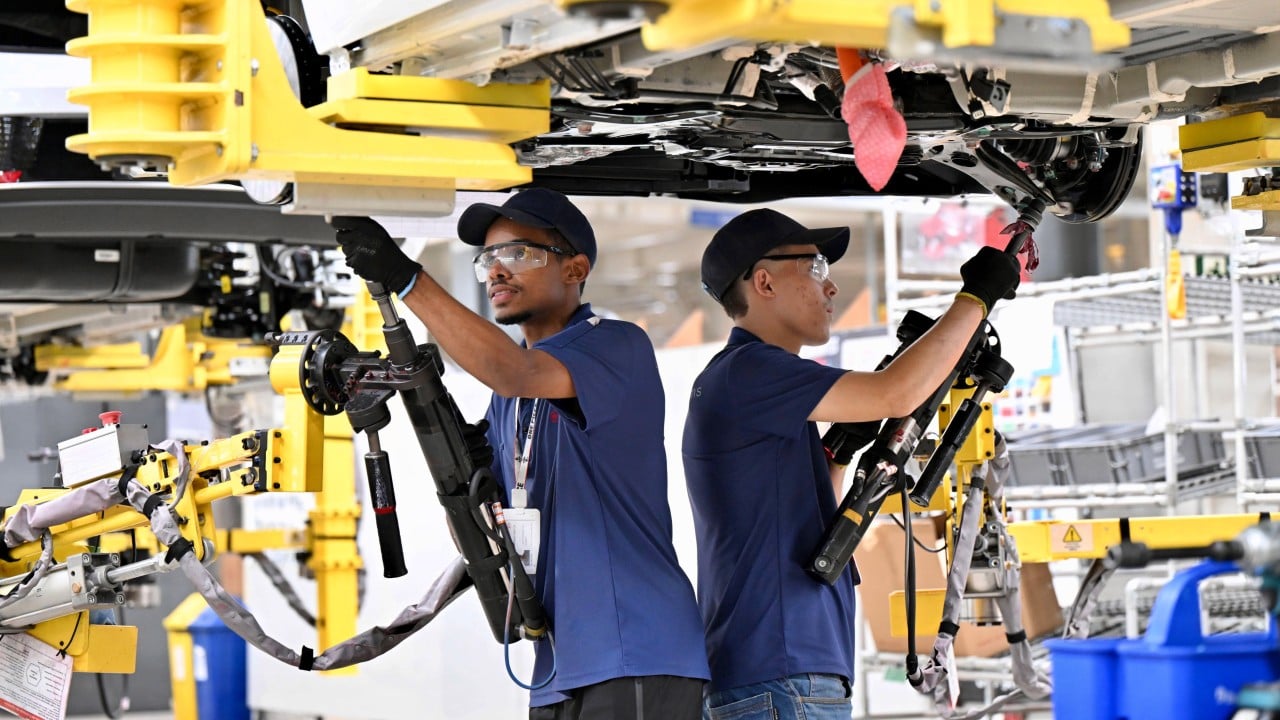
BYD's passenger car push in Brazil is anchored at its Camaçari industrial complex in Bahia, built on a former Ford site, where the company has been scaling output and pushing toward higher localization. Commercial vehicles—electric buses, trucks, and vans—have a different rhythm. Reports indicate BYD has been evaluating a second factory project in Brazil centered on commercial vehicles, with figures around R$1 billion in proposed investment, roughly 2,000 projected jobs, and target production timelines stretching toward 2028 or 2029.
Existing capacity in Campinas, São Paulo, has faced strain as demand grows. Meanwhile, electric buses and urban commercial fleets are one of the fastest ways for a carmaker to prove local utility in Latin America, especially with municipal transit electrification on the agenda across major cities and potential exports to neighboring South American markets.
Here's how the three contenders stack up in practice:
- Minas Gerais brings raw material proximity via the Jequitinhonha Valley and an incoming administration eager to tie China-backed investment to energy transition goals starting in January. Its weakness? Heavy industrial logistics and supply-chain depth still have to prove they can beat established coastal hubs for certain components.
- São Paulo offers Brazil's deepest auto parts ecosystem, massive freight demand, and existing commercial vehicle roots. The downside is cost, congestion, and stiffer competition for incentives.
- Rio de Janeiro brings port access and coastal logistics advantages for moving parts and finished units, though it has to fight harder to out-pitch Minas Gerais's mineral narrative.
Honestly, a memorandum of understanding in January is a starting gun, not a done deal. Automakers routinely talk to multiple states to sharpen tax incentives, land packages, infrastructure commitments, and power deals before locking in a final site.
The Messy Realities Behind BYD's Brazil Bet
If you follow industrial policy closely, you know shiny investment pledges never tell the whole story. BYD's expansion in Brazil has come with serious friction that any serious observer—or investor—needs to factor in.
First, there's the labor controversy from the Camaçari buildout. Brazilian labor authorities investigated contractor working conditions at the site, leading to legal actions, visa scrutiny, and later BYD's inclusion on Brazil's labor ministry "dirty list" of employers tied to slave-like working conditions—a blow BYD has contested while blaming contractors and pointing to corrective steps. In automotive manufacturing, reputation hits don't just live in headlines; they affect union negotiations, bank financing rules, and political goodwill.
Second, localization in Brazil is a moving target. Raising import duties on electric and plug-in hybrid vehicles has pushed automakers to assemble locally rather than simply ship finished cars from Asia. Yet moving from assembly to genuine local content—sourcing parts, battery materials, and engineering locally—takes years and requires suppliers that don't always exist yet at scale.
Third, vertical integration cuts both ways. BYD's global edge comes from controlling key parts of its stack—batteries, motors, power electronics—rather than outsourcing everything. That helps costs in China. Abroad, building a vertically integrated loop from mine to factory is expensive, slow, and exposed to local permitting and politics.
What This Means If You're Watching The Market
A lot of commentators treat every state-level MOU as if bulldozers will roll onto site the next morning. That's a mistake. An MOU signals intent and political alignment—especially around a gubernatorial transition—not binding final capex.
Watch three concrete signals over the coming months instead of getting swept up in political optimism:
- Binding commitments after January 6: Look past the handshake and see what specific land, tax, or infrastructure terms are put on paper once Cleitinho Azevedo's administration takes office.
- Scope of the commercial plant: Pay close attention to whether BYD commits to deeper local manufacturing (like chassis, battery assembly, or regional supplier tie-ins) or sticks mostly to lighter assembly.
- Permitting and supply-chain timelines: Track real milestones around mining research, environmental licensing, and local supplier contracts rather than long-range projections alone.
If you're tracking industrial policy, supply chains, or Latin American EV adoption, treat this rivalry as a live stress test of resource nationalism versus speed-to-market. Minas Gerais wants leverage from its lithium. BYD wants scale and cost control. Who bends—and how much—will tell us plenty about how Brazil's EV industry actually gets built.