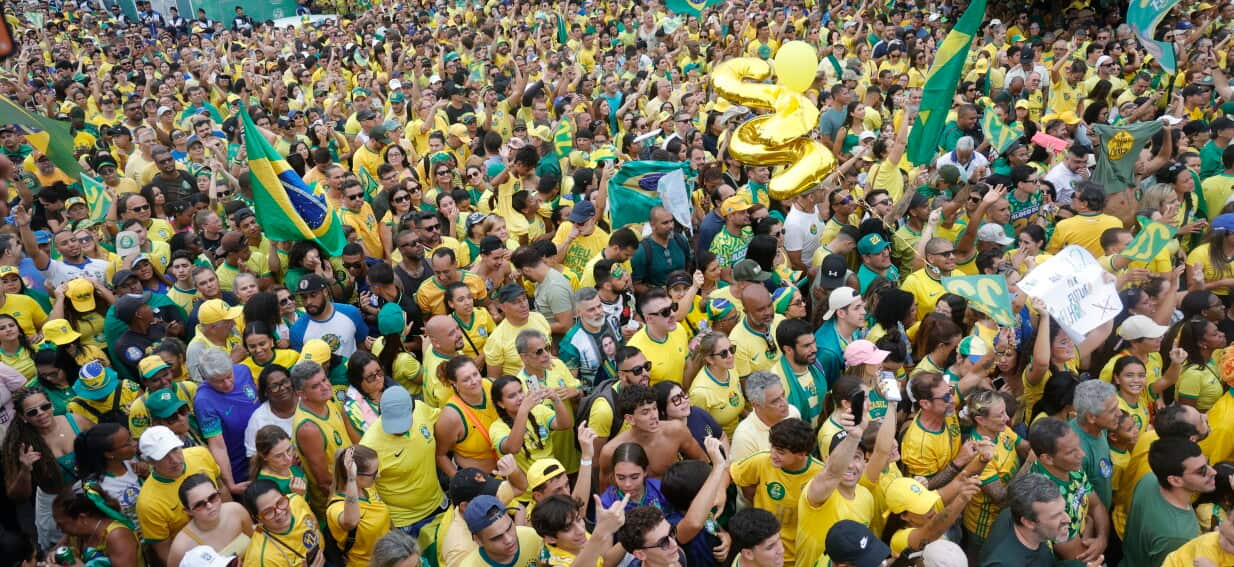
Street corners in São Paulo and Rio de Janeiro are drowning in a sea of red flags and canary-yellow jerseys right now. Millions of Brazilians have packed iconic boulevards like Avenida Paulista and Copacabana Beach, turning a tense political standoff into a massive visual showdown. If you think this is just another standard election cycle, you're missing the entire plot.
Brazil is staring down a fiercely polarized presidential runoff between left-wing incumbent Luiz Inácio Lula da Silva and right-wing challenger Flávio Bolsonaro, the senator and son of imprisoned former leader Jair Bolsonaro. With polls showing a razor-thin margin after an unexpected first-round outcome, the energy on the ground is electric, volatile, and deeply personal.
The Battle Lines of a Divided Nation
To understand why people are risking tropical heat and packed crowds to march, you have to look at what's actually on the ballot. Lula secured about 45 percent of the vote in the initial October contest, while Bolsonaro pulled roughly 47 percent. That surprise deficit caught the left off guard and triggered an aggressive street-level mobilization campaign.
Lula's base is framing this election not as a standard policy debate, but as a referendum on democratic survival. Supporters wearing red chant slogans against the Bolsonaro family legacy, pointing to the shadow of former President Jair Bolsonaro—currently serving a 27-year sentence following his conviction for attempting a coup after the 2022 election. For millions of voters, blocking Flávio Bolsonaro from the presidency is seen as the only way to safeguard democratic institutions from rolling back into military-style governance.
On the flip side, the right isn't backing down an inch. Bolsonaro supporters, sporting Brazil's national football team jerseys and occasionally waving foreign flags alongside domestic emblems, argue that the country desperately needs economic overhaul. Business owners and conservative voters point to decades of Workers' Party administration, arguing that welfare-heavy policies foster state dependency rather than real economic mobility. They want fiscal discipline, tighter spending controls, and a sharp break from leftist governance.
Why the Street Rallies Matter More Than the Polls
Polling numbers in Brazil have notoriously struggled to capture the full picture, which is why both camps have leaned so heavily into massive physical demonstrations. Avenida Paulista didn't just host a gathering; it turned into a historic logistical feat with over a million Lula supporters flooding the asphalt to counter his first-round deficit.
When you see crowds stretching for kilometers, wearing red hats and chanting for worker rights—such as Lula's pushed legislation to increase paid days off and shorten the standard workweek—you realize physical turnout is psychological warfare. It signals momentum. It tells undecided voters which way the wind is blowing.
Meanwhile, conservative rallies in bellwether states like Minas Gerais have drawn roaring crowds of bikers and entrepreneurs shouting for change. These aren't polite town halls. They are high-octane populist spectacles where voters vent years of frustration over inflation, corruption scandals, and ideological fatigue.
What’s at Stake for Everyday Brazilians
Strip away the political theater, and you find a nation wrestling with fundamental questions about its identity.
- Economic Direction: Will Brazil embrace a state-guided labor-first model, or shift toward austerity and spending cuts inspired by regional shifts?
- Democratic Integrity: Can the country move past the shadow of the 2022 coup attempt and political imprisonment, or will polarization paralyze future governance?
- International Alignment: Will foreign policy lean toward Western democratic alliances or traditional regional partnerships?
The stakes couldn't be higher. As polling stations open for the runoff vote, the million-person marches prove that Brazilians aren't apathetic observers. They are active combatants in an ideological war for the soul of South America's largest democracy. Watch how the urban centers vote on Sunday, because the shockwaves will ripple far beyond South America.